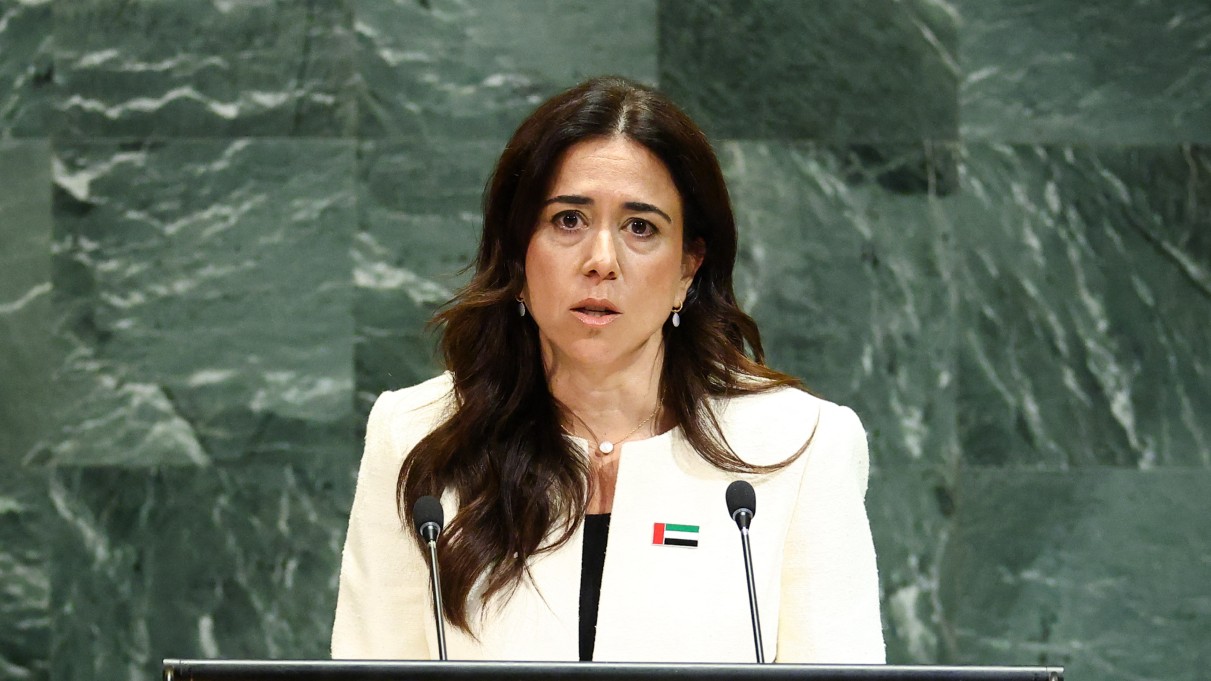
The race to succeed António Guterres as United Nations Secretary-General, long gridlocked after months of stalled selection processes, gained a new high-stakes contender this week as the United Arab Emirates formally put forward its veteran former UN ambassador Lana Nusseibeh for the top global post. The surprise nomination upends long-held expectations about the race’s outcome and has sparked immediate backlash over the UAE’s controversial foreign policy actions, with critics warning that Nusseibeh’s ties to a government accused of enabling atrocities could undermine the UN’s core humanitarian mission.
The official nomination was submitted via letter by UAE President Mohamed bin Zayed Al Nahyan to the presidents of the UN General Assembly and Security Council, state-run news agency WAM confirmed Wednesday. In a campaign launch statement, Nusseibeh framed her candidacy as a call for more urgent multilateral action, saying, “I am standing to be Secretary-General because I believe this is a moment to act with greater urgency: to act earlier, bring people together across difference, and drive the work forward until it produces concrete results.” Nusseibeh, who most recently served as a minister of state at the UAE foreign ministry, has taken formal leave from her government post to pursue the candidacy. If elected, she would make history as the first woman to lead the United Nations, and only the second Arab national to hold the role, following Egypt’s Boutros Boutros-Ghali who served in the 1990s.
Nusseibeh’s entry into the race comes after six consecutive informal Security Council straw polls failed to produce a candidate with the required backing from all five permanent veto-wielding members – the United States, Russia, China, the United Kingdom, and France. For months, Costa Rica’s Rebeca Grynspan has held the lead in most polling rounds, but she has failed to win universal support from the P5, collecting two “discourage” votes in the most recent October 16 ballot. Other leading candidates including Guyana’s Carolyn Rodrigues Birkett and Argentina’s Rafael Grossi also each drew two negative votes from permanent members, while Senegal’s Macky Sall dropped out of the race after the first colour-coded poll. Longstanding informal regional rotation practices had led most observers to expect the next secretary-general would come from the Latin America and Caribbean region, a convention Nusseibeh’s nomination directly upends.
Following the UAE’s official announcement, a planned seventh straw poll scheduled for Friday was postponed, likely until next week, to allow time for the new candidate to be processed and introduced to the full 193-member General Assembly, diplomatic sources told independent UN outlet PassBlue. Guterres’ current five-year term is set to end on December 31, leaving the Security Council with a tight timeline to reach a consensus candidate to put forward for General Assembly approval – a deadline that now looks increasingly uncertain to be met.
A seasoned multilateral diplomat with decades of UN experience, the 47-year-old Nusseibeh built her career in the UAE foreign service, starting as a UNESCO consultant and Gulf Research Centre analyst before founding the ministry’s policy planning department. She made history in 2013 as the UAE’s first female permanent representative to the United Nations, a post she held until 2024. During her 11-year tenure at the UN, she served as a vice-president of the General Assembly, president of the UN Women Executive Board, and twice held the rotating presidency of the Security Council. Born to a prominent Palestinian family with roots in Jerusalem, her grandfather Anwar Nusseibeh was a leading Palestinian political figure who held cabinet posts in Jordan’s government during its administration of the West Bank and East Jerusalem, and later served as Jordan’s ambassador to the UK. Nusseibeh also holds a master’s degree in Israeli studies from SOAS University of London, where her former professor described her as “instrumental” in negotiating the 2020 Abraham Accords, the US-brokered normalization agreement between the UAE and Israel.
Despite her extensive diplomatic resume, Nusseibeh’s candidacy has drawn sharp, immediate criticism from human rights experts and UN watchdogs, centered on the UAE government’s foreign policy stances and actions. Most notably, critics point to Abu Dhabi’s documented support for two actors widely accused of genocide: Israel’s military campaign in Gaza, and Sudan’s Rapid Support Forces (RSF) paramilitary group, which has waged a brutal campaign against civilian communities in Darfur.
UN sanctions monitors have deemed credible widespread allegations that the UAE has supplied military aid to the RSF, a claim the UAE has repeatedly denied. However, multiple independent investigations from UN expert panels and human rights organizations have confirmed the RSF has committed genocide and systematic crimes against humanity against non-Arab communities in Darfur, with open source reporting from Middle East Eye and other outlets corroborating direct arms and logistical links between the UAE and the RSF.
“Nusseibeh is extremely intelligent,” international law expert Adil Haque wrote on social platform X. “She also currently works for a state that has spent the last few years supplying arms to the RSF in Sudan as they’ve massacred civilians.” Nathaniel Raymond, executive director of the Humanitarian Research Lab at the Yale School of Public Health which documents atrocities in Darfur, called Nusseibeh’s selection a potential “catastrophe” for UN humanitarian work across Sudan, Yemen and the broader Middle East. “She has a dual loyalty, conflict of interest, between the United Nations and a state which is credibly accused by the UN itself of directly aiding and abetting the massacre of El Fasher, which the UN itself has determined has the ‘hallmarks of genocide’,” Raymond told PassBlue. “Next week is the one year anniversary of El Fasher. The UN should not celebrate it by making a government official of the country that made the massacre militarily possible the SG of the United Nations.”
Criticism also extends to the UAE’s 2020 normalization deal with Israel, amid ongoing Israeli military actions in Gaza that the International Court of Justice has ruled carry plausible claims of genocide. Nusseibeh has defended the accords, saying in September 2025 amid Israeli plans to annex large parts of the occupied West Bank that the UAE saw normalization as a path to advancing Palestinian statehood, and called on Israel to suspend its annexation plans.
While Nusseibeh’s nomination faces steep headwinds from controversy, diplomatic analysts note it could still gain traction in the deadlocked race. No candidate has yet secured the endorsement of the incoming second Trump administration, and the UAE’s longstanding close diplomatic and economic ties to all five permanent Security Council members could give it an opening to build consensus behind its candidate, a path that supporters have already begun laying the groundwork for: multiple news outlets reported ahead of the official nomination that backers had begun privately sounding out UN member missions to gauge potential support for Nusseibeh.