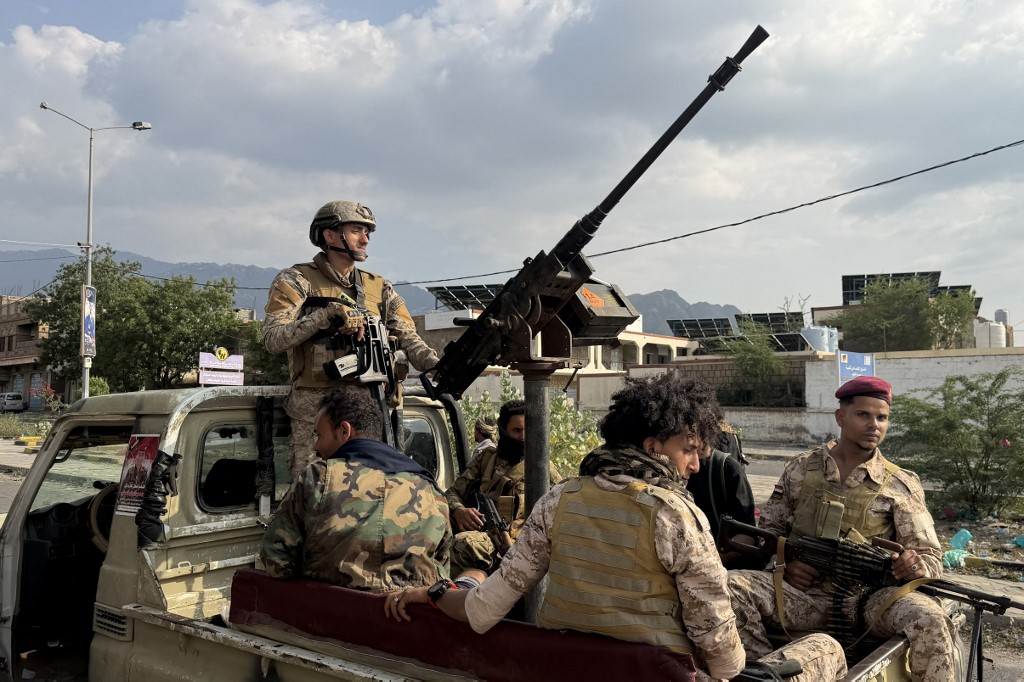
Weeks after Iran extended an offer to mediate the escalating conflict between Saudi Arabia and Yemen’s Houthi movement, neither warring party has formally accepted the proposal, leaving regional observers warning that violence will likely continue to escalate in the absence of meaningful negotiations.
Iran’s foreign minister Abbas Araghchi confirmed earlier this month that 11 days after Tehran made its mediation offer public on October 11, neither Riyadh nor the Houthis had formally responded to the overture. The current impasse stems from non-negotiable demands put forward by the Houthis, paired with deep-seated Saudi reluctance to engage Iran as a neutral broker amid shifting regional power dynamics.
Houthi spokesperson Yahya Saree recently reaffirmed that the group will not halt its cross-border attacks on Saudi territory until two key conditions are met: an end to what the Houthis describe as a 12-year economic and financial blockade of Yemeni ports, and a full cessation of Saudi-led military operations against the group. Yemeni affairs analyst Mohammed Basha, writing for Middle East Eye, notes that Saudi Arabia and its coalition partners are highly unlikely to meet these demands, which include Houthi control over Yemeni airspace and maritime corridors, as well as billions of dollars in reconstruction compensation. “Such concessions would effectively reward the Houthis militarily, politically and financially without securing meaningful guarantees for lasting peace,” Basha argues.
Beyond the core Houthi demands, experts say the lack of progress toward negotiations is rooted in competing regional strategic priorities that stretch far beyond Yemen’s borders. For Saudi Arabia, accepting Iranian mediation carries major geopolitical risks. Riyadh has framed the Houthi movement as an Iranian proxy, and accepting Tehran’s good offices would implicitly legitimize Iran’s influence over the group — a narrative Riyadh has worked to counter amid the ongoing U.S.-Israeli campaign against Iran. This posture was reinforced earlier this year when Riyadh joined Washington in joint air strikes on Iran-linked groups in Iraq, and later when it signed the Mecca security pact with Turkey and Pakistan to coordinate regional counter-Iran policy.
Saudi Arabia also already has established communication channels with the Houthis through Omani intermediaries, which have a long track record of facilitating backchannel talks. As Carnegie Endowment expert Alex Jalili notes, “Accepting Tehran as mediator could also reinforce the perception that Iran is the ultimate guarantor of Houthi behaviour, something Riyadh has little interest in legitimising.” Still, Saudi officials have clarified that Riyadh’s rejection of Iranian mediation does not mean a complete break in diplomatic contact: just last week, a senior Saudi public diplomacy official confirmed that Riyadh maintains direct bilateral communication with Tehran.
For the Houthis, the calculus is similarly rooted in military leverage rather than diplomatic opportunity. The group has demonstrated repeated ability to target critical Saudi infrastructure, disrupt Gulf energy exports, and bypass Saudi air defense systems. This military success has convinced Houthi leadership that continuing offensive operations will strengthen their hand in eventual negotiations, making them unwilling to enter talks mediated by Iran until they have secured maximum military gains. “That gives them considerable leverage, which they are unlikely to relinquish in exchange for marginal concessions,” Jalili explains.
For Iran, the mediation offer fits into a broader strategic balancing act. Tehran has long benefited from the leverage that Houthi control of northern Yemen provides, allowing it to put pressure on Saudi energy exports and regional security even as Tehran avoids direct conflict with Riyadh. At the same time, Iran does not want the current escalation to spiral into a full regional conflict that would undermine its broader diplomatic and regional goals. As Sina Toossi, senior non-resident fellow at the Centre for International Policy, puts it: “There is a fundamental tension here: Iran wants to preserve the leverage that the Houthis provide without allowing that leverage to produce an uncontrollable escalation.”
An uncontrolled escalation carries major risks for Iran. Riyadh has already accused Tehran of violating the 2023 Iran-Saudi rapprochement agreement by encouraging Houthi escalation. Worse, a wider regional spillover could draw in other actors: from Mecca Pact signatories Turkey and Pakistan launching offensive operations against the Houthis, to the UK expanding its role beyond defensive support for Saudi Arabia, to Iran-aligned groups in Iraq entering the fighting. Such a scenario could harden the stance of Gulf states toward Tehran and derail any prospects for renewed U.S.-Iran nuclear negotiations.
Right now, the most likely outcome is continued intensification of fighting across key Yemeni frontlines including Taiz and Marib, with a fragile, temporary ceasefire the best case scenario even if indirect talks eventually resume. Experts warn that a durable, comprehensive peace settlement remains far out of reach as long as both sides prioritize military gains over negotiated compromise, and regional power struggles continue to overshadow local efforts to end Yemen’s nearly decade-long war.