A roundup of commentary from Iranian state-aligned and independent media outlets this week reveals a range of sharp perspectives on domestic and regional geopolitical issues, spanning religious policy in neighboring Azerbaijan, Israeli alliance proposals, domestic unrest in a restive southeastern province, and swirling rumors over territorial sovereignty at a key Indian Ocean port.
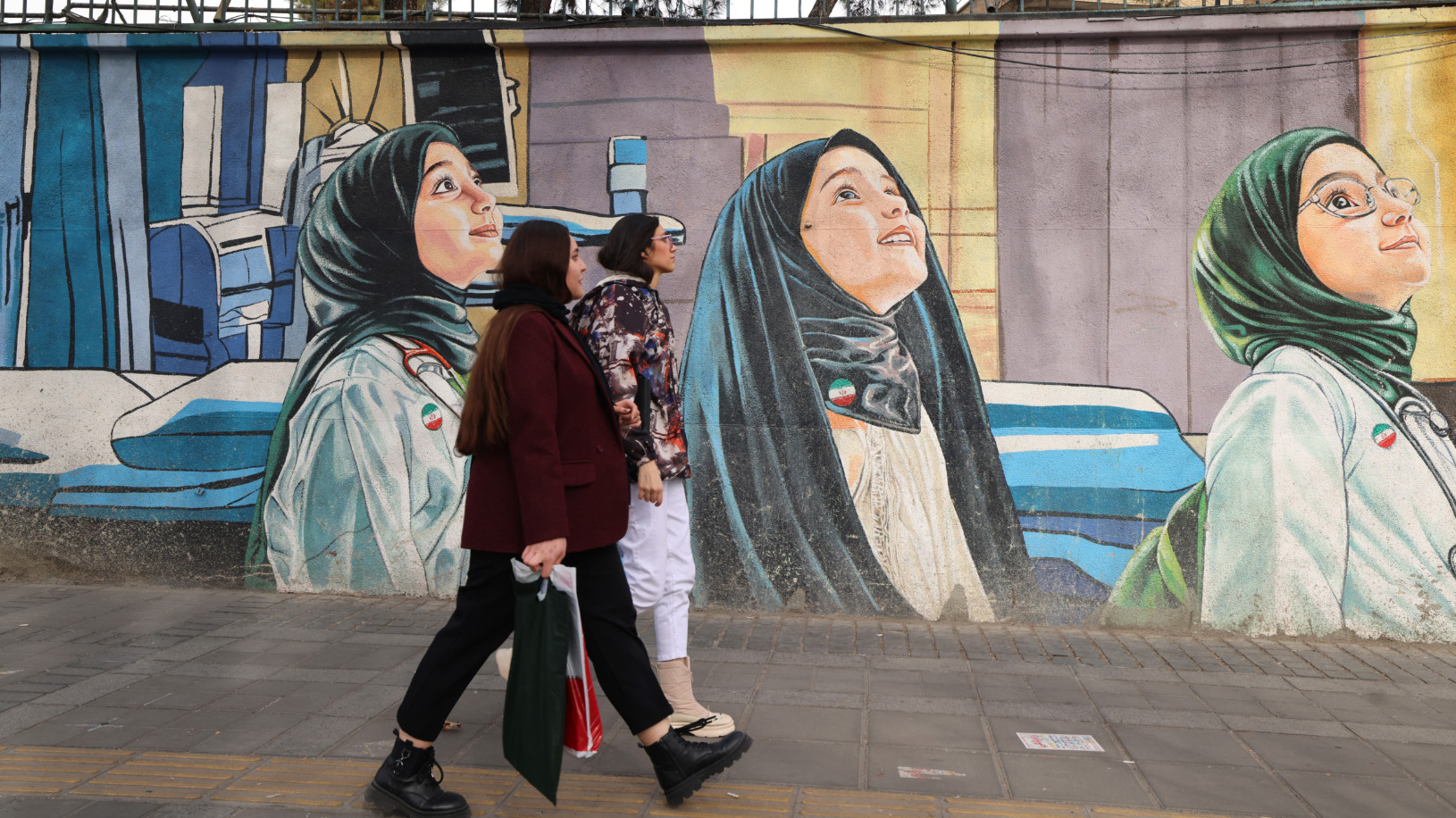
First, multiple conservative Iranian publications have unified in criticizing Azerbaijani President Ilham Aliyev over new regulations that ban hijab-wearing teachers and students from accessing public school campuses. Daily newspaper Farhikhtegan used the provocative headline “Roll out the red carpet for Baku’s girls” to call on Iranian government officials to take tangible action supporting barred female students, arguing that diplomatic condemnation of the education access ban must be paired with concrete measures to create alternative study opportunities for affected young women.
Javan, a daily newspaper funded directly by Iran’s Islamic Revolutionary Guard Corps (IRGC), framed the hijab restrictions not as a simple domestic policy matter rooted in Azerbaijan’s longstanding secular governance, but as a deliberate outcome of Baku’s growing geopolitical alignment with Israel and its deliberate distancing from majority-Muslim nations. The outlet noted that the crackdown on hijab-related protests reflects broader Aliyev administration anxieties over religious influence in public life, a shift that Baku sees as threatening its regional geopolitical positioning.
Going further than other outlets, Khorasan daily labeled the restrictions a pre-planned “Zionist plan” in an article titled “The Zionist project of Ilham”. The publication accused Aliyev’s government of seeking to forcibly reshape the collective identity of Azerbaijan’s religious population, arguing that the government’s overreaction to schoolgirls’ headscarves exposes its underlying weak legitimacy and hollow claims to a unified national identity.
Notably, this unified outcry from Iranian establishment media comes amid stark contrast to Iran’s own domestic hijab policies. During 2022 nationwide protests against Iran’s compulsory hijab regulations, Amnesty International recorded at least 377 protestors killed by Iranian security forces and the IRGC.
On a separate regional issue, Iranian press has turned widespread attention to Israeli Prime Minister Benjamin Netanyahu’s recently unveiled map of a restructured Middle East, which divides regional states into explicit friends and foes of Israel, and includes the United Arab Emirates as a core member of his proposed “Hexagon Alliance”. While Netanyahu named Iran and the Axis of Resistance as Israel’s primary adversaries, it was the UAE’s prominent placement in the alliance that drew the most fierce criticism in Iranian commentary.
Quds daily devoted a front-page article headlined “The United Israeli Emirates” to condemn any Middle Eastern state that has aligned itself with the Israeli government. The outlet dismissed Netanyahu’s alliance proposal as delusional, pointing out that none of the countries named in the plan have dared to publicly endorse it or formally declare their alignment with Tel Aviv.
Meanwhile, mass circulation daily Hamshahri called Netanyahu’s map proof of what it describes as the UAE’s “greatest betrayal” of Iran and the broader Muslim world. The publication focused specifically on the UAE’s role in freezing Iranian assets held abroad, framing the move as an act of deliberate economic betrayal. Recalling decades of close economic ties, when the UAE’s currency exchange sector thrived on Iranian commerce, Hamshahri argued that the UAE now has emerged as a primary tool of economic pressure for both Washington and Tel Aviv against Tehran, with a more prominent role in anti-Iran action than any other regional state.
Turning to domestic issues, a sharp rise in militant attacks in Iran’s poorest province, Sistan and Baluchestan, which borders Pakistan and Afghanistan and is home to a large ethnic Baloch population, has prompted local media scrutiny of the root causes of the ongoing violence. Arman daily published a detailed investigation into the unrest, which has spiked dramatically over the past three months, bringing higher casualties for both government forces and armed actors on both sides after decades of low-level clashes in the region.
The daily identified deep, widespread systemic poverty as the core vulnerability that has allowed anti-establishment armed groups to expand their recruitment and operations in the province. The outlet noted that systemic inequality and a widespread sense of hopelessness among young people create fertile ground for extremist groups to recruit new members and frame their violence as justified. It added that limited access to healthcare, substandard housing, and poor integration into Iran’s national education system have all fueled widespread public discontent, creating the conditions for armed groups to grow their influence.
In its conclusion, Arman emphasized that the only long-term solution to the unrest is targeted investment to raise living standards, ensuring the province’s population receives equal access to opportunities in education, employment and public life that all Iranian citizens are entitled to.
Finally, Tehran officials have moved quickly to debunk rumors that Iran plans to transfer sovereign territory to Afghanistan, after a parliamentary proposal to allocate a parcel of land at the strategic southeastern port of Chabahar for Afghan trade and investment sparked public backlash over territorial integrity. Mohammad Mehdi Shahriari, a member of Iran’s parliamentary national security and foreign policy commission, clarified that the proposal involves a 100-hectare plot of land that would be leased to Afghanistan for a period of between two and five years, solely to streamline goods imports and transit for landlocked Afghanistan. All land would remain under full Iranian sovereignty, he confirmed.
Shahriari’s comments followed remarks from fellow MP Mohsen Zanganeh, who referenced an initial preliminary agreement to allocate Chabahar land for Afghan investment; Zanganeh’s description of the area as “a territory belonging to itself [Afghanistan]” triggered widespread public anger and concerns over territorial concessions. Iranian foreign ministry spokesman Esmaeil Baghaei stated that reports of a full territorial handover are rooted in public misunderstanding, noting that no formal proposal for a land transfer has been submitted to the government. Chabahar Governor Alireza Noura also rejected all claims of planned land handover to foreign actors, confirming that all foreign investment in the port abides by Iranian law and requires formal government approval before moving forward.
This is a digest of Iranian press commentary, and has not been independently verified for accuracy by Middle East Eye.