A series of deadly drone strikes attributed to Sudan’s regular army have killed more than 200 civilians across multiple regions of the conflict-battered country, triggering a diplomatic backlash, fears of cross-border conflict spillover, and sharp criticism from United Nations humanitarian officials.
The coordinated wave of attacks launched over Sunday and Monday this week marks one of the deadliest single episodes of civilian harm since the full-scale civil war erupted between the Sudanese Armed Forces (SAF) and the paramilitary Rapid Support Forces (RSF) in April 2023. According to the Sudan War Observatory, a conflict monitoring body, the death toll from two Sunday evening strikes in West Kordofan state alone stands at 150. The deadliest of these attacks targeted a convoy of roughly 200 mourners traveling to a funeral in the town of Al-Dabab, killing 145 people and wounding 150 more. A second strike on a nearby funeral tent killed an additional five people. A separate strike on a market in Al-Mujlad the same evening has left casualties uncounted as of press time, the monitoring group added.
On Monday morning, a separate drone attack hit the Amiet Common Market, also called Al-Na’am Market, a busy commercial hub 10 kilometers from Abyei town in the contested border region of Abyei, killing 73 people, according to Yohana Akol Ngor, information minister for the Abyei region. A military source confirmed to the BBC that the SAF carried out the Abyei strike, justifying the attack by claiming the market served as an illicit fuel storage and distribution hub for RSF forces. BBC Verify’s independent analysis of satellite imagery and on-the-ground footage confirmed extensive destruction: large-scale fire damage to multiple buildings in the market’s northeast corner, thick smoke plumes, and at least one destroyed fuel tanker matching witnesses’ accounts that five missiles were fired during the assault.
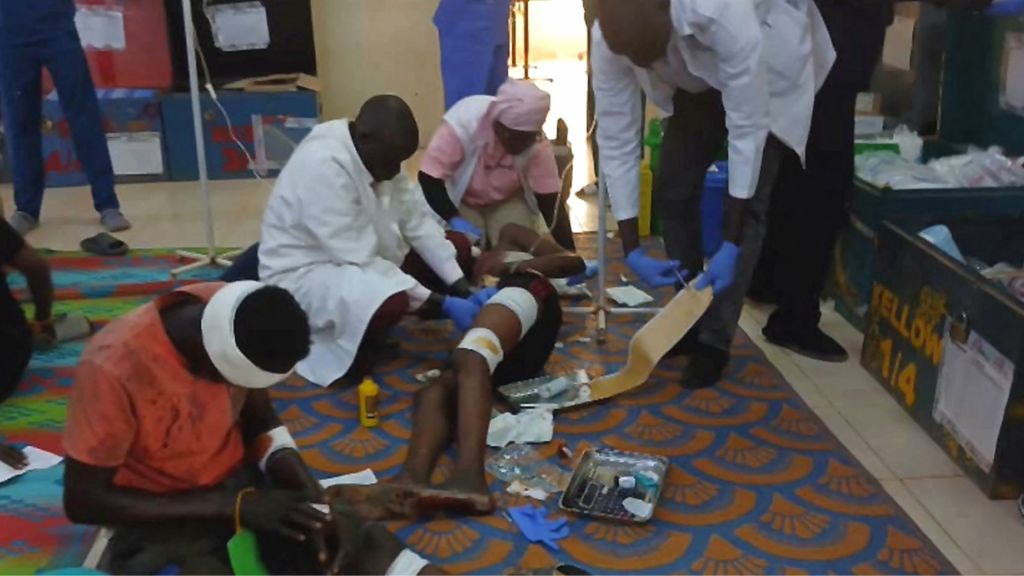
Ngor told Reuters that emergency response teams have faced major barriers recovering bodies from the strike, as ongoing blazes from ignited fuel stores have kept the area unsafe for access. Medical humanitarian organization Médecins Sans Frontières (MSF) confirmed it has admitted more than 20 wounded patients from the attack to Ameth Bek Hospital in Abyei town, including multiple critical care cases and patients with severe burns. “We are providing surgical services and wound dressing, along with other emergency care,” said Christian Lindauer, MSF’s hospital manager in Abyei, in a statement.
The Abyei region holds a unique and fraught status: it is jointly administered by Sudan and South Sudan, but both nations claim full ownership of the oil-rich territory, a dispute that has remained unresolved since South Sudan gained independence from Sudan in 2011. In response to the strike, South Sudan has officially summoned Sudan’s ambassador to Juba to lodge a formal diplomatic protest, and analysts warn the attack could reignite long-simmering cross-border tensions and allow the Sudanese civil war to spill into South Sudan.
In a separate incident on Monday, a drone strike near Khartoum International Airport killed four people, three of them children, the AFP news agency reported, citing an anonymous medical source. A Sudanese military spokesperson told AFP that air defense systems had shot down multiple other drones launched by the RSF targeting the airport.
Fighting across the broader Kordofan region, an economically strategic area that holds large reserves of gold and oil, has intensified dramatically over the past 12 months after the SAF recaptured full control of the capital Khartoum from RSF forces. Greater Kordofan, which includes West Kordofan and the attack’s launch point of Kadugli in South Kordofan, serves as a critical supply and movement corridor connecting Darfur — which is largely controlled by the RSF — to Khartoum, which remains under SAF control.
Armed drones have become the weapon of choice for both warring parties in the Sudanese conflict, even with a partial United Nations arms embargo in place across the country. Multiple international reports confirm foreign states continue to supply both the SAF and RSF with advanced drone technology.
The United Nations has issued sharp condemnation of the latest wave of strikes, with spokesperson Stéphane Dujarric saying the organization is “alarmed by the continued deadly drone strikes across the country that are killing civilians, including children, and that are disrupting essential services.” Dujarric added that the growing use of lethal airstrikes comes as 20 million Sudanese people already face acute food insecurity, with famine looming across large parts of Darfur and Greater Kordofan. The two-year conflict has already created what the UN calls one of the worst humanitarian catastrophes on the globe, killing hundreds of thousands of people and displacing more than 14 million Sudanese from their homes.
The SAF has not yet issued an official response to specific allegations it carried out the West Kordofan and Abyei strikes, but has repeatedly stated it does not intentionally target civilian areas, even when operating in zones where RSF fighters are believed to be present.