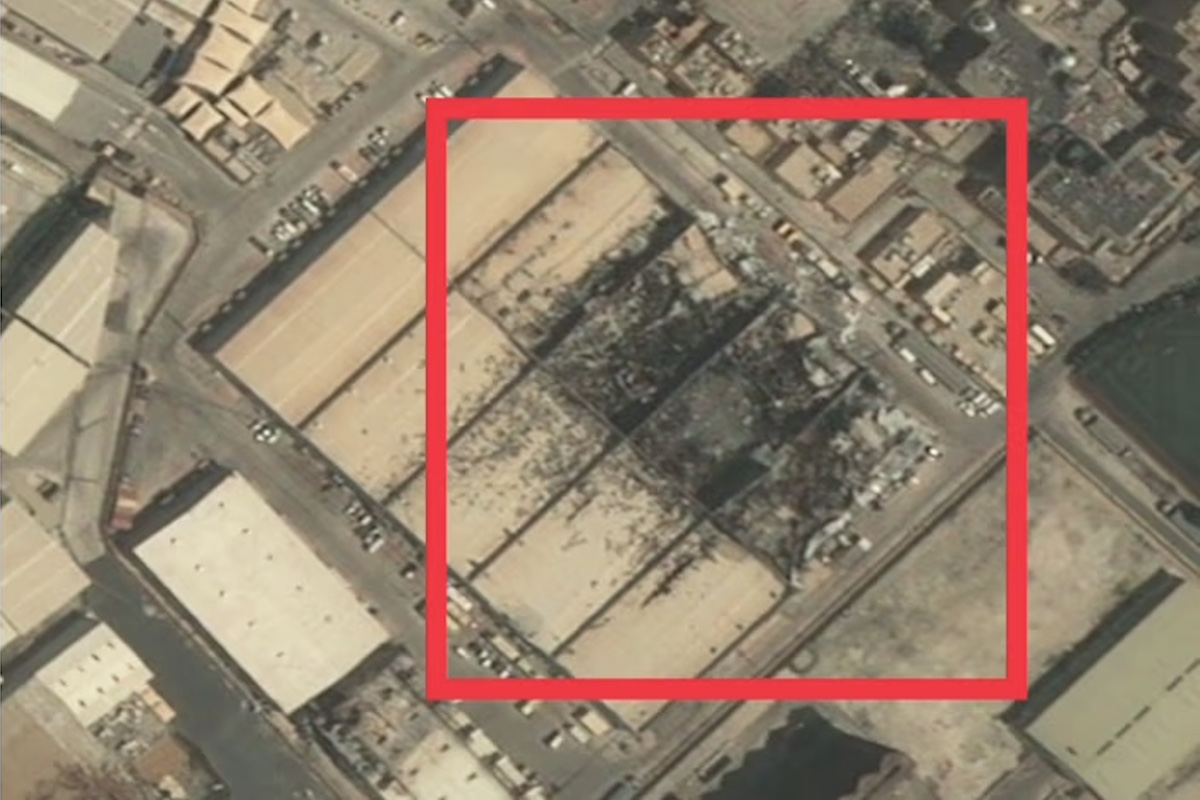
A group of Senate Democrats on the influential Armed Services Committee is pressing the Pentagon to lift classification on the full taxpayer cost of the Iran conflict launched during Donald Trump’s presidency, accusing defense leaders of deliberately obscuring the true financial toll of the ongoing military engagement.
Leading the charge is Senator Elizabeth Warren of Massachusetts, who was joined by four fellow Democratic senators — Mazie Hirono of Hawaii, Richard Blumenthal of Connecticut, Tammy Duckworth of Illinois, and Gary Peters of Michigan — in a formal letter sent Monday to Admiral Brad Cooper, head of U.S. Central Command (CENTCOM). The lawmakers are calling for the immediate public release of a classified estimate covering repair costs for infrastructure damaged by Iranian strikes on U.S. military positions across the Middle East.
CENTCOM previously reported to Congress that cumulative costs of the war hit $43.6 billion as of September 3. But Democratic lawmakers argue this official figure omits billions of dollars in damage repair costs that have already been calculated by defense officials but remain hidden from public view, a estimate that members of Congress have already reviewed in its classified form.
“There is no rationale for classifying that cost estimate,” the lawmakers wrote in their letter. “Our allies and our adversaries are, unfortunately, keenly aware of the extraordinary toll that this reckless war has taken on military readiness, and Congress and the public need this information to determine the steps necessary to recover from this debacle.”
Their calls for transparency are backed by a September report from the Pentagon’s own inspector general, which documented that Iranian attacks have damaged or destroyed hundreds of buildings and facilities at U.S. bases across eight Middle Eastern nations. The letter notes that despite inconsistent disclosure from the Department of Defense, open-source evidence including media reporting, leaked footage from active-duty service members, satellite imagery, and photos confirm the widespread scale of destruction at American military installations.
Multiple current and former U.S. officials and congressional aides have previously confirmed that the total damage far exceeds what the executive branch has publicly acknowledged, with total repair costs projected to run into the billions of dollars.
Since Trump launched the conflict, more than 50,000 U.S. troops have been deployed to support operations in Iran. At least 23 American service members have been killed, and another 865 have been injured in the conflict, according to public data. The Pentagon has faced repeated criticism for its failure to fully disclose war casualties, including moving dozens of troops injured in Iranian strikes outside of the official Iran war casualty count. On the Iranian side, U.S.-based human rights monitoring group HRANA reports that at least 1,700 Iranian civilians have been killed, with Iran’s Health Ministry recording more than 26,500 injuries in the first 40 days of the war alone, including over 2,200 injured children.
Independent defense and budget analysts have long argued that the Pentagon has systematically undercounted the full financial cost of the war. The Center for Strategic and International Studies projected that by June, total costs had reached roughly $40 billion, including between $4 billion and $9.4 billion in base repair and reconstruction costs. At that point, the Pentagon’s public tally was just $29 billion, published the month prior.
In May, analyst Stephen Semler of the Center for International Policy argued the Pentagon was also omitting other critical war-related expenses, including underestimating the costs of replacing damaged weapons and covering hidden spending outside of the Pentagon’s core budget, such as billions in military aid provided to Israel, which has joined U.S. forces in bombing operations in Iran. Including these unreported costs, Semler estimated the war had already cost nearly $72 billion in just its first 60 days, around three times the official Pentagon estimate at that time.
Beyond direct federal spending, American households are also bearing the financial brunt of the conflict. Last week, Mark Zandi, chief economist at Moody’s Analytics, estimated that the war has cost the average U.S. household nearly $2,000, factoring in higher energy prices ($1,100), increased interest rates ($540), and direct taxpayer-funded military costs ($360).
Speaking Monday about the call for transparency, Warren emphasized that “Americans deserve to know how much of their money is being burned on Trump’s war with Iran.”