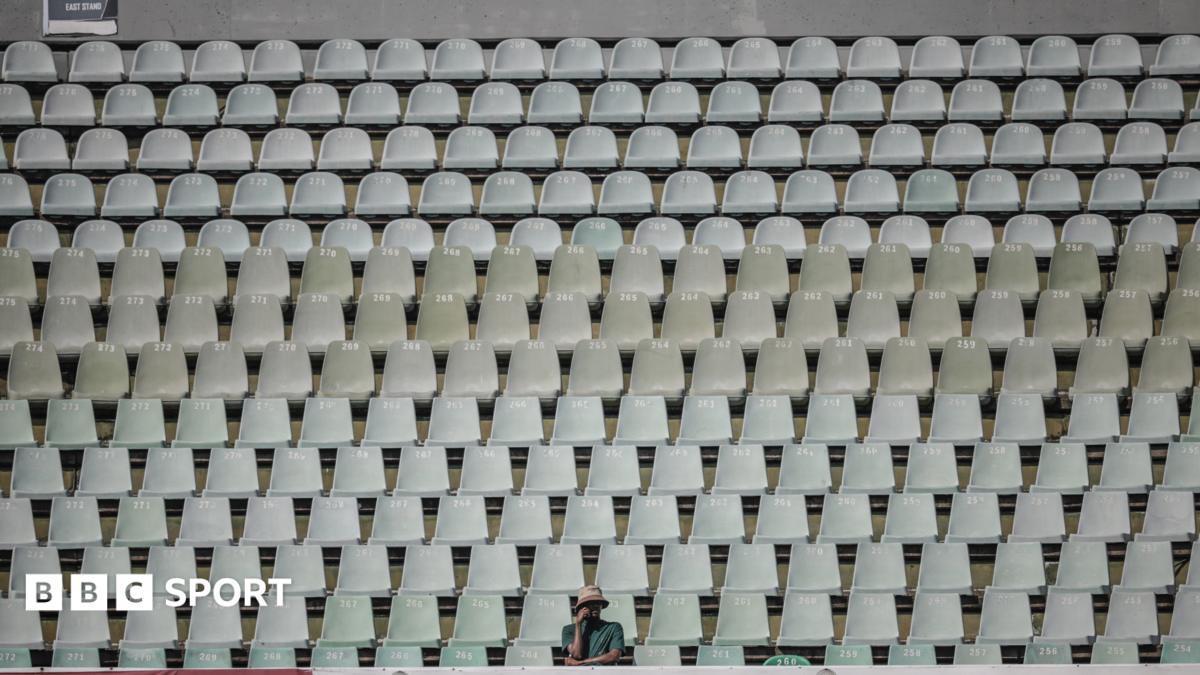
Top-tier Test cricket, billed as one of the most highly anticipated matchups of the southern hemisphere cricket calendar, has hit a major stumbling block in South Africa after alarmingly low turnout for the opening Test of a three-match series against Australia in Durban.
Even with two of the world’s top-ranked sides – reigning World Test champions South Africa and the world’s number one Test team Australia – taking the field across five days of play, total attendance across the entire match barely crept under 20,000. For context, a concurrent South African Premier Division Cup final between Orlando Pirates and Mamelodi Sundowns held across the same city pulled in more than 50,000 spectators, highlighting the stark gap in public draw between the two biggest sports in the country.
Heinrich Strydom, chief executive of the KwaZulu-Natal Cricket Union, the governing body that hosts matches at the Durban ground, has publicly acknowledged the scale of the disappointment and announced a full internal review to identify the root causes of the low turnout. “A Test match of this quality deserved greater support in the stands. This is something we will reflect on through a thorough internal review,” Strydom said in a statement following the match. “We need to listen to our supporters, reconnect with our communities and continue to find ways to make Test cricket more accessible, engaging and appealing. Test cricket is part of our sporting heritage and its future depends on all of us.”
Strydom added that while organizers recognize cricket fans face increasing competing demands for both their limited leisure time and discretionary income, the governing body needs a clearer understanding of what drives fans’ decisions to skip live matches – and what changes can be made to position Test cricket as a must-attend live experience. Declining attendance at Test matches is not an issue unique to South Africa; global audiences for the five-day format have shrunk steadily over the past two decades, with particularly steep drops in South Africa and the West Indies. The question of long-term financial sustainability for traditional Test cricket has become an increasingly urgent topic of discussion among global cricket governing bodies in recent years.
On the field, Australia claimed a convincing 214-run victory in the first Test, putting them in a position to seal the series with a win in the second Test, which kicks off Sunday in Gqeberha. The Australian tour marks the first time the side has returned to South Africa since the 2018 sandpaper ball-tampering scandal that disrupted cricketing relations between the two nations.
Following their disappointing opening defeat, South Africa’s coaching staff have made significant changes to their squad for the second Test, adding hard-hitting batsman Matthew Breetzke at the expense of out-of-form Tristan Stubbs, who notched scores of 32 and 1 in Durban. Wicketkeeper Kyle Verreynne retains his spot in the squad but will step back from wicketkeeping duties, with Ryan Rickelton set to take over gloves. Breetzke and uncapped batsman Marques Ackerman are expected to slot into the top order in place of Stubbs and Verreynne.
Breetzke, 27, earned the nickname “Aussie agitator” earlier in the tour after he drew the ire of Australian players when he took a single after a throw rebounded off his body during a one-day international, where he scored a century. South Africa head coach Shukri Konrad admitted Breetzke’s competitive temperament was a key factor in his call-up. “The attitude and character that Matt brings and has, I think that will go a long way,” Conrad said. While Breetzke has only notched 14 runs across three innings in two previous Test appearances and has not played a first-class match since February, he has posted an exceptional average of nearly 59 across 17 ODI matches to start his international limited-overs career.
South Africa face a must-win (or at minimum must-draw) match in Gqeberha to avoid having the series decided with one match still left to play. The 214-run loss was the first defeat for the Proteas in captain Temba Bavuma’s 13 matches leading the side. Pace bowler Kagiso Rabada, who missed the first Test while recovering from a hamstring injury, is widely expected to rejoin the starting line-up for the second Test.
For Australia, coaching staff are facing selection questions of their own as key players return from injury. Cameron Green (abdominal injury) and Josh Inglis (broken finger) were forced to miss the first Test, opening up a spot for Nic Maddinson – who played his first Test in 10 years, after 19 months out of first-class cricket while receiving treatment for testicular cancer. Maddinson’s inclusion forced Matthew Renshaw to move down to the number five batting spot, where he delivered a career-best performance, scoring 190 in the first innings and 82 in the second, while also picking up two wickets with his off-spin.
Australia head coach Andrew McDonald confirmed Green is progressing well in his recovery, while Inglis has resumed batting practice. If one or both players are cleared fit for selection, Maddinson is likely to be dropped from the starting eleven, with Renshaw moving back up to open the batting.