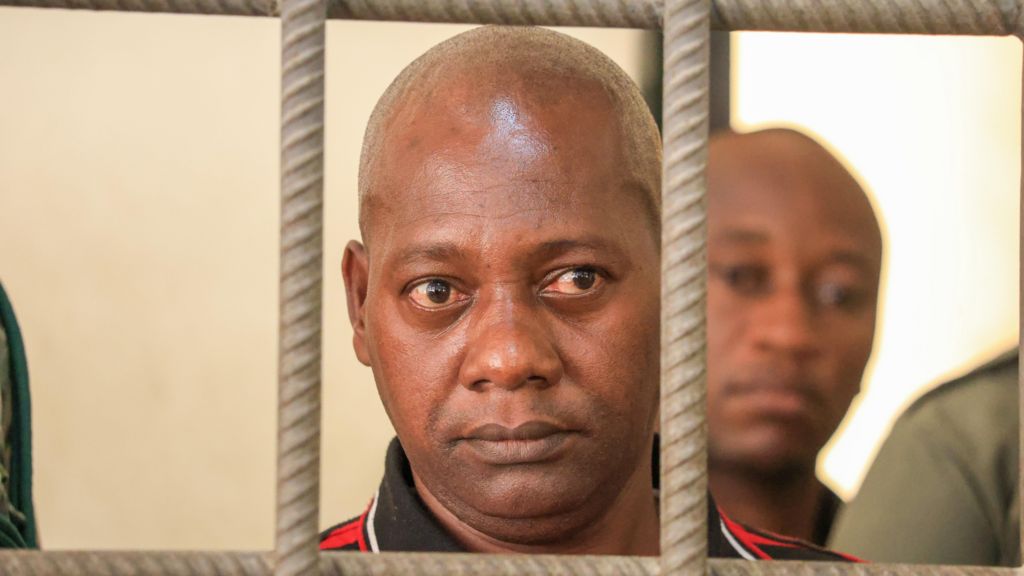
After years of investigation and legal proceedings, a Kenyan court is on the cusp of delivering a landmark verdict in one of the most disturbing cult-related mass murder cases in the country’s modern history. At the center of the case is Paul Mackenzie, a self-proclaimed doomsday preacher who led the now-infamous Good News International Ministries, and 29 of his closest followers, who stand accused of murdering 191 children.
Prosecutors allege that Mackenzie’s extreme doomsday ideology pushed his followers to force young children to starve to death, claiming the deaths would allow them to “meet Jesus”. His radical doctrine rejected all secular institutions: education was labeled forbidden, modern healthcare was branded evil, and digital identity cards were dismissed as the “mark of the devil”. Mackenzie and all 29 co-accused have repeatedly pleaded not guilty to the murder charges, maintaining that no one was coerced into dying as part of the cult’s practices. One key development that strengthened the prosecution’s case came when Enos Amanya Ngala, Mackenzie’s former head of security, accepted a plea deal after initially being charged, agreeing to testify against the cult leader and his associates.
While Mackenzie and other senior cult figures face a wide range of additional charges, including terrorism, radicalization, and violating children’s right to education, this upcoming verdict marks the first time the pastor will face a formal ruling on the most severe charge of mass murder.
The full scale of the tragedy began to unfold in 2023, when local herders stumbled upon the first human remains in Shakahola Forest, a remote, sprawling expanse of land near Kenya’s Indian Ocean coast where Mackenzie relocated his following in 2019. To date, authorities have recovered more than 400 bodies from shallow, hastily dug graves scattered across the woodland. Seventeen local men were hired to excavate the site, a gruesome task that paid as little as $8 (roughly £6) per day. One gravedigger, James, shared haunting details of his work with the BBC: “Every grave we found had at least three bodies. Some of the remains were of children as young as a few weeks old. We once found 12 bodies of children in a line inside a grave. It was massive, the bodies were arranged like clothes. One on top of another.” Multiple gravediggers reported that many child victims were found with their hands and legs bound, their bodies wrapped in discarded bedsheets before burial.
Salim Karisa, another gravedigger who grew up near the forest, recalled that local residents had regular, casual interactions with cult members before the tragedy was exposed. “We would sometimes carry people on our motorbikes into the forest,” he said. “But it was so planned and secretive that nobody could tell what was happening inside.”
For many local families, the harm caused by Mackenzie’s cult has been irreversible. Stephen Mwiti, a 48-year-old father from the region, lost all six of his children to the cult’s ideology. Mwiti recounted confronting Mackenzie at his forest compound, where he saw “many bald women and tens of children” surrounding the preacher. Mackenzie mandated that women shave their heads or leave their hair unkempt, banning cosmetics and styled hairstyles as against his doctrine. Mwiti’s ex-wife is now among those standing trial alongside the cult leader. “If I met Pastor Mackenzie today, one of us will have to die,” Mwiti told the BBC, his voice breaking as he held a faded photo of his family. “All six of my children died in Shakahola forest. I only found and buried the remains of my son Samuel.” Pointing to a dusty old television and cable box in his Malindi home, 43 miles from the forest, Mwiti added: “This little thing here was the start of all my misery.”
Mackenzie first founded Good News International Ministries back in 2003. Over 16 years of operation, the movement grew exponentially, attracting thousands of followers across Kenya through branch churches and a dedicated television station, Times TV, which broadcast his apocalyptic sermons from his Malindi studio. His own son, Dan Paul Mackenzie, who worked as a cameraman for the church, described the routine: “The children would sit at the back, adults in the middle, and everyone would sing worship songs all morning. The pastor would start his fiery sermons at noon, some of which included casting out demons.”
In 2019, Mackenzie closed his main Malindi church and urged all his followers to join him in the remote Shakahola Forest, where he planned to prepare for the end of the world. Peter Shukrani, who first joined Mackenzie’s congregation at age 8, relocated to the forest with his mother when he was 23. He still describes Mackenzie as his “spiritual father” and says he will never speak ill of him. Shukrani fell ill shortly after arriving in the forest, but his mother discarded all his prescribed medication, convinced by Mackenzie’s teaching that modern medicine was evil and only faith could heal sickness. “We lived a quiet normal life, fasting for a few days then having a small meal,” Shukrani recalled. He was eventually rescued from the forest in March 2023, after weeks of being bedridden and too frail to recover without treatment. “I would have died if I wasn’t rescued from Shakahola forest,” he said. Even after his experience, he remains loyal to Mackenzie: “Mackenzie didn’t force anyone to fast. People made those choices by themselves because of their beliefs. I still love him and he is still my pastor.”
In stark contrast, Dan Mackenzie has called for his father to be convicted of the murder charges. “He was the leader, he was someone who they were looking up to. So he is a murderer of mass killing,” he stated.
Of the 191 children named as victims in the current murder case, many remain unidentifiable. The bodies were buried in shallow graves in the warm, humid forest climate, leaving remains in an advanced state of decomposition. In court documents, dozens of victims are simply labeled “unknown male child”, identified only by the location of their grave and the date their remains were discovered.