France is grappling with its worst wave of public disorder in modern history, after a peaceful mass protest over soaring living costs and collapsing public service quality devolved into widespread looting, arson and violent clashes over the weekend. What began as a coordinated demonstration drawing more than 500,000 participants, who marched to highlight grievances including underfunded public education, quickly spiraled into chaos when factions of black-clad, masked radical activists and vandals joined the demonstration. By the end of Saturday, an estimated 1,500 shops and businesses across the country had been looted or destroyed, iconic public monuments including central Paris’ Statue de la Republique were defaced, and multiple public buildings including a historic town hall were set ablaze.
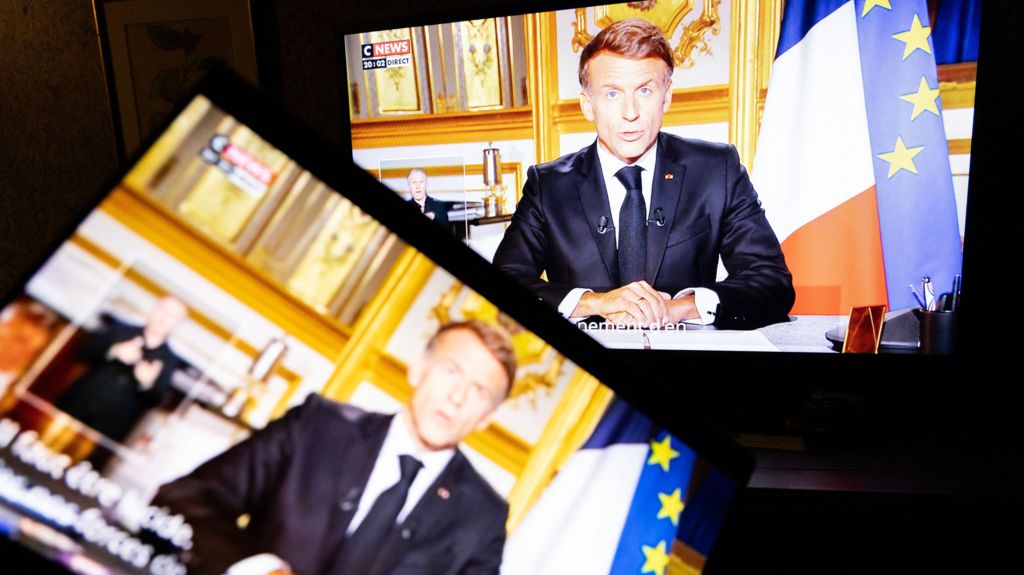
Riot police responded to the unrest with tear gas, water cannons and baton charges, leaving roughly 1,000 officers injured across the country, seven with serious wounds, according to France’s interior ministry. In the days leading up to President Emmanuel Macron’s Sunday national address, widespread speculation circulated that the executive would implement temporary regional curfews or even declare a state of emergency to defuse the volatile situation. Instead, Macron used his televised speech to call for national unity, promising that all perpetrators of the violence would face full legal accountability.
The address has drawn fierce backlash from both political opponents and social media users, who uniformly criticize it for lacking concrete policy answers to the core grievances that sparked the protest, and failing to outline clear plans for key outstanding questions: how rioters will be brought to justice, how urban centers will be protected ahead of already announced new mass protests in two weeks, how affected small businesses will receive compensation for damages, and when negotiations will open with education sector representatives over long-simmering demands.
Sophie Binet, Secretary General of the influential CGT union, echoed widespread criticism on Sunday, saying Macron had completely failed to address student concerns, the ongoing cost-of-living crisis and the steady decline of France’s public services. Many French citizens and political observers have also slammed the government, led by newly installed Prime Minister Sébastien Lecornu, for being severely underprepared for the scheduled protests, with insufficient police deployments to stop large-scale vandalism and looting. Yaël Braun-Pivet, president of France’s National Assembly, the lower house of parliament, has formally called for a public inquiry to investigate exactly what unfolded over the weekend and what systemic failures allowed the unrest to escalate to such a scale.
The chaos comes at a uniquely fragile moment for French politics, with a presidential election just six months away and Macron widely viewed as a lame-duck incumbent whose term is winding down. The already tense pre-election atmosphere has been amplified by two leading opposition candidates—far-right nationalist Marine Le Pen and far-left anti-capitalist Jean-Luc Melenchon—who have both seized on the unrest to attack the Macron administration, further polarizing the country. France’s parliament is already paralyzed by deep divisions between three competing political blocs, leaving little room for coordinated legislative action to address growing public anger.
Compounding political instability is France’s mounting financial pressure: international investors are pushing the government to rein in spiraling public debt, but any cuts to public services or welfare programs are almost certain to spark even larger street protests. Walking through central Paris the night after the unrest, one striking piece of graffiti summed up the national mood: “Things are dark in the city of light.” Polls and on-the-ground interviews show many French citizens are deeply shaken by the weekend’s violence, with images of burning buildings, unimpeded looting and tear gas-filled city squares spreading widespread anxiety. Many ordinary residents express frustration that political leaders are more focused on blaming each other than solving the underlying crises, framing the unrest as a political football ahead of the presidential vote.
Following the violence, Macron has delegated day-to-day crisis management to Lecornu, who convened an emergency cabinet meeting on Monday to assess the damage and plan a response. For the next two weeks, authorities are hoping for a temporary reprieve, as French students enter their half-term break that will likely reduce protest activity. But labor unions, the remnants of the 2018 yellow jacket movement that disrupted Macron’s first term, and other activist groups have already scheduled a new wave of mass protests for November 5. As France waits for the next round of demonstrations, the entire country is holding its breath, uncertain what comes next for a nation facing growing political, economic and social pressure.