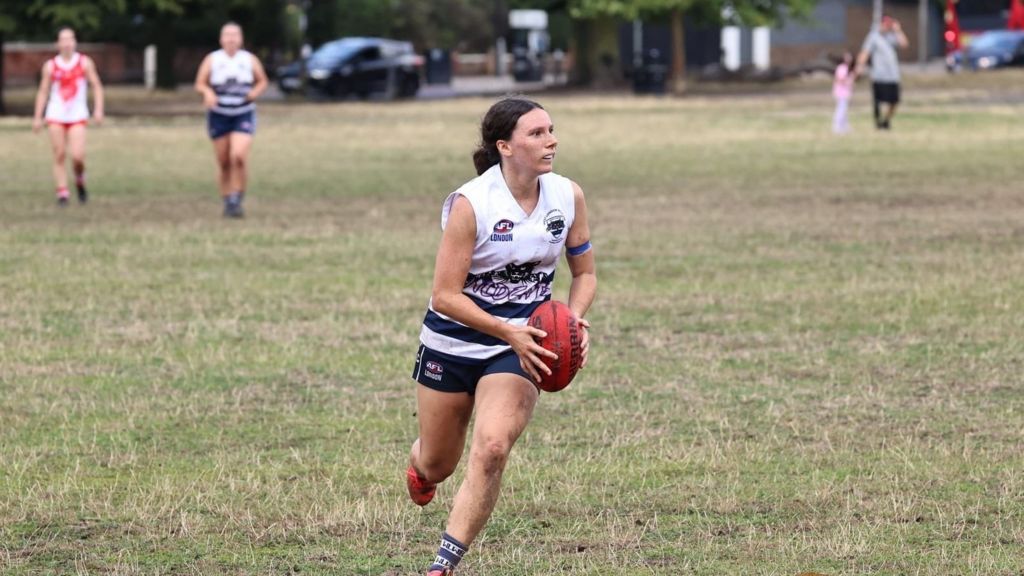
Against the backdrop of London’s diverse amateur sports scene, a uniquely Australian pastime is quietly experiencing a dramatic surge in popularity, particularly among women who have embraced the sport far from its 150-year-old birthplace.
At the center of this movement is 29-year-old Iona Williams, a London local born in Greenwich who has only stepped foot in Australia a handful of times. Five years ago, a casual suggestion from a friend pushed Williams to try Australian Rules Football – a game she had never seen, let alone played, and whose rules she knew nothing about. Today, she is a core member of the West London Wildcats women’s side, pointing to the tight-knit team culture as one of the sport’s biggest draws.
“The team were really welcoming,” Williams told the BBC. “Everyone’s really together and always so keen to help each other and kind of make each other better at the sport.”
Often shortened to Aussie Rules, AFL or footy, the game is a one-of-a-kind hybrid that blends elements of Gaelic football, soccer, and rugby into a fast-paced, physically demanding contest played on an oval field. Unlike most mainstream sports, it allows players to use both hands and feet to advance the ball, which can be punched, carried, or kicked across the pitch to score points via goals or behinds. While footy has a reputation for its ferocious physicality – a 2022 viral description from an American dubbed it “a marathon during a fistfight” – Williams says new players need not be intimidated.
“Don’t be scared to get involved. There’s so many girls that start that have never played before – me included,” she said.
Williams’ story is far from unique: she is a representative example of the growing global appetite for women’s footy, even outside Australia. Women’s AFL only turned professional in its home country in 2017, but the international Australian Football League estimates that roughly 75,000 women and girls now play the sport across the world. London, which hosts its own standalone AFL London league split across two competitive divisions, has emerged as one of the sport’s most vibrant international hubs.
The West London Wildcats launched their first ever women’s team in 2017, and now count a mix of native Britons and Australian expats among their ranks. For Australians living in London like 27-year-old Jamie Symons, who moved to the city from Tasmania two years ago and played footy in her home country for years, the clubs offer a comforting connection to home while opening doors to new cross-cultural connections.
“You know you’re going to meet Aussies and walk into a new brand new bunch of friends,” Symons explained. To ensure the sport remains accessible to local players, AFL London enforces rules mandating that four non-Australian players take the field at any time in the top-tier Women’s Premiership, preventing Australian expats from dominating rosters. That intentional inclusion has led to rich social bonds that extend far beyond the oval: from pub crawls and club barbecues to annual ladies’ days celebrating the club’s female members, players get constant opportunities to connect across backgrounds, even picking up local slang along the way. “Whenever I ask for a sausage sandwich, it’s now called a snag,” Williams jokes, referencing a common Australian colloquialism she’s picked up from her teammates.
For some players based in London, the local league has even acted as a stepping stone to professional careers in Australia. North Melbourne player Kate Shierlaw first took up footy while living in London, playing for the Wimbledon Hawks before earning a professional contract back in the sport’s home country. She says she feels privileged to see the sport’s growth in the UK firsthand.
“It’s super special. I think because I started there, being able to see so many people playing over there, playing the best sport in the world, it’s really exciting,” Shierlaw said.
Women’s footy was a late addition to the AFL London lineup: the men’s league was founded in 1989 and played its first season in 1990, with women waiting 26 years for an official women’s competition to launch. The inaugural 2015 women’s season featured just four founding teams, but by 2026 that number has grown to 10 teams competing across two divisions, marking dramatic expansion in just over a decade.
Global data reflects this rapid upward trajectory: between 2023 and 2025, female participation in Australian Football programs and competitions outside Australia grew by approximately 35%, according to Kaitlyn Blanchard, media manager for AFLW. Strong participation growth is not limited to the UK, Blanchard noted, with major gains also recorded in Papua New Guinea, South Africa, and Fiji.
Shierlaw says she hopes this upward trend continues, as the sport gains new fans and players across the globe. “We should be sharing the sport all over the world so it’s so good to see so many girls playing,” she said.