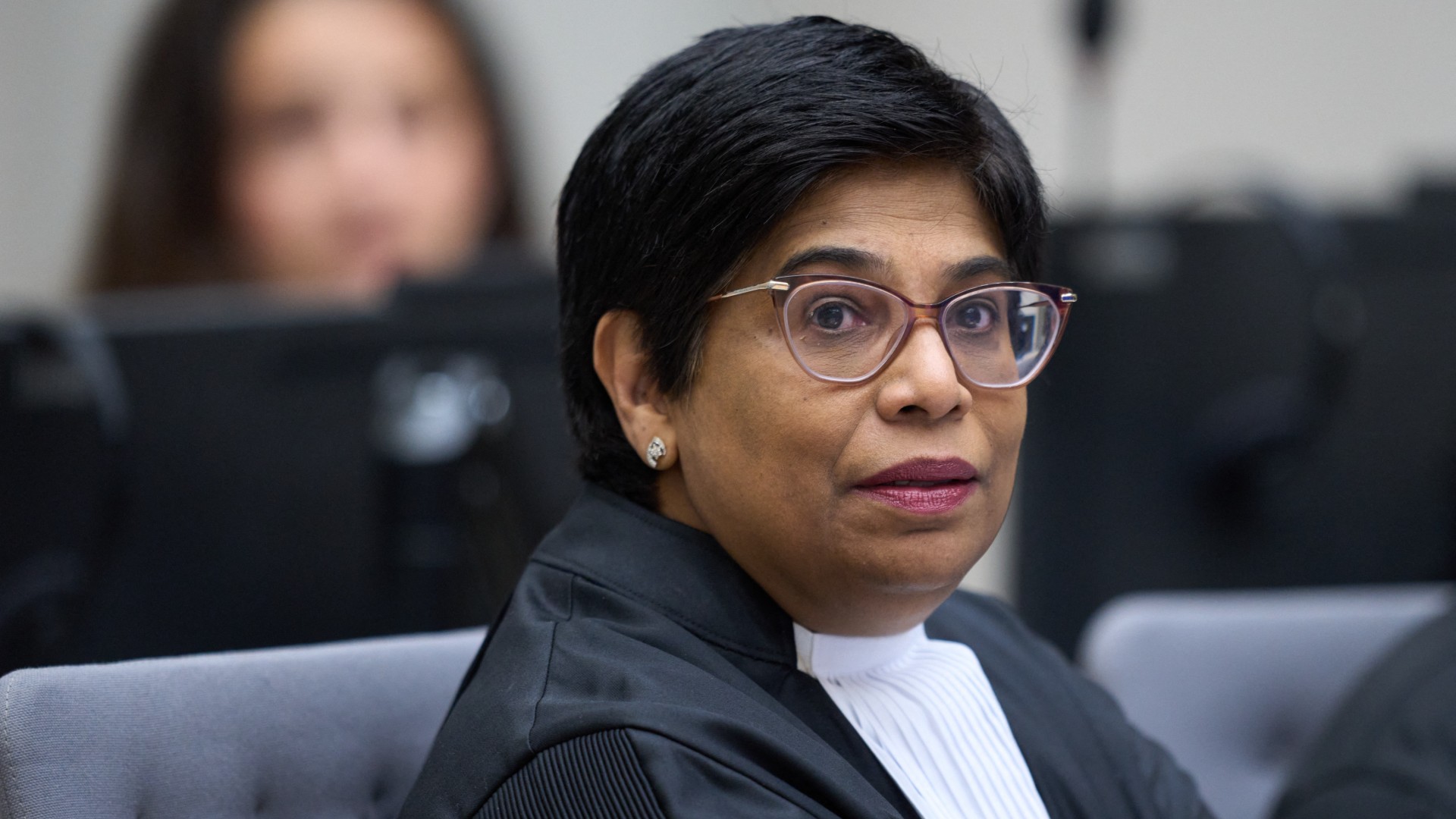
The International Criminal Court (ICC) has not retreated from its legal actions against senior Israeli officials, even as the United States ramps up punitive pressure and broad sanctions against the court’s leadership and institutional operations, ICC Deputy Prosecutor Nazhat Shameem Khan has confirmed in an exclusive interview with CNN.
In the weekend interview, Khan made clear the court’s investigation into alleged atrocities in Gaza remains on track, with no moves initiated to withdraw any existing arrest warrants or pending applications. “The case is still proceeding,” she stated. “We have taken no steps to try and withdraw any of those arrest warrant applications or the arrest warrants themselves, and the team continues to investigate in that situation.”
The legal process began in November 2024, when ICC judges issued arrest warrants for Israeli Prime Minister Benjamin Netanyahu and his former defense minister Yoav Gallant. The warrants stem from allegations of war crimes and crimes against humanity committed during the military campaign in Gaza that launched in October 2023. Israel, which is not a member state of the ICC, has launched two appeals against the rulings, one of which challenges the court’s fundamental jurisdiction over Israeli citizens. Both appeals are currently pending.
Beyond the high-profile warrants for Netanyahu and Gallant, reporting from independent outlet Middle East Eye (MEE) reveals the ICC prosecutor’s office has advanced additional investigations into other senior Israeli leaders over the past two years. In May 2025, MEE disclosed that prosecutors had submitted a confidential application for an arrest warrant targeting Israeli Finance Minister Bezalel Smotrich, over alleged offenses against Palestinians in the occupied West Bank. The charges against Smotrich include forced displacement classified as both a war crime and crime against humanity, the transfer of Israeli civilian populations into occupied territory (a recognized war crime), and persecution and apartheid as crimes against humanity. An evidence review has also been completed to evaluate two additional arrest warrant applications, one of which names Israeli National Security Minister Itamar Ben Gvir.
Khan’s defiant comments come in the context of an aggressive, escalating campaign against the Hague-based permanent court from the second Trump administration. In July 2025, US Secretary of State Marco Rubio publicly declared that Washington would deploy every available policy tool to “dismantle the ICC – brick by brick, if necessary”, and called on all ICC member states to cut their financial and political support for the institution. In subsequent public remarks, Rubio launched verbal attacks on the court, labeling it a “stupid organisation” run by “lunatics and crazies”, and warned of severe consequences if the ICC attempts to exercise jurisdiction over American citizens.
In August 2025, the US imposed asset freezes and transaction bans on Khan, fellow Deputy Prosecutor Mame Mandiaye Niang, and two sitting ICC judges, expanding sanctions that were already levied against former chief prosecutor Karim Khan, nine judges including the ICC president, and most other senior court leaders. The sanctions block any assets held by targeted individuals in US jurisdictions, and bar all American individuals and companies from providing funds, goods, or services to the sanctioned officials.
Khan detailed the tangible personal and professional harms the sanctions have imposed. Sanctioned ICC leaders lose access to international banking services, have their credit cards revoked, and can only process financial transactions within the Single Euro Payments Area in Europe, she explained. She added that third-party service providers, including global health insurance firms, have cut ties with sanctioned personnel, and family members of targeted officials may be barred from entering the United States. Khan also noted she has never received an official explanation for her designation, but said she has no doubt the sanctions are retaliation for her role as a senior leader in the ICC prosecutor’s office.
Against this pressure, Khan reaffirmed the court’s unwavering commitment to its mandate rooted in the Rome Statute, the founding treaty that was negotiated over decades and adopted by the sovereign decision of the court’s member states. “The work of the court continues unabated,” she emphasized. “We have trials in court. We have a trial scheduled for November of this year and one for next year. We have, in the course of the last year, seen convictions in two major trials, and we continue to conduct our investigations and our prosecutions, and appear in court on a regular basis, regardless of these events.”
Established in 2002, the ICC is the world’s only permanent international court with authority to prosecute senior officials for four core international crimes: genocide, war crimes, crimes against humanity, and the crime of aggression. Beyond its investigation into alleged crimes in Palestinian territory, the court currently oversees more than a dozen active investigations across global conflict zones, including Ukraine, Darfur, Libya, and Afghanistan.
Khan acknowledged that the court and its staff operate under unprecedented levels of external pressure. “The nature of the work that we do means that we inevitably will face pressure of all sorts to try and toe a political line, for instance, or to take a different position on the charging of accused persons, or to follow a path in investigation and prosecution,” she said. “So, indeed, we do feel pressure, but, as I’ve said, the dedication of our staff is extraordinary, and they continue to do their work.”
Reports from international policy circles indicate the Trump administration is now drafting even broader institutional sanctions that would target the ICC as an organization, rather than just individual leaders. The proposed measures could cut the court off from all US dollar transactions, and restrict its access to global banking, insurance, and core technology services.
Despite the mounting threats to the court’s operations, Khan said she retains hope for the future of international accountability. “The work that we do for victims, the fact that we continue to hear their voices stridently, with so much sincerity – they believe in this court,” she said. “For them, this provides an avenue of justice that may not necessarily be provided in many courts around the world. Every single member of this court works for humanity, and there can be nothing better than that.”