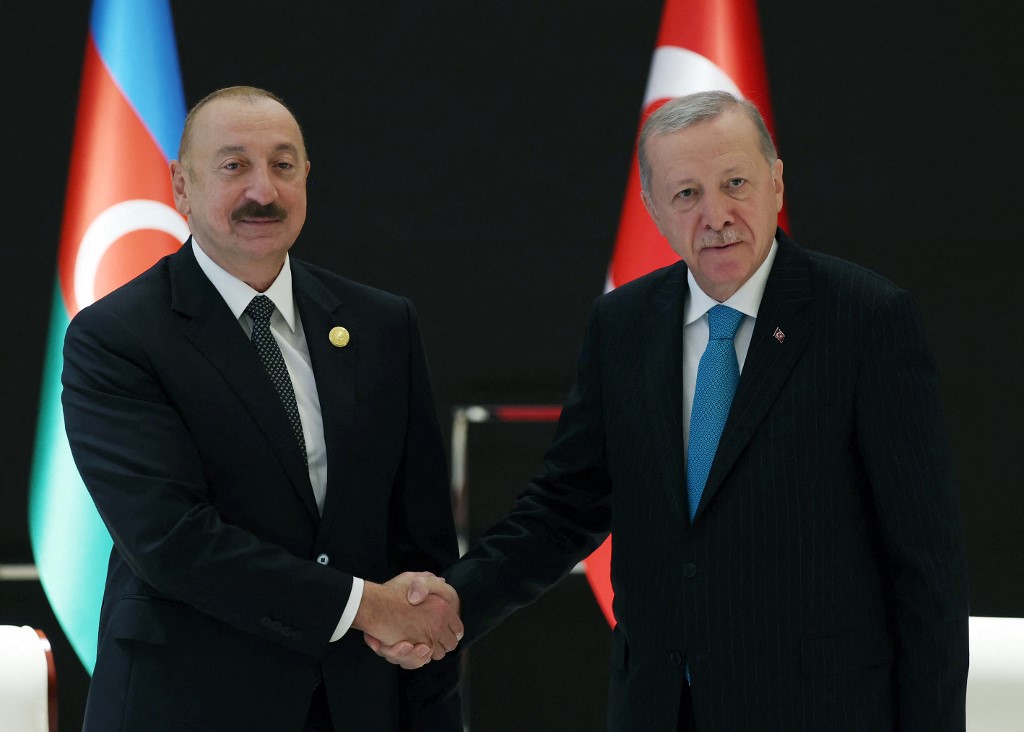
A brewing diplomatic rift between two longstanding regional allies, Turkey and Azerbaijan, has been downplayed by senior Turkish officials, who confirm Ankara has no plans to publicly push back against veiled criticism from Azerbaijani President Ilham Aliyev sparked by recent protests over new school dress restrictions in Baku. Multiple anonymous Turkish officials shared the details with Middle East Eye, outlining a deliberate strategy of de-escalation to preserve close bilateral ties.
The controversy traces back to a September policy change by the Azerbaijani government, which introduced new clothing restrictions for public schools framed as a defense of the country’s secular principle. While the rule did not explicitly name headscarves as a banned item, multiple regional reports confirm that several schools began barring female students wearing traditional Islamic head coverings from entering classrooms starting in early October. Footage shared on Turkish social media showed students turned away from school gates in both the Sumgayit and Jalilabad regions, sparking widespread outcry across the border in Turkey.
The restrictions quickly drew comparisons in pro-government Turkish media to Turkey’s own decades-long headscarf ban, implemented during the 1997 28 February post-modern coup when Turkish military and bureaucratic institutions ousted a democratically elected Islamist-led government. Turkish social media criticism of Azerbaijan extended beyond the dress code issue, too: many users condemned Baku’s decision to keep its UN General Assembly delegate in the chamber during Israeli Prime Minister Benjamin Netanyahu’s recent address, while Turkey and dozens of other nations walked out in solidarity with Palestinian victims in Gaza.
On 2 October, during a keynote address to his ruling New Azerbaijan Party’s convention in Baku, Aliyev launched a thinly veiled rebuke of unnamed foreign actors for what he called improper interference in Azerbaijan’s domestic affairs. “Everyone should know their place; they should not interfere in our affairs, stick their noses into our way of life, or tell us what to do. Everyone should mind their own nation and state,” he stated. Aliyev went on to emphasize that Azerbaijan had never required external patronage, noting that Baku independently covered all costs of resettling one million Nagorno-Karabakh refugees after retaking the region in the 2020 conflict – even saying the country paid full global market price for every piece of military equipment it acquired, sometimes at markup, without accepting outside assistance.
Though Aliyev did not name Turkey directly, political observers in Ankara almost universally interpreted the remarks as a direct response to Turkish criticism of the headscarf restrictions. Some Azerbaijan-based political sources have suggested Aliyev’s comments were triggered by a speech Turkish President Recep Tayyip Erdogan delivered at the UN General Assembly on 23 September, where Erdogan condemned headscarf bans in schools across “certain countries” as an attack on fundamental women’s rights.
However, senior Turkish officials push back on that interpretation, noting that Erdogan’s remarks came a full week before the first reported incidents of headscarf restrictions in Azerbaijani schools. The officials confirmed Erdogan’s comments were directed at European nations, specifically France, where right-wing parties have pushed for sweeping public sector headscarf bans, and Austria, which implemented a ban on headscarves for girls under 14 in all public and private schools starting 1 September 2026, with fines reaching €800 for repeated parental violations.
Senior Turkish officials stress that Ankara has never intended to interfere in Azerbaijan’s domestic policy, and has already communicated this reassurance directly to Baku at the highest diplomatic levels. “We believe this is a misunderstanding,” a senior unnamed Turkish official told MEE. Multiple sources confirmed that Turkey will not issue a formal public response to Aliyev’s criticism, instead focusing on quiet diplomacy to reduce tensions.
The senior official described Azerbaijan as a “kin country” for Turkey, highlighting the deep interconnectedness of the two nations across strategic energy infrastructure, cross-border transport networks, and decades of joint military cooperation. Turkey was Baku’s most critical military backer during the 2020 second Nagorno-Karabakh war, providing combat drones, small arms, ammunition, deploying F-16 fighter jets and special operations forces to support Azerbaijan’s successful campaign to retake the region. The official characterized the current disagreement as minor, noting that previous disputes between the two allies have always been resolved through continued engagement.
Omer Celik, spokesperson for Turkey’s ruling Justice and Development Party (AKP), echoed that sentiment in televised remarks this week, emphasizing that Erdogan and Aliyev share a “true brotherly relationship.” “There may be differences in their assessments regarding domestic and foreign policy,” Celik said. “When we have disagreements on these issues, we continue on our path by discussing them as two brotherly countries, sharing all of this openly and honestly.”
Celik also sought to distance the Turkish government from the anti-Azerbaijan protests that erupted in Turkey, noting that the demonstrations were organized independently by civil society groups and private social media users, not by the AKP or state institutions. “There is absolutely no connection between these actions and our party or government; those involved are acting on their own initiative,” he said. “We will not tolerate any attempts to create the impression of a rift between Turkey and Azerbaijan, nor will we allow a shadow to be cast that might harm our brotherhood. We view this situation with great displeasure.”