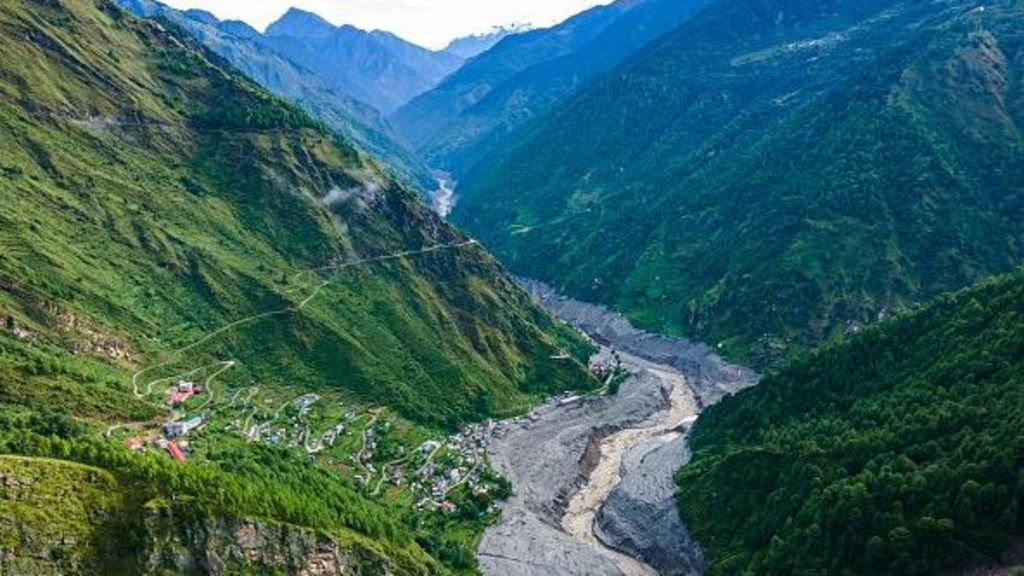
The catastrophic August debris floods that swept across Nepal served as a stark wake-up call for the Himalayan region, and one that Nepal’s Prime Minister Balendra Shah brought to the global stage during his recent address to the United Nations General Assembly. While Shah dedicated much of his speech to highlighting the escalating climate-driven catastrophe risks threatening the world’s highest mountain range, it was his groundbreaking call for collaboration between regional rivals India and China that captured international attention. To unify action across this environmentally fragile and geopolitically tense region, Shah has proposed the creation of a Himalayan Climate Resilience Mechanism, a framework designed to strengthen cross-border disaster response, and facilitate the open sharing of scientific data and specialized expertise. His vision: to turn the Himalayas into a global hub of climate cooperation, rather than a region divided by fragmented information and competing interests.
A senior anonymous official from Nepal’s Ministry of Foreign Affairs confirmed the proposal remains in its early conceptual stages, noting that the prime minister’s address has set a clear political direction for the government. Interagency working groups are currently developing a preliminary framework to build common ground among the three nations, though neither India nor China has yet issued a formal public response to the plan. The BBC has reached out to both countries’ foreign ministries for comment, with no official statement released to date.
The proposal comes at a moment of growing urgency, as the Himalayan region faces climate change impacts far outpacing the global average. Decades of scientific data confirm temperatures are rising faster here than most other parts of the world, triggering accelerated glacial retreat, permafrost thaw, and a sharp increase in the frequency and severity of catastrophic events including landslides, rockfalls, avalanches, and glacial lake outburst floods. Unlike many natural hazards, these disasters do not respect international borders: floodwaters and debris can travel hundreds of miles downstream, threatening lives, critical infrastructure, and livelihoods in multiple countries, making cross-border cooperation not just beneficial, but essential.
A March 2025 report from the International Centre for Integrated Mountain Development (ICIMOD) underscores this urgency, finding that the rate of ice loss across the Hindu Kush Himalaya (HKH) region has doubled since 2000, compared to the 1975-1999 period. Further data from Chinese glaciologist Kang Shichang, director of the Chinese Academy of Sciences’ Institute of Mountain Hazards and Environment, shows that glaciers on the Qinghai-Tibet Plateau have shrunk by 24% in total area over the past 60 years. As glaciers retreat, they leave behind expanding glacial lakes, which raise the risk of sudden, catastrophic cross-border floods that can impact Nepal, India, and Bhutan. All three countries depend on major river systems that originate on the Tibetan Plateau, which is currently home to more than 14,000 glacial lakes covering over 1,100 square kilometers, per Chinese state media People’s Daily Online.
The threat extends far beyond flooding. A 2024 study published by the American Geophysical Union projects that increasing intensity of rainstorms across the region will drive a significant rise in landslide hazards across the Himalayas and Tibetan Plateau over the coming decades. While the largest absolute increases in hazard are expected in already vulnerable areas including Nepal and India’s Garhwal and Kumaon regions, the Tibetan Plateau will see the fastest relative growth in landslide risk.
Despite the clear shared risk, past efforts to foster collaboration between India and China on Himalayan climate issues have struggled to gain traction, hampered by the two nations’ long-running territorial disputes along their 3,500-kilometer de facto border, the Line of Actual Control (LAC). Competing territorial claims have already sparked a full-scale war, deadly border clashes, and repeated military standoffs, creating a persistent climate of mistrust.
While India and China have found common ground in multilateral UN climate negotiations, where both have pushed back against Western demands for steep emissions cuts, arguing that developing nations should not carry the same mitigation burden as historical industrialized emitters, they have never reached a dedicated bilateral agreement to address Himalayan climate impacts. A 2009 joint research initiative to study glacial melt in the region, launched by India’s Wadia Institute of Himalayan Geology and China’s Cold and Arid Regions Environmental and Engineering Research Institute, ultimately collapsed after just one initial meeting, according to Dr. DP Dobhal, a retired glaciologist who led the Wadia Institute’s glaciology program at the time.
More recently, long-standing agreements for China to share real-time flood-season hydrological data for the Brahmaputra and Sutlej rivers, both of which originate on the Tibetan Plateau, expired in 2025. India’s junior foreign minister Kirti Vardhan Singh told India’s parliament that China stopped sharing Brahmaputra data in June 2023, and has not provided Sutlej data since 2022. China has not issued a public explanation for the halt, though during a similar 2017 interruption amid a border standoff, Beijing cited technical issues at its Tibetan monitoring stations.
Some analysts see a small opening for progress in the recent thaw in bilateral relations between India and China, which has included high-level diplomatic meetings and moves to restart cross-border trade through Himalayan mountain passes. “These developments suggest there might be more room for the three countries to explore climate-related co-operation,” says William Yang, senior analyst for North East Asia at the International Crisis Group. Even so, Yang notes that Beijing is likely to remain cautious about entering any major new agreement with Nepal and India, as core border disputes remain unresolved.
One of the biggest structural barriers to cooperation is the dual nature of climate data: information critical to forecasting disasters can also carry strategic military value in a contested border region. “What climate scientists might see as essential research data might look like strategic intelligence to the national security establishment in an environment where two militaries face each other across a disputed frontier,” explains Walter Ladwig, an associate fellow in the Indo-Pacific Programme at the UK-based Royal United Services Institute (RUSI).
Decades of work by the Kathmandu-based ICIMOD, which has spent more than 30 years pushing for regional cooperation on transboundary disaster early warning systems, has already demonstrated how these geopolitical tensions slow progress. Arun Bhakta Shrestha, a former senior specialist at ICIMOD, notes that upstream countries are often reluctant to share sensitive data like full river flow measurements due to national security concerns. Instead, Shrestha argues, nations should prioritize sharing less sensitive data related to disaster risk to build trust.
Dr. Uday Kala, head of the Centre for Climate Change and Disaster Management at India’s IIT Mandi, recommends starting with small, practical collaborative steps: jointly mapping high-risk glacial lakes and cross-border hazard zones, agreeing to basic shared data-sharing protocols and monitoring standards, and establishing a system for immediate exchange of disaster warnings. “Climate change is moving the baseline itself; catching up with the previous disaster is no longer enough. We need to anticipate the next one,” he says.
For Nepal, which has already paid a devastating human cost for unaddressed Himalayan climate risk with hundreds killed in the August cross-border floods, the immediate challenge is convincing its two large, powerful neighbors to set aside decades of tension to confront a threat that puts all three nations at risk. Whether India and China will agree to even the most modest incremental steps toward collaboration remains an open question.