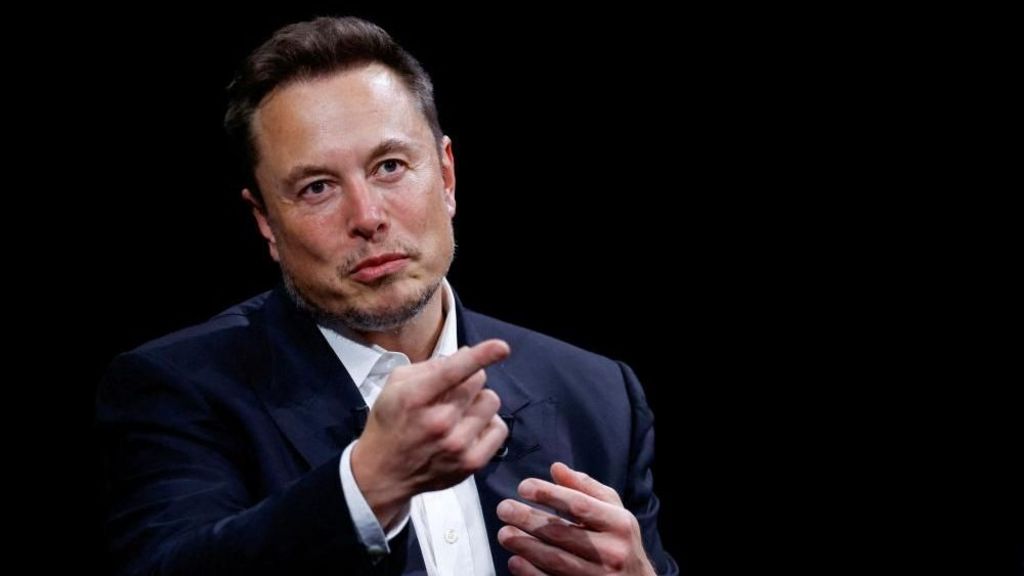
A sudden controversy over speed and connectivity restrictions on SpaceX’s Starlink satellite internet for Ukrainian military operations has sent new ripples through already strained relations between Kyiv and Washington, with Elon Musk publicly placing responsibility for the limitations directly in the hands of the U.S. government.
Starlink has emerged as one of the most critical communications tools for Ukraine’s military since Russia’s full-scale invasion, enabling forces to guide attack drones toward Russian positions, coordinate air defense operations to protect Ukrainian airspace, and maintain command connectivity across frontline positions. On Tuesday night, however, Ukrainian officials reported unexpected new speed caps of 100 mph (160 km/h) on the service that cut off connectivity for any Ukrainian weapons traveling faster than that threshold, directly disrupting active battlefield missions.
In a post on the social platform X, Serhiy Beskrestnov, an adviser to Ukrainian President Volodymyr Zelenskyy, argued the timing of the restrictions could not be coincidental, linking them to growing recent tensions between Kyiv and the U.S. administration. The restrictions came the same night Russia launched one of its largest mass drone and missile strikes against Ukraine in months, hitting critical civilian and military energy and communications infrastructure across the country, killing multiple civilians in Kyiv, and leaving more than 600,000 households without power.
As Ukrainian officials appealed for the restrictions to be lifted—including Zelenskyy, who told British media he hoped the issue was an unforeseen technical error and requested full connectivity be restored—Musk responded publicly to clarify the division between SpaceX’s two satellite services. While consumer-focused Starlink is a commercial civilian product, Musk noted that Starshield, the military-grade variant of the satellite network in use by Ukraine, is fully owned and controlled by the U.S. government. “Any limits on speed or usage are decided by the U.S. military and ultimately [the U.S. president],” Musk wrote in his post.
Musk further added that commercial Starlink, the company’s primary consumer offering, was intended only for “civilian or defensive activities and cannot be used for offensive military action, as doing so would be inappropriate for a commercial company.” By Wednesday evening, partial restoration of connectivity had been confirmed by Mykhailo Fedorov, Ukraine’s former defense minister, who published an appeal on X urging the complete removal of the speed cap, calling it “critical for Ukraine’s defense” while thanking Musk for his past support.
The controversy comes amid a period of escalating friction between Zelenskyy and U.S. President Donald Trump, who has openly voiced growing frustration with Ukraine’s ongoing strikes on Russian energy infrastructure. Zelenskyy has previously alleged that the U.S. threatened to cut off intelligence sharing if Kyiv refused to agree to a Trump-proposed energy ceasefire with Russia, a claim Trump has publicly denied.
During a one-day visit to London on Wednesday, where he was greeted by British Prime Minister Andy Burnham at 10 Downing Street and met with King Charles III, Zelenskyy acknowledged to journalist Piers Morgan that he felt betrayed by a recent U.S. deal to import 300,000 tonnes of diesel from Russia. “Really yes… but it’s a little bit more complicated than just my emotions or my feelings,” Zelenskyy said of the betrayal claim. Ahead of the Ukrainian president’s arrival, Downing Street announced it would accelerate deliveries of lightweight multirole missiles to Kyiv—weapons that have proven effective at shooting down Russian drones—with Burnham reaffirming British support: “We are behind you and that will not change.”
As of Wednesday, the U.S. government has not issued any public comment on Musk’s claims or the Starlink restrictions.