On September 21, Azerbaijan adjusted its national school uniform regulations, banning any clothing deemed inconsistent with official uniform standards and the country’s foundational secular education principles. While the revised text never explicitly names the Islamic hijab, on-the-ground enforcement has targeted headscarf-wearing female students, who have been systematically turned away from classroom instruction. Reports also indicate that female school staff wearing hijabs have been ordered to remove their religious attire, with termination threatened for non-compliance.
Footage of the blocked students quickly circulated online, sparking domestic protests across Azerbaijan as students rallied in solidarity with their affected peers. By October 12, Azerbaijani authorities confirmed that 37 people had been taken into custody in connection with the unrest linked to the new policy. Baku’s ruling establishment has stood firm behind the restrictions, framing them as a necessary measure to protect the country’s long-standing secular education framework and safeguard its distinct national cultural identity. Proponents of the policy argue that the hijab represents an external religious influence misaligned with Azerbaijan’s domestic cultural and secular traditions, opening urgent public debate over what forms of religious expression are permissible in public education for a self-identified secular state.
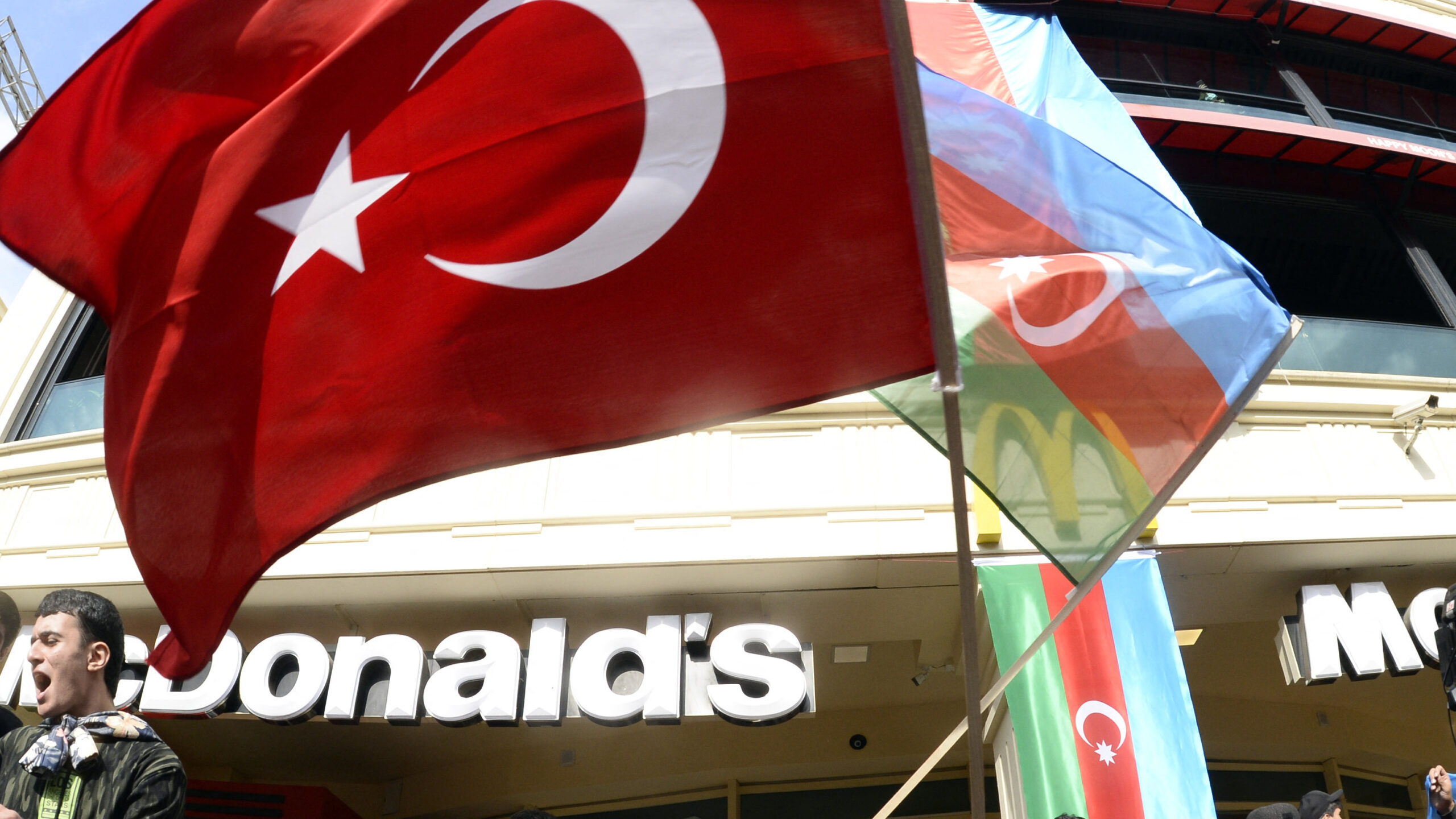
What might have remained a domestic controversy has quickly spilled across borders, igniting intense condemnation from neighboring Turkey, a close strategic partner that Baku and Ankara frequently describe as “one nation, two states.” The viral images of hijab-wearing girls barred from classrooms have stirred painful collective memories in Turkey, of its own decades-long national ban on headscarves in public institutions that followed the 1997 “postmodern coup”, a military intervention that reshaped the country’s domestic social policy.
Following the 1997 intervention, Turkish authorities enforced sweeping restrictions that barred hijab-wearing students from university campuses and forced women employed in public sector roles to choose between removing their headscarves or losing their jobs. Thousands of women were locked out of education and formal employment, forced to select between upholding their religious beliefs and advancing their academic and professional goals; many ultimately left the country to pursue study opportunities abroad. These restrictions were only gradually rolled back: barriers for hijab-wearing university students were lifted around 2010, and the ban for most female civil servants was not removed until 2013. Decades later, however, the policy remains a raw and defining part of Turkey’s modern political memory, shaping ongoing conversations about secularism, religious freedom, and systemic discrimination that still resonate across generations.
Turkish social media has erupted in response to Azerbaijan’s new policy, with thousands of users sharing their own personal stories of discrimination under the old Turkish ban, and expressing solidarity with affected Azerbaijani women. “What the Turkish public went through decades ago is now being forced on the Azerbaijani people,” one Turkish commentator noted in a widely shared Instagram video. Turkish journalist Hatice Orhan echoed that sentiment in her own viral post, writing, “Women wearing headscarves in Turkey were subjected to all kinds of cruelty; so many were barred from school, blocked from their professions, and forced to put their dreams on hold. What is happening in Baku right now brings all that pain back to the surface.” Turkish content creator Gulben Tankus questioned how such restrictions could exist in 2024, writing, “We in Turkey spent decades fighting this injustice. How can we accept this happening in a country we call our brother nation?”
Outcry has not been limited to social media: earlier this month, demonstrators gathered outside Azerbaijan’s consulate in Istanbul to demand an immediate end to the headscarf restrictions. Criticism has also come from senior Turkish political circles: presidential adviser Oktay Saral and multiple lawmakers from Turkey’s ruling Justice and Development Party have publicly condemned Azerbaijan’s policy. That criticism has in turn sparked a sharp diplomatic rebuke from Baku’s ruling New Azerbaijan Party, which issued a formal statement on October 13 accusing Turkish political figures of violating Azerbaijan’s sovereignty and interfering in its domestic affairs.
The statement noted that secularism is enshrined in both nations’ constitutions, and defended Azerbaijan’s education policy as rooted in commitments to equality, secularism, and the rule of law. Baku’s ruling party further accused Turkish officials of exploiting the sensitive religious issue for domestic political gain, and rejected the argument that the two countries’ close bilateral relationship gives Ankara any right to shape Azerbaijan’s domestic policy decisions. The controversy has laid bare underlying tensions between the two nominally close allies, turning a domestic education policy debate into a high-stakes dispute over sovereignty, religious freedom, and the legacy of secular governance across the region.