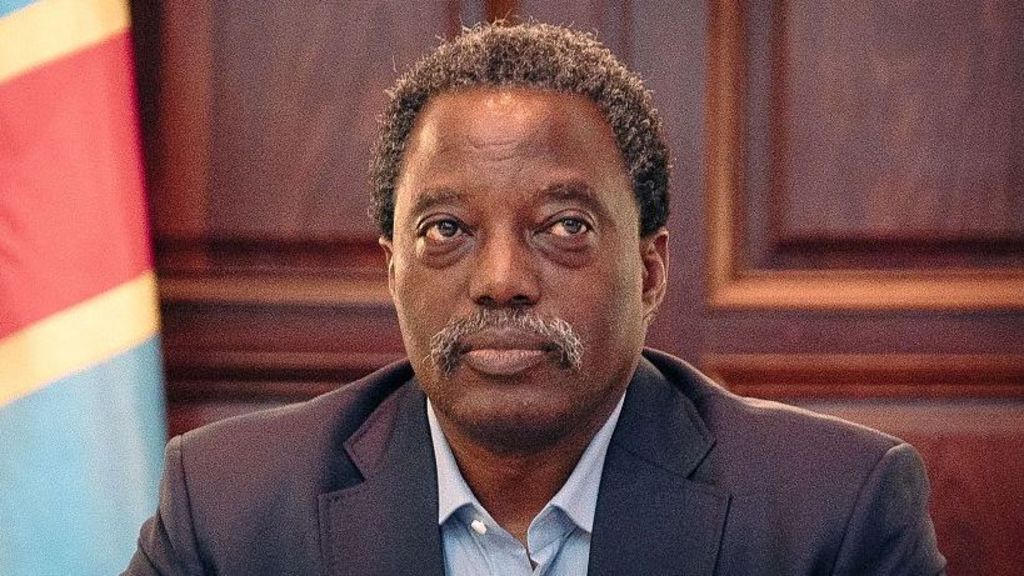
Decades of persistent instability in the Democratic Republic of Congo have taken a sharp new turn, with former head of state Joseph Kabila stepping into the public spotlight to lead a newly launched rebel coalition dedicated to ousting the sitting government of President Félix Tshisekedi.
Officially dubbed the Front for the Refoundation of the Nation (FRN), the alliance announced its formation on Monday at Kabila’s private residence in Goma, the strategic major city in eastern DR Congo that has been controlled by the M23 rebel movement since 2023. In its founding declaration, the FRN stated its core mission: unifying so-called resistance forces to dismantle what it labels “tyranny” across the country, and it made clear it will pursue this objective “by all means, including force.”
Monday’s announcement marks the most concrete confirmation to date of Kabila’s direct ties to an armed anti-government movement. The development comes one year after a DR Congolese court convicted the former president of treason in absentia and handed down a death sentence. Kabila had long rejected previous claims that he maintained connections to the M23 movement, which has seized large swathes of the mineral-rich eastern region over the past 18 months.
The coalition’s leadership structure links Kabila directly to the existing AFC-M23 alliance: M23 chief Sultani Makenga will serve as one of four deputy leaders of the FRN, with the other three deputy positions also filled by figures from the AFC-M23 bloc.
The coalition launch was not an unannounced surprise. Just days prior, Kabila delivered a public address teeing up the move, in which he pledged to outline a path for Congolese citizens to “rescue” their nation from the current administration. In a critical speech Friday, he accused Tshisekedi’s government of ignoring compromise proposals he put forward in 2023, including initiatives meant to de-escalate the ongoing conflict in eastern DR Congo. Beyond the stalled conflict resolution talks, Kabila levied a series of broad accusations against the incumbent government: he claimed it has eroded constitutional governance, mismanaged the struggling national economy, failed to curb widespread insecurity, and carried out arbitrary arrests of political opposition figures and military personnel. As of Monday, Tshisekedi’s administration has not issued any public response to these accusations, nor has it commented on the formation of the new FRN coalition.
Kabila, 55, led DR Congo for 18 years, taking office in 2001 following the assassination of his father, former president Laurent-Désiré Kabila, and stepping down in January 2019 after a disputed election that brought Tshisekedi to power. After years of keeping a low public profile following his exit from office, the former leader has ramped up public criticism of his successor’s administration in recent months.
The formation of the FRN comes as DR Congo grapples with overlapping political and security crises that have pushed the country into a period of deep uncertainty. For decades, the nation has been fractured by persistent violence, with more than 100 active militia groups operating in the eastern region, where fighting is fueled by ethnic rivalries, competition for political control, and battles over access to lucrative gold and coltan reserves.
Political tensions have also boiled over in recent months. Tshisekedi’s second constitutionally mandated term is set to conclude in 2028, but in May he suggested that scheduled elections may not be possible that year due to the ongoing conflict. He also opened the door to a potential third term, hinting he would run again “if the people want” it. Since that announcement, the national parliament, which is controlled by Tshisekedi’s ruling coalition, passed a bill that clears the way for a national referendum to remove the constitution’s two-term limit on presidential service. Last month, security forces clashed with demonstrators in the capital Kinshasa who gathered to protest the proposed constitutional changes, leaving multiple people injured and arrested.