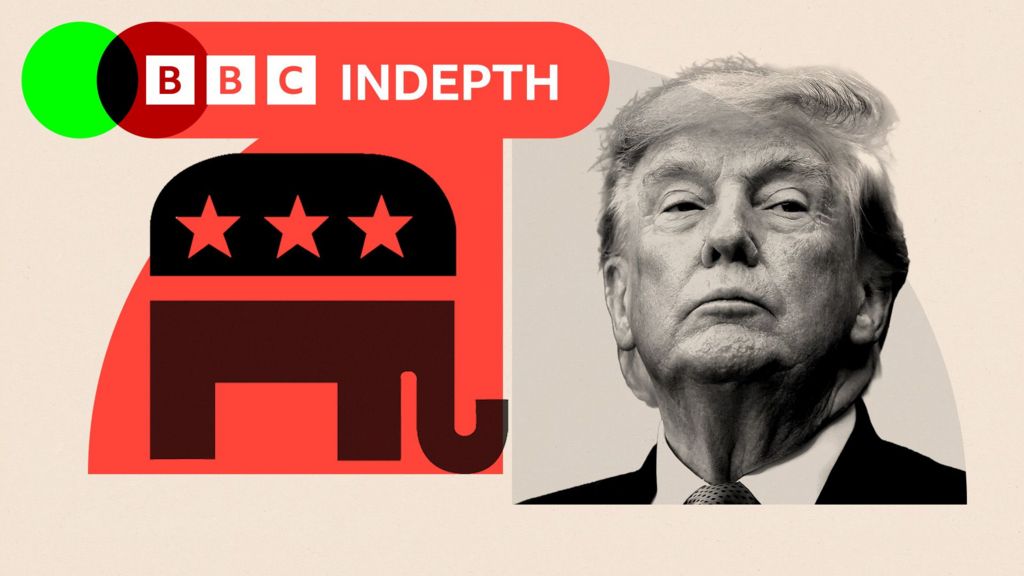
With the 3 November US midterm elections entering its final stretch, former and current President Donald Trump has hit the campaign trail, leaning hard into an uncompromising defense of his administration’s economic record. Framing his tenure as the most economically successful in American history, Trump has argued that mainstream media coverage has hidden this success from voters, dismissing widespread public anxiety over soaring living costs as a “hoax” manufactured by his political opponents.
While a handful of high-level metrics – including record-breaking stock market performance and multi-decade low poverty rates – align with Trump’s claims, the broader economic landscape tells a far less positive story. Official data shows persistent inflation holding at 3.4%, outstripping average wage growth for most American workers. Pump prices have jumped to an average of $4.37 per gallon, and beef prices sit at all-time nominal highs. This disconnect between Trump’s narrative and household financial reality has reshaped the 2026 midterm campaign, leaving Republican candidates across the country facing a high-stakes balancing act: embrace Trump’s upbeat economic framing and risk alienating cost-stressed voters, or break with the president and face his wrath and the backlash from his loyal base.
Public opinion polling underscores the severity of the political challenge for Republicans. A recent YouGov survey found 63% of US adults believe the economy is worsening, while an AP-NORC poll showed just 17% of respondents approve of Trump’s handling of cost-of-living issues, with only 26% backing his overall economic stewardship. The polls also reveal broad disapproval of several of Trump’s signature policies, including sweeping trade tariffs, hardline immigration restrictions, and the ongoing military conflict with Iran. Avery James, communications director for GOP-aligned polling firm Echelon Insights, summed up the voter mood: “We ask our voters their motivation to turn out, and what we find is cost of living, cost of living, cost of living. That’s the top issue.”
Even in Florida, Trump’s adopted home state that he won in each of his three presidential runs and which has not elected a Democratic governor since 1999, top Republican candidates have been forced to adjust their messaging to acknowledge voter economic pain. Byron Donalds, a pro-Trump House member running for governor with Trump’s early endorsement, has made “affordability” the centerpiece of his campaign, crisscrossing the state on an official “affordability tour”. During a recent appearance at a Hispanic church in Kissimmee, even as he touted Florida’s status as America’s top state, he conceded that “success has gotten expensive”, highlighting the struggles of retirees, teachers, first responders and service workers to make ends meet.
Notably, Donalds made no mention of Trump during the campaign event, instead leaning heavily on personal anecdotes about his own early-life financial hardship, when he worked paycheck to paycheck waiting tables at a Cracker Barrel restaurant. When audience members asked questions, alongside predictable conservative cultural flashpoints, many raised urgent concerns about sky-high housing costs, rising property insurance premiums, soaring property taxes, elevated mortgage rates, and persistent healthcare worker shortages.
Donalds is far from alone. Bryan Avila, running for lieutenant governor on Donalds’ ticket, has also centered economic hardship in his campaign events, as have GOP candidates across the country. Texas Governor Greg Abbott recently hosted a “rural affordability roundtable” in Texarkana, promising his “affordability agenda” will make Texas the most affordable state in the nation. In Iowa, Republican Congresswoman Ashley Hinson – who is running for an open US Senate seat – has released her own plan to cut household costs, and joined other GOP Senate candidates in calling for Trump to quickly end the conflict in Iran. Two of Hinson’s House colleagues from Iowa even crossed party lines to vote for a Democratic measure to limit Trump’s war powers in the region.
The pressure to address affordability has sparked widespread speculation that candidates are seeking to distance themselves from Trump, particularly after reports emerged that Donalds had removed most prominent mentions of the president from his campaign website. Donalds has denied the claim, but Trump took to Truth Social to denounce the story as “fake”, warning that “If Florida thought the story that Byron ‘dropped’ me was true, he would lose the election, and that would be a terrible thing because he’s going to be a fantastic governor!” Donalds, for his part, has pushed back on the narrative, telling reporters that addressing high prices “is not even about President Trump. I’m the one asking for the votes for the people of Florida to be their governor.”
Candidates who have publicly broken with Trump on key issues have faced harsh backlash. Florida Congresswoman Maria Salazar released a TV ad bluntly stating that Trump’s hardline immigration crackdown had “gone too far”. Trump responded on Truth Social by accusing Salazar of betrayal and calling on her to drop out of her race, a pattern he has repeated for other dissident candidates during primary season.
Marc Short, a veteran Republican strategist and former chief of staff to ex-Vice President Mike Pence, noted that Trump’s anger serves as a clear warning to other GOP candidates considering a public break. But Short added that creating distance from Trump also carries political risks for most candidates: “It’s almost disingenuous now to try to create separation. I think for voters it looks opportunistic.” Candidates who have spent years aligning themselves with Trump have no choice but to tie their political fortunes to his, while only long-established Republicans with independent brand identities, like Maine Senator Susan Collins, can credibly draw distinctions between themselves and the president, Short explained.
Given widespread public economic pessimism and full Republican control of the White House and both chambers of Congress for the past two years, Short said GOP candidates are facing “hurricane force” headwinds ahead of November.
Yet the election is far from a foregone conclusion, with most competitive battleground races polling as dead heats. While Democrats have benefited from voter discontent over the economy, a majority of voters still hold a negative overall view of the Democratic Party. Republican strategists argue their party can still hold power by framing the election as a contrast between Republican growth and Democratic failure. Alex DeGrasse, a Republican campaign consultant with close ties to congressional GOP leadership, said: “If you elect the Democrats, they’ll destroy everything. Democrats had a chance to run the country, and by every objective economic metric, they did a worse job.” DeGrasse added that Republican leadership at the White House is not panicking, and remains focused on executing its campaign strategy.
In Florida’s governor’s race, GOP candidates are contrasting what they frame as the “Florida Dream” of pro-growth Republican governance with the economic hardship they argue plagues Democratic-led states like California, Illinois, and New York, a message that resonates with the thousands of conservative transplants moving to Florida from blue states. Even so, candidates still weave acknowledgement of current economic struggles into that pitch.
James, from Echelon Insights, said the key Republican strategy is to tie core conservative policy strengths – crime, tax cuts, immigration – to the top voter issue of affordability, convincing swing voters that even if they are unhappy with the current situation, Republicans offer better solutions than Democrats. With Republicans outspending Democrats on advertising in battleground districts and states by wide margins, there remains a path for the party to hold control of Congress in the final weeks of the campaign.
Still, many rank-and-file Republican supporters admit to nervousness over slow voter enthusiasm. Joseph Robinson, an engineer who attended a Tampa campaign event for Avila, said: “Campaigns are won at the end by momentum. But the momentum has been slow. It’s not really like, ‘Hey, I’m going to go run out there and vote right now.’”
For his part, Trump remains characteristically upbeat, making appearances at high-profile public events in reliably red states from Tennessee to Alabama, drawing large, enthusiastic crowds. But the president’s own words and actions have repeatedly complicated the careful balancing act Republican candidates are trying to pull off. Trump continues to insist that the only problem with the economy is his administration’s poor public relations, telling a crowd in Texas: “In other words, we’re doing a phenomenal job.”
He has also sent mixed messages about his role in the midterms, alternately insisting his name is essentially on the ballot, then claiming the election is not his fight. If Republicans perform poorly, Trump has argued it will reflect anger at congressional Republicans, not at him. But regardless of whether candidates run with Trump or away from him, a poor midterm result will leave Trump facing a hostile Congress with full legislative and oversight powers for the final two years of his term, carrying significant consequences for his policy agenda and his presidency.