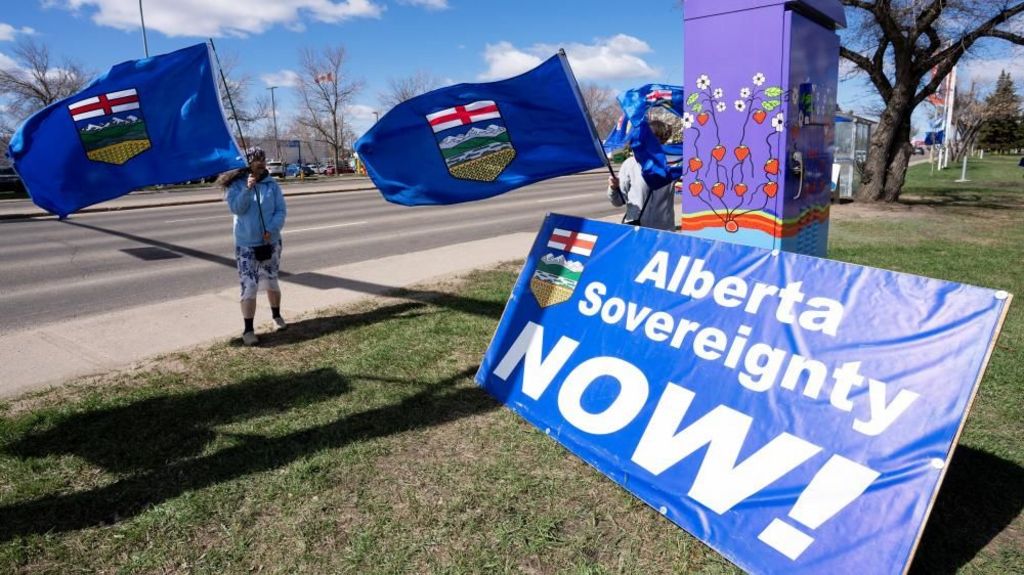
On October 19, residents of Alberta, Canada’s resource-rich western province, will head to the polls for a vote that could reshape the future of the Canadian federation. This is not an immediate vote to split from Canada; instead, Albertans will decide whether to authorize a formal, binding independence referendum at a later date. Even so, political analysts across the country widely view the ballot as one of the most consequential democratic exercises in modern Canadian history, representing the most significant strain on national unity in decades.
For proponents of separation, led by activists like Keith Wilson, Alberta’s economic foundations make it more than capable of standing alone as an independent nation. Blessed with the world’s fourth-largest proven crude oil reserves, a robust agricultural sector, and a young, highly skilled workforce, the province already boasts Canada’s highest per capita GDP. Crude oil alone generated C$142 billion in export revenue in 2025, most of it shipped to refineries in the United States. Separatists argue that decades of membership in the Canadian federation have shortchanged Alberta, with much of the province’s natural resource wealth redistributed to poorer, less productive provinces through federal equalization transfers. Calculations from the Fraser Institute show Alberta has contributed a net C$322 billion to federal coffers since 2007, averaging C$17 billion per year—nearly four times the net contribution of British Columbia and more than four times that of Ontario. The province has not received equalization payments, which are distributed to less wealthy “have-not” provinces, since 1965.
The Alberta Prosperity Project, a leading pro-independence organization, projects that an independent Alberta would save up to C$47 billion annually by eliminating federal tax contributions. After accounting for new costs unique to an independent nation—including national defense, diplomatic services, and the establishment of sovereign governmental institutions—the group still estimates an annual surplus of between C$24 billion and C$46 billion. Proponents argue this surplus could be used to cut personal income taxes by more than C$10,000 per resident annually, fund major infrastructure upgrades, or grow the province’s sovereign wealth fund. Wilson rejects the doom-and-gloom projections from separation opponents, noting that Alberta already attracts global investment for its in-demand natural resources despite federal policy constraints. He argues comparisons to the economic fallout of the United Kingdom’s Brexit withdrawal from the European Union are unfounded, saying the fundamental economic dynamics of a potential Alberta separation are entirely different from Brexit.
Opponents of separation, including Alberta’s Premier Danielle Smith, warn that the short and long-term costs of splitting from Canada far outweigh any potential benefits. A government-commissioned report released earlier this month calculated that separation would cost the province between C$50 billion and C$170 billion over the first five years alone, with massive uncertainty hanging over long-term economic projections. Smith estimates that transition costs alone could reach C$400 billion, while political upheaval would drive away billions more in lost investment and cross-border trade.
A separate report from the CanadaWest Foundation, an Alberta-based non-partisan think tank, adds that an independent Alberta would be required to assume a share of Canada’s national debt, adding between C$258 billion and C$333 billion in new liabilities for the province. The new sovereign state would also need to build entirely new governmental institutions from scratch: it would need to draft a constitution, establish independent legal and court systems, create national tax and security agencies, launch a public pension plan, and negotiate the division of federal assets ranging from national parks to military bases. The report projects that separation would reduce the average Albertan’s disposable income by 5.8% due to GDP contraction and additional fiscal burdens.
Prime Minister Mark Carney has repeatedly pointed to Brexit as a cautionary tale for Alberta. One 2025 analysis found Brexit reduced the UK’s total economic output by 6% compared to pre-vote projections. If Alberta suffered a similar contraction, Calgary-based economist Trevor Tombe projects the province’s annual GDP would drop by C$62 billion, with 175,000 jobs lost. Lennie Kaplan, a former Alberta finance official, questions the logic of creating massive economic uncertainty that would undermine the province’s long-term fiscal health, arguing that Alberta’s grievances are better addressed within the existing Canadian federal framework. Even economists at the Fraser Institute, which has long highlighted Alberta’s large net contributions to Ottawa, warn that prolonged political uncertainty from the separation process would deter business investment, as companies will avoid committing capital to a region with an unclear political future.
The separatist movement, once a fringe political idea in Alberta, has grown into a mainstream political issue driven by decades of simmering discontent known as “western alienation.” Separatists say the province’s priorities and values are consistently overlooked and misunderstood by federal decision-makers in Ottawa, who have long been led by a Liberal Party government at odds with Alberta’s conservative-leaning electorate. Grievances have been fueled by federal environmental policies that blocked proposed pipeline projects to move Alberta’s landlocked oil to global coastal markets, as well as lingering anger over strict COVID-19 public health lockdowns that many Albertans viewed as federal overreach. After separatist organizers held dozens of public town halls across the province and collected more than 300,000 signatures on a pro-independence citizen petition earlier this year, Premier Danielle Smith opted to allow the October 19 advisory vote to move forward.
Current opinion polling shows that between 20% and 25% of Albertans intend to vote in favor of moving forward with a binding independence referendum, with higher support among younger, rural, and conservative voters. Regardless of the outcome of next month’s vote, the debate has already exposed deep rifts within Canadian federalism, and will leave a lasting mark on the future of national unity.