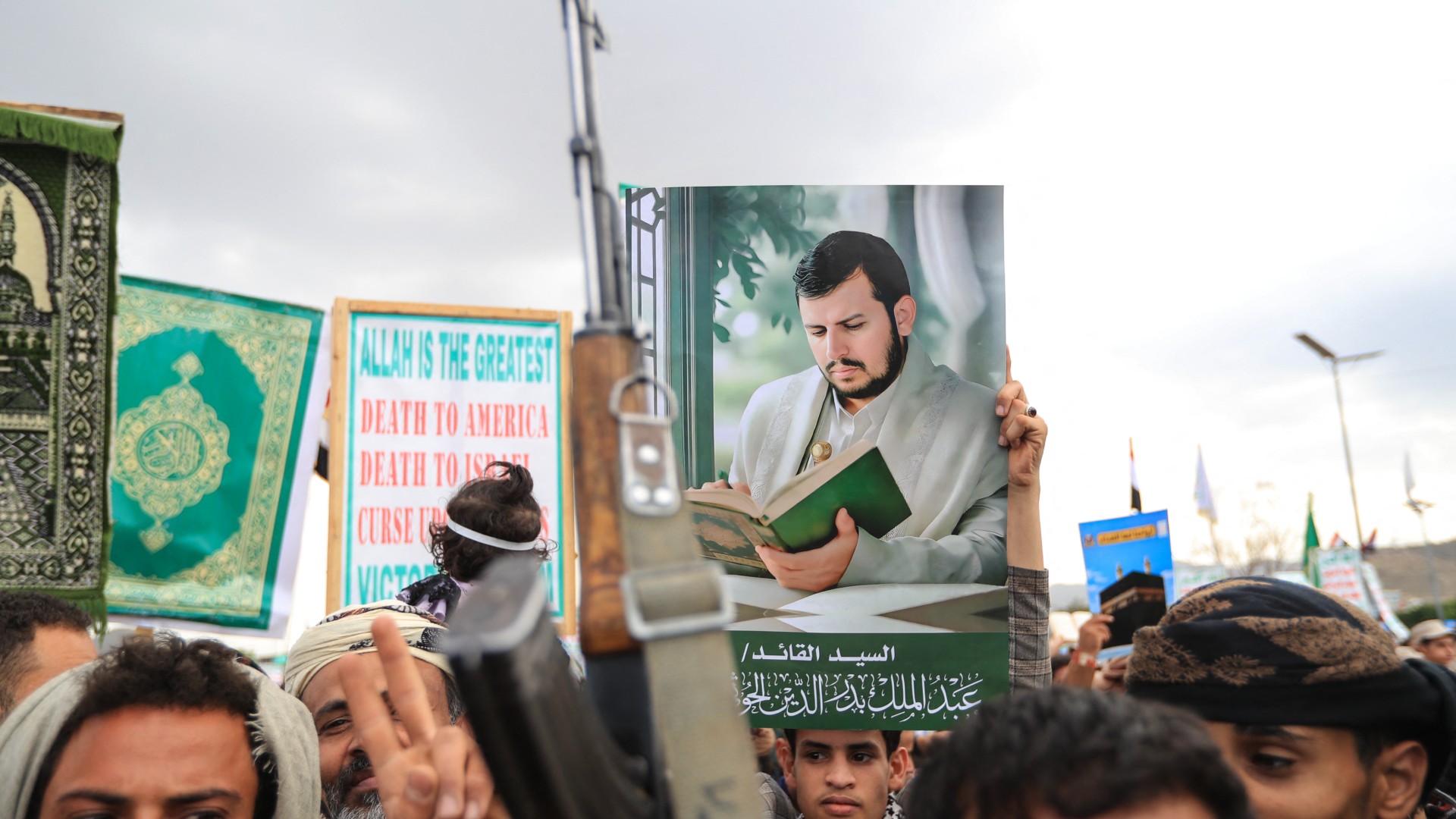
A series of coordinated Houthi attacks on Riyadh’s King Khalid International Airport have left at least 14 people dead and more than 300 injured, marking the deadliest assault on Saudi territory in over a decade and escalating a regional conflict that has already plunged Yemen back into large-scale hostilities. The first strike, carried out on Saturday, killed 13 people and left 309 others wounded. A follow-up attack the next day claimed one additional life, sending shockwaves across the kingdom and the broader Middle East.
The Saudi-led military coalition that has intervened in Yemen’s civil war since 2015 immediately condemned the assaults, labeling them a deliberate war crime. Houthi military spokesperson Yahya Saree confirmed responsibility for the attacks in an official statement released Sunday, noting that the group had launched a multi-phase operation targeting the airport starting Friday evening that succeeded in closing the facility entirely. Saree issued a stark warning: all Saudi airports, with the exception of those serving the holy cities of Mecca and Medina, are now unsafe for operation. The Riyadh attacks cap months of steadily worsening violence that has unraveled a fragile peace agreement.
A UN-brokered truce that had largely halted large-scale fighting across Yemen since 2022 collapsed in July, after Saudi coalition forces carried out airstrikes on Yemen’s capital Sanaa’s international airport. In response, the Houthi movement announced a maritime blockade of Saudi territory. By September, Houthi fighters had seized the strategic Red Sea port of Mokha and advanced toward the Bab al-Mandab strait, a critical chokepoint for global maritime trade. Saudi-backed Yemeni government forces launched a counter-offensive in early October, prompting the United Nations’ special envoy to Yemen to issue a formal warning that the country had fully returned to full-scale war.
Heavy, sustained clashes are ongoing around Taiz, a strategically vital city overlooking the Red Sea coast. The resumption of active fighting has already forced more than 130,000 Yemeni civilians to flee their homes in search of safety.
To understand the current escalation, it is necessary to contextualize the origins and trajectory of the Houthi movement. Officially named Ansar Allah, meaning “helpers of God”, the group emerged in Yemen’s remote northern region in the 1990s, organized around the cleric Hussein al-Houthi. It is rooted in Zaydism, a Shia Islamic branch whose followers make up a minority of Yemen’s overall population but are concentrated in the country’s northern highlands. Between 2004 and 2010, the movement fought six separate rounds of conflict with the government of former Yemeni president Ali Abdullah Saleh. Hussein al-Houthi was killed in the first of these conflicts, and leadership passed to his brother Abdul-Malik al-Houthi, who remains the group’s head today.
Houthi fighters seized control of Sanaa in September 2014, and in March 2015, Saudi Arabia assembled a multinational military coalition to intervene in Yemen in support of the internationally recognized Yemeni government, which has since operated mostly from Riyadh and the southern Yemeni port city of Aden. By the time the 2022 truce took effect, the Houthis controlled roughly 30 percent of Yemen’s territory — home to 80 percent of the country’s population. Domestically, the group has pushed for greater autonomy for northern Yemen and increasingly demanded formal recognition as Yemen’s legitimate governing authority. It has long called for an end to what it describes as a Saudi land, air and naval blockade of Yemen, a characterization the Saudi government rejects.
In his Sunday statement, Saree reaffirmed the group’s commitment to its “siege for siege, escalation for escalation” doctrine, promising to continue expanding attacks deep into Saudi territory until what the Houthis call “Saudi aggression” ends and the blockade of Yemen is lifted.
The Houthi movement’s regional ambitions extend far beyond Yemen’s borders. The group frames its political agenda around opposition to U.S. and Israeli influence in the Middle East. Since 2023, it has launched attacks on more than 100 commercial vessels transiting the Red Sea and Gulf of Aden, claiming the actions are in solidarity with Palestinians during Israel’s military campaign in Gaza. These strikes were temporarily paused in May 2025 under a ceasefire agreement with the United States brokered by Oman. In March 2025, the group began firing missiles at Israel in a show of support for Iran following U.S. and Israeli military operations against Iranian targets.
Iran lists Ansar Allah as a core member of its “Axis of Resistance”, an alliance of anti-Israel and anti-U.S. armed groups that also includes Lebanon’s Hezbollah and the Palestinian group Hamas. Iran has cultivated ties with the Houthis since at least the late 2000s, and the majority of the Houthi movement’s military arsenal is either designed or supplied directly by Tehran. The Houthis have repeatedly denied claims that they act as an Iranian proxy force.
Following the Riyadh airport attacks, Iranian foreign ministry spokesperson Esmaeil Baqaei released a statement Monday saying Tehran was “deeply concerned” by the escalating conflict between the Houthis and Saudi Arabia, and offered to mediate dialogue between the two sides to de-escalate tensions.
Since the 2015 Saudi-led intervention, the Houthi fighting force has expanded dramatically: from an estimated 30,000 fighters in 2015 to roughly 350,000 by 2024, though independent estimates of troop numbers vary. While the group lacks a conventional navy and has only limited air power, it has built an extensive arsenal of advanced asymmetric weapons, including long-range drones, explosive-laden unmanned surface vessels, and medium-range ballistic missiles capable of striking targets as far as 2,000 kilometers away — a range that covers all of Israel.
The Bab al-Mandab strait, where the Houthis have advanced in recent months, connects the Red Sea to the Gulf of Aden and serves as the southern access route to the Suez Canal, one of the world’s most important trade chokepoints. The strait’s strategic importance has grown sharply in recent months after conflict around Iran disrupted commercial shipping through the Strait of Hormuz, pushing global oil prices higher and leaving the Red Sea route as a key alternative corridor for Saudi oil exports.
This escalating conflict raises urgent concerns about regional stability and the safety of global commercial shipping, with potential ripple effects on energy markets and the global economy.