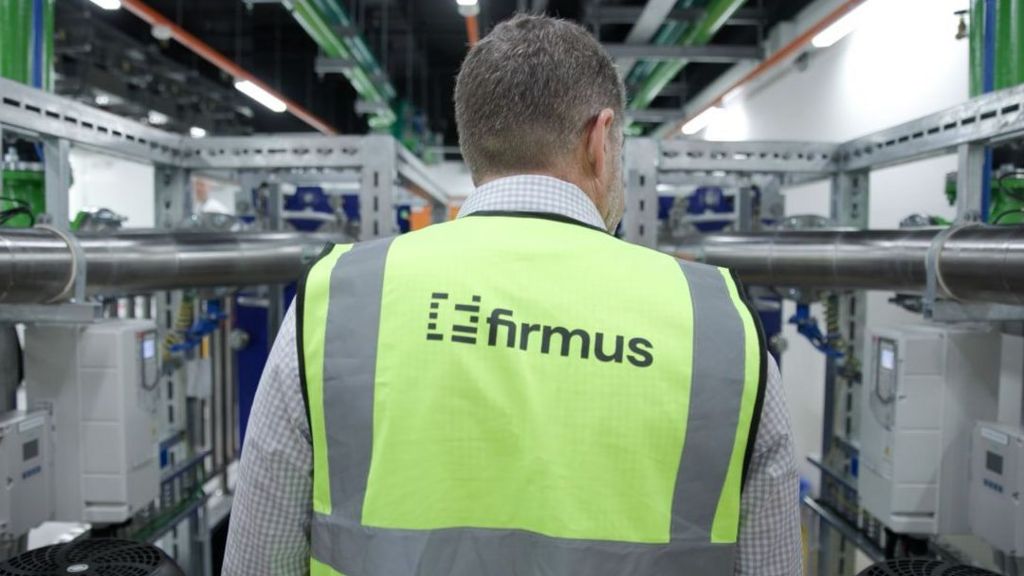
In a move that has sent ripples through the global AI and investment communities, Nvidia-backed AI data centre developer Firmus has pulled the plug on what was set to be one of the largest initial public offerings (IPO) in Australian history. The company announced Friday that shifting market conditions and widespread volatility convinced its leadership that moving forward with a public listing would not serve the best interests of either the firm or its existing shareholders.
When Firmus first unveiled its IPO plans earlier this year, the offering was projected to value the company at more than $30 billion (£22.65 billion), a valuation that immediately raised red flags among large institutional investors. One major investment firm confirmed to the BBC it had already opted out of participating in the offering specifically over valuation concerns, and UniSuper, one of Australia’s largest pension funds, also joined the list of non-participants.
UniSuper Chief Investment Officer John Pearce told the BBC that while Firmus has a strong value proposition as a key infrastructure player in the fast-growing AI sector, its proposed pricing failed to match its underlying fundamentals. “Firmus indeed has a compelling story. It just doesn’t have a compelling valuation,” Pearce said in an investor update, adding that the fund also shared concerns that Firmus would need to take on substantial new debt to fund its aggressive expansion pipeline. Pearce also noted that the Australian Securities Exchange (ASX) sorely needs high-profile new growth listings like this one, calling the withdrawal disappointing for the exchange.
Headquartered across the Asia-Pacific, Firmus designs, builds and operates cutting-edge liquid-cooled data centres, which the company brands as “AI factories” built specifically to power large-scale AI model development and deployment. Its client roster includes two of the biggest names in global AI: OpenAI and Meta, with operations currently spread across Australia, Singapore and other key APAC markets. Beyond Nvidia, the startup counts global investment giants Blackstone and Jane Street among its major backers. When contacted by the BBC, Blackstone declined to issue a statement, while requests for comment have also been sent to Nvidia and Jane Street with no immediate response.
Going forward, Firmus said it will shift its focus to raising new capital from private market investors, and will re-evaluate alternative paths to a public listing or continued private ownership down the line. “We will provide additional information to shareholders as those options progress,” the company said in a statement.
The collapse of Firmus’s IPO comes at a moment of growing investor scrutiny over the hundreds of billions of dollars in capital flooding into the AI sector, where questions around long-term profitability and return on investment remain largely unanswered. Phillip Wool, chief research officer at Rayliant Investment Research, described the planned Firmus listing as a key test of institutional investors’ ongoing willingness to pour capital into early-stage AI infrastructure. “Investors in Firmus would be buying into a company that is still in its early stages and is likely to need to borrow large sums of money,” Wool explained, adding “It’s more like a bet on a dream.”
Australia has emerged as a hotspot for AI data centre investment in recent years, drawn by the country’s abundant access to low-cost clean energy, ample natural gas reserves, and large available parcels of land for large facilities. OpenAI CEO Sam Altman highlighted this potential earlier in 2024, saying Australia could position itself as a global leader in the AI data centre sector if it prioritizes the industry. Currently, more than 160 data centres operate across the country, with dozens more in planning stages, even as local communities have raised pushback over the facilities’ high energy consumption and noise pollution.
The withdrawal of Firmus’s offering also aligns with a broader trend of caution around AI public listings this year. In September, Altman announced OpenAI itself would not pursue an IPO in 2024, citing ongoing concerns over AI safety that made a public debut ill-advised at this stage. Despite that, both OpenAI and rival AI developer Anthropic are reportedly planning blockbuster future listings that could value each firm at more than $1 trillion. Just this week, two major AI-linked stocks, Nvidia and Oracle, dropped in U.S. trading after reports emerged that OpenAI’s 2024 revenues have come in below earlier analyst projections, deepening market jitters over overinflated AI valuations.