DURBAN, South Africa – Day three of the opening Test between Australia and South Africa delivered a masterclass in high-pressure international cricket, as Australia’s iconic bowling attack turned a evenly poised match on its head, putting the visitors firmly in control ahead of the final two days.
Coming into this match, Australia’s modern Test side has long divided cricket observers. Critics in England insisted Australia was vulnerable during last winter’s Ashes series, despite the Aussies securing a dominant 4-1 win, while many pundits back home argue the core of the team is past its peak. Even after shock upset losses to the West Indies and Bangladesh in recent years, Australia has gone unbeaten across its last nine Test series, a testament to its enduring competitive quality.
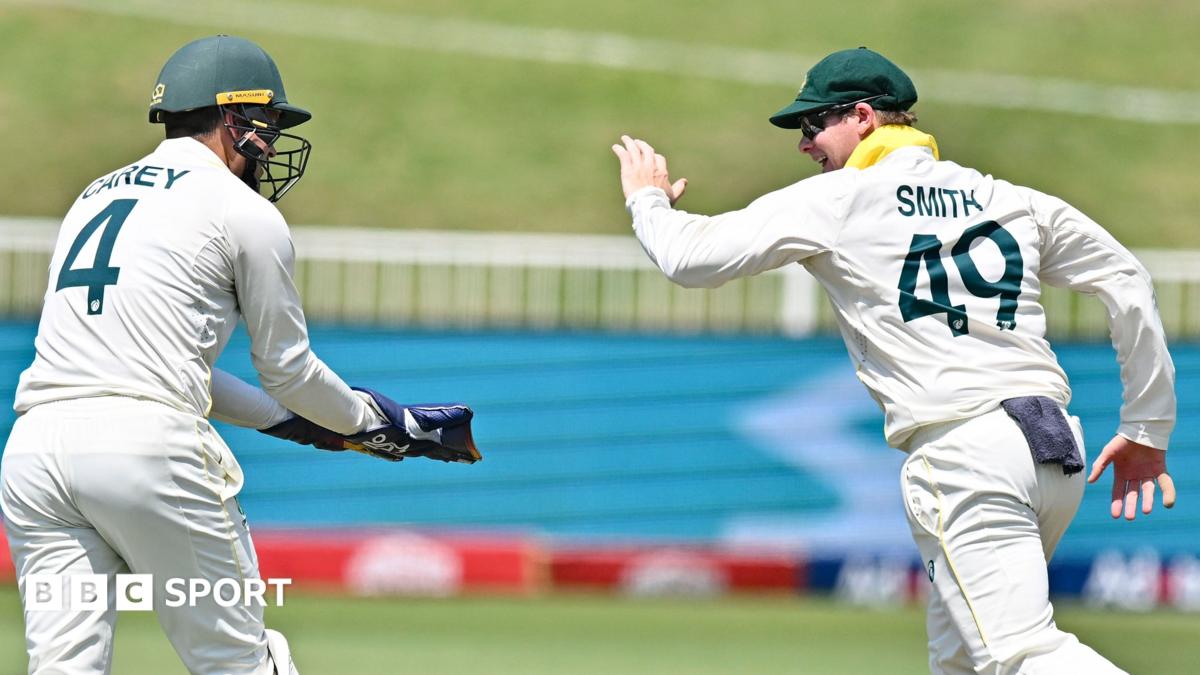
After rookie batter Matt Renshaw rescued Australia’s inconsistent batting line-up across the opening two days with a patient 190, it was the turn of Australia’s legendary bowling quartet – Mitchell Starc, Josh Hazlewood, Pat Cummins and Nathan Lyon – to deliver one of their signature performances, nine years after they first joined forces as a unit. The group’s relentless pressure dismantled South Africa’s batting order, dismissing the hosts for 284 in their first innings, with veteran batter Steve Smith producing two moments of individual magic in the field to cap the performance.
Cummins finished with three wickets, while Starc, Hazlewood and Lyon chipped in with two each, silencing any lingering doubts about the group’s ability to perform against top-tier competition ahead of a tough upcoming schedule against World Test champions New Zealand, India and England.
At the 20-over mark, South Africa sat comfortably at 82-1, with their opening partnership putting Australia’s first innings total of 390 under pressure on a good batting surface. Australia’s bowlers had been searching for early swing, and South Africa’s second-wicket pair of Aiden Markram and David Bedingham had built a steady partnership at almost 4.5 runs per over. That is when captain Cummins adjusted Australia’s strategy, reverting to the team’s proven game plan: Lyon at one end, with the quicks rotating pace at the other.
Where 34% of deliveries from Australia’s pace attack had been full in the opening 20 overs, Starc, Hazlewood and Cummins pulled their length back after that. Between the 20th and 60th overs, only 19 full deliveries were pitched, forcing South Africa’s batters into uncomfortable shots. With easy scoring opportunities drying up, Markram and Bedingham both attempted forced back-foot drives and edged catches to the slip cordon for 37 and 49 respectively.
Wiaan Mulder was confused by the changed line and length and popped a catch up to short leg off Cummins, while Tristan Stubbs top-edged a pull from the Australia captain to fine leg. Six overs after Stubbs’ dismissal, Marco Jansen – who had hit six fours in a quick 26 – tried to pull a shorter delivery from Hazlewood and was caught tamely at mid-off.
Beyond the tactical adjustment from the pace bowlers, 39-year-old off-spinner Nathan Lyon delivered a masterclass of his own, bowling 19 overs at less than three runs per over. With a worn pitch offering more turn than South Africa’s spinners had enjoyed earlier in the match, Lyon posed constant threat to the hosts’ batters – and he had the benefit of Steve Smith’s exceptional fielding at slip.
Both of Smith’s catches off Lyon – dismissing Temba Bavuma and then Kyle Verreynne – were examples of elite anticipation. Smith read both batters’ intent to play the reverse sweep, positioned himself early, and held on to close-range catches. The first was an excellent grab, but the one-handed second catch was spectacular. Lyon later praised Smith’s premeditation, saying: “He’s an absolute freak. He practices that in training. He is an incredible thinker of the game but the way he moves, premeditates, for those types of catches. There are not many people in the dressing room that would be able to pull off those two catches.”
In between those two catches, Smith’s leaping grab at second slip off Cummins that dismissed Bedingham moved him past Joe Root to claim the record for the most Test catches by a non-wicketkeeper, with his total now standing at 223 – three clear of Root. While Smith’s catch percentage sits around 77%, below the Test average, his ability to create chances that no other fielder would even reach is unmatched.
As a quartet, Starc, Hazlewood, Cummins and Lyon have now combined for 607 wickets in the Tests they have played together. The next most successful four-pronged bowling attack, England’s combination of James Anderson, Stuart Broad, Ben Stokes and Moeen Ali, has only managed 415 wickets across 31 Tests together.
Former Australia bowler Jason Gillespie, commentating for ABC Radio, praised the group’s enduring quality: “Each of these players will go down as a legend of Australian cricket. Starc got hit for a few early but I didn’t mind that. Hazlewood was very good, as he always is. Cummins was hostile. He looked fresh.”
While much has been made of Australia’s ageing core and perceived lack of succession planning, the numbers back up the group’s continued form. At 37, Starc is the oldest of the three quicks, but his average pace of 141.21km/h in 2026 is higher than any of his past three seasons, and he is generating more swing this calendar year than he has since 2015. The only real concern for Australia is keeping the group fit: Hazlewood missed all five of last winter’s Ashes Tests, and Cummins missed four. When they are all on the field together, though, they remain as dangerous as any attack in world cricket.
At stumps on day three, Australia had reached 33-0 in their second innings, extending their overall lead to 139 runs. Even though bad light again cut play short, Australia remains well positioned to press home their advantage and secure a win across the final two days of the Test.