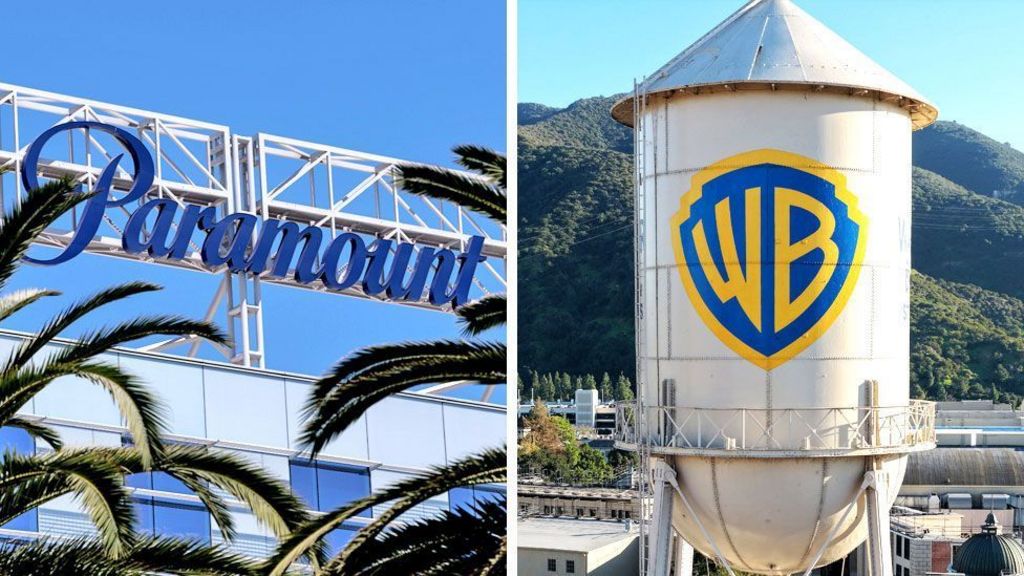
After months of high-stakes legal battles, public scrutiny, and competitive bidding, the $110 billion merger that will redefine Hollywood’s power structure is finally complete: Paramount Skydance has formally taken over Warner Bros Discovery, creating a new entertainment giant that will reshape how audiences worldwide access film, television, and news content.
The combination of two of Los Angeles’ largest and most storied studios was anything but straightforward. The deal faced fierce opposition from regulators and critics, who warned that sweeping consolidation would suppress market competition, drive up costs for consumers, and disrupt the existing media ecosystem. Even with final approval secured, the merger’s far-reaching impacts are already rippling across the industry, from streaming platforms that serve millions of households to the future of major U.S. news outlet CNN, which now enters a period of uncertain transition.
Beyond structural change, the merger unites a roster of the world’s most recognizable media brands under one umbrella. Iconic properties including HBO, CBS, Nickelodeon, Showtime, Comedy Central, DC Studios, and Food Network will now fall under the new corporate umbrella. Perhaps most notably, the combined entity brings under single ownership some of the highest-grossing and culturally defining media franchises in modern history, spanning Harry Potter, *Game of Thrones*, *The Lord of the Rings*, and *Mission: Impossible*.
The newly formed corporation will operate under the name Skydance Corporation, a brand that traces its origins to the independent production house founded by David Ellison, who has now led the acquisition of both Paramount and Warner Bros Discovery. Ellison, who will serve as chairman and chief executive officer of the new entity, framed the completed deal as a transformative milestone for the global entertainment industry.
“From the start, our ambition was to bring these two storied studios together and create a stronger competitor, with the talent, resources, and reach to tell great stories in every genre, on every platform, for audiences everywhere. Now that ambition is a reality,” Ellison said in a statement following the merger’s closing.
The road to this final approval has been mired in controversy from the earliest stages of negotiations. Initially, streaming giant Netflix had secured a deal to acquire a portion of Warner Bros Discovery, but Paramount Skydance launched a competitive bidding war that ultimately pushed Netflix to abandon its plans and exit the process. Soon after, attorneys general from roughly a dozen U.S. states—led by California—filed a suite of lawsuits seeking to block the merger entirely. Regulators argued the combination would stifle competition, raise consumer prices for streaming and cable services, and inflict substantial harm on movie theaters, independent cable distributors, and ultimately audiences across the country.
A settlement reached between the states, Paramount, and Ellison last month removed the final legal barrier to the deal’s completion, clearing the way for the formal takeover. As a core condition of that settlement, several strict guardrails were put in place to address key regulatory concerns. To address widespread fears of political interference in news coverage, Paramount agreed to establish a dedicated “news editorial independence board” tasked with protecting independent, fact-based reporting at both CNN and CBS. Concerns over editorial independence at CBS first emerged in 2025, when Skydance Media completed a separate merger with Paramount that brought the broadcaster under its control. Ellison, who hosted a dinner for U.S. President Donald Trump earlier this year, has repeatedly sought to reassure the public and journalists that the outlet’s editorial independence will remain intact.
The settlement also includes strict requirements designed to protect film production, domestic job growth, and content authenticity. California Attorney General Rob Bonta, who led the multi-state lawsuit and subsequent settlement negotiations, noted the agreement is structured to guarantee the merged entity delivers on promises to produce large-scale original films that drive economic activity and create U.S. jobs. To prevent the company from meeting annual production quotas with low-budget or algorithmically generated content, the deal includes explicit restrictions on reliance on AI-generated films. Under the terms, Paramount must release a minimum of 30 full feature films annually. If the company fails to meet this quota for any year, it will be required to sell its 49% stake in Miramax, the legendary independent studio founded by disgraced media mogul Harvey Weinstein and his brother Bob.
Additional terms also mandate domestic production growth to support U.S. industry workers: 20% of all film production must take place within the United States for the first two years after the merger, rising to more than 30% for the following three-year period.
Both merging studios carry century-long legacies of industry success. Warner Bros, founded 103 years ago, has taken home more than 100 Academy Awards over its history, including a dominant performance at last year’s Oscars ceremony, where it tied the record for most wins in a single year with 11 Oscars spread across *One Battle After Another*, *Sinners*, and *Weapons*. Paramount, whose origins date back to 1912, also boasts more than 100 Academy Awards for genre-defining classics ranging from *The Godfather* to *Titanic*, though the studio has not matched its historic award success in recent years. It received no Academy Award nominations for any of its projects last year, with its most recent Oscar win coming in 2022 for *Top Gun: Maverick*.