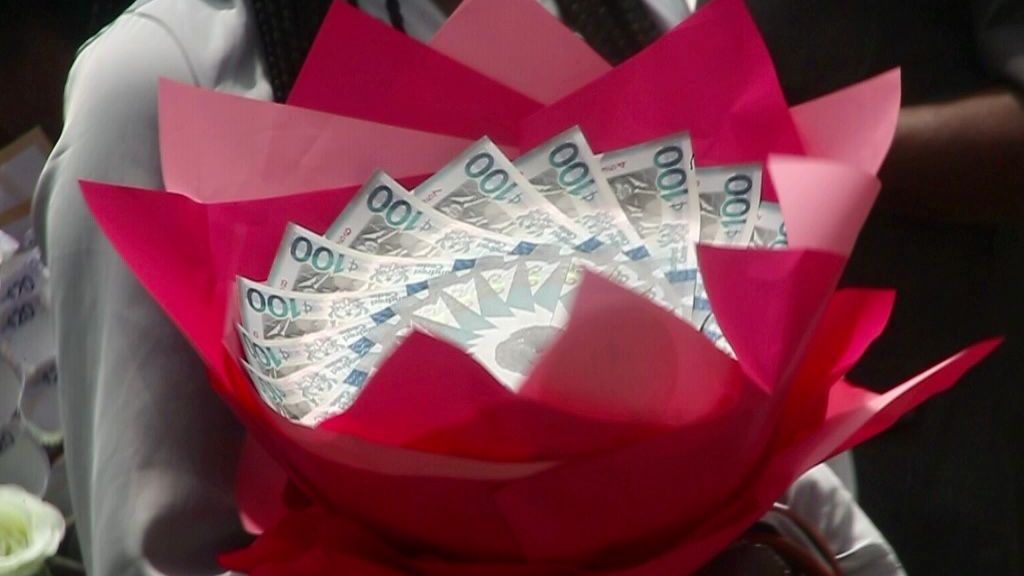
A major enforcement crackdown on misuse of Ghana’s national currency has resulted in seven arrests, sending a sharp warning to individuals and businesses engaging in the increasingly popular trend of turning banknotes into decorative gifts. All seven suspects, who are women, were taken into custody during a coordinated operation by Ghanaian police and the Bank of Ghana in different districts of the capital, Accra, following a public tip-off about their illegal activities.
The suspects are accused of crafting so-called “money bouquets” — arrangements of folded banknotes designed to look like floral arrangements — and decorating cakes with cedi banknotes to sell to customers for events including weddings, birthday celebrations, graduation parties and other milestone occasions. In recent years, this decorative practice has grown in popularity across Ghana and spread to several other African nations, prompting regulatory action in multiple countries.
The Bank of Ghana has long classified this activity as a violation of national currency law, framing it as improper handling and misuse of the cedi, the country’s legal tender. Back in July of this year, the central bank issued a formal public notice, explicitly warning that creating decorative arrangements from banknotes constitutes a criminal offense. The regulator’s warning explicitly prohibited all actions that damage, devalue or undermine the integrity of the national currency, including altering or defacing banknotes for non-monetary uses.
Dinah Bonzi, a senior official in the Bank of Ghana’s currency department, emphasized that the landmark arrests are intended as a clear warning to all Ghanaians. “The Ghana cedi is legal tender… and must be treated with respect. The misuse or abuse of the currency is an offence and may attract sanctions under the law,” she stated in a public address following the operation. “Today’s arrest should serve as a clear warning to the public. Let us all handle the Ghana cedi with dignity.” Bonzi also added that any person found aiding or abetting these illegal activities could face arrest and prosecution as well.
Currently, law enforcement agencies are conducting ongoing investigations into the case, and the seven suspects will face formal prosecution in court. If convicted, they could face either a monetary fine or a jail term, with the exact penalty to be determined by a presiding judge. This operation marks the most aggressive enforcement of Ghana’s currency misuse laws to date, following repeated public warnings from the central bank about other harmful practices including “spraying” — the common cultural practice of throwing loose banknotes at celebrations — writing on banknotes, and altering currency for decorative uses.
The trend of currency-based decorations is not unique to Ghana. In recent years, financial regulators in neighboring African countries including Kenya, Nigeria, South Africa and Botswana have also issued similar public warnings against the misuse of their own national currencies, echoing Ghana’s concerns about protecting the integrity of legal tender.
For more reporting from across the African continent, visit BBCAfrica.com, or follow BBC Africa on Twitter @BBCAfrica, Facebook at BBC Africa, and Instagram at bbcafrica.