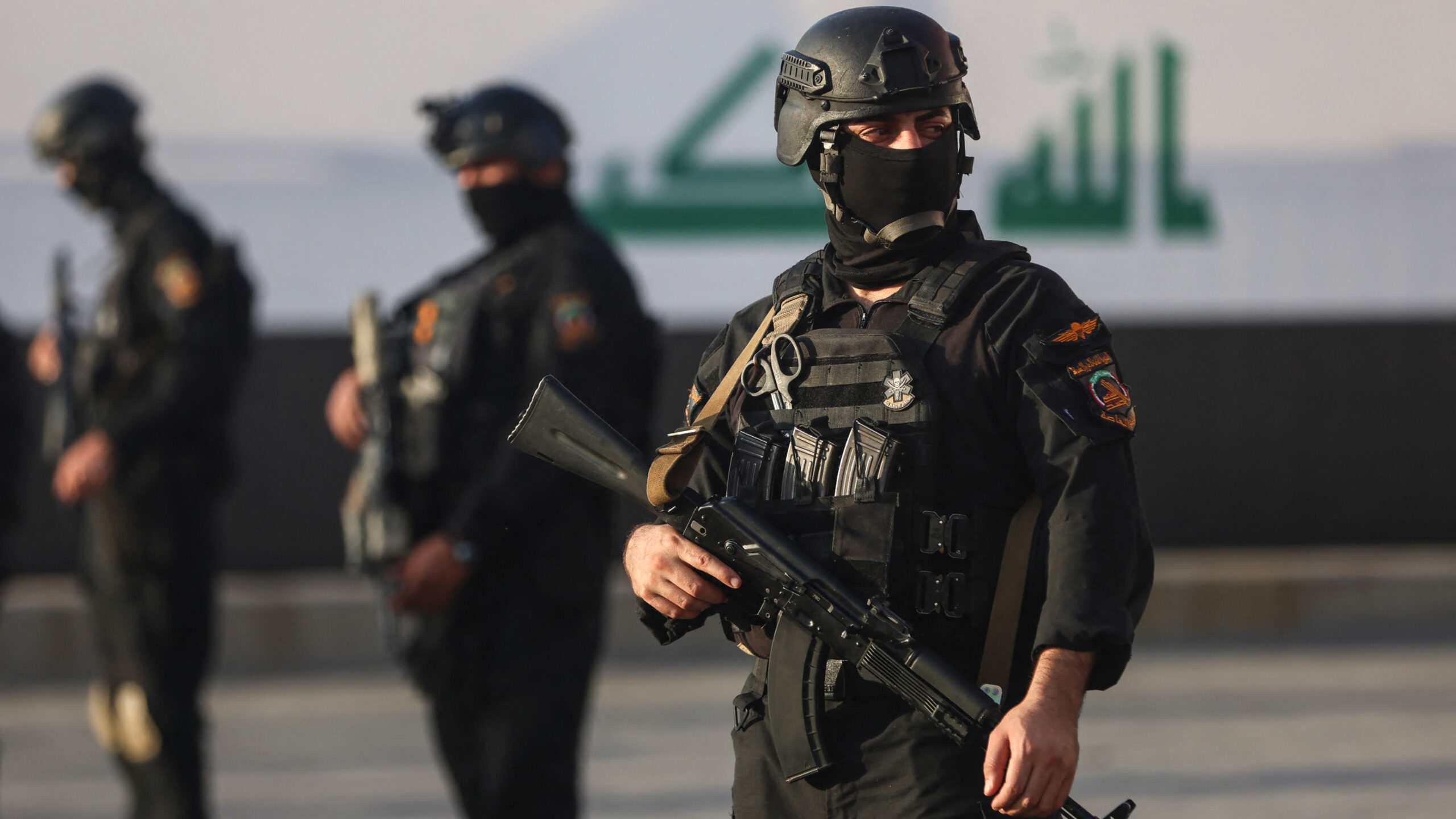
Following the formal exit of the US-led military coalition from Iraqi territory in late September 2026, Baghdad has launched an ambitious, high-stakes effort to rein in the country’s sprawling network of powerful paramilitary groups under greater state oversight – a process that demands careful navigation of clashing domestic power dynamics and competing foreign interests between Washington, Tehran and regional stakeholders.
Unlike a straightforward full disarmament campaign, the initiative crafted by Prime Minister Ali al-Zaidi focuses on curbing the independent operational autonomy of armed factions, bringing unregulated weaponry under state management, and integrating eligible fighters into formal Iraqi government security structures. Zaidi has set a firm completion deadline of June 30, 2027, for the full rollout of the plan.
The entire framework is built on a phased approach that kicked off alongside the US coalition withdrawal. The opening 90-day window, which launched September 30, mandates a full cessation of unauthorized military activity by all paramilitary groups. In a reciprocal agreement, the US has committed to halting unilateral military strikes against Iraqi armed groups in Iraqi territory – a marked shift from years of repeated US attacks on Iran-aligned paramilitary bases, most notably a joint US-Saudi strike on Popular Mobilisation Forces (PMF) targets in July 2026 that killed at least 20 fighters.
After the 90-day de-escalation period concludes, factions – many of which already hold embedded positions within Iraq’s state security apparatus through the PMF network – will begin the process of transferring control of their weapons to government authorities. Former Iraqi prime minister and State of Law Coalition leader Nouri al-Maliki clarified in early September that the initiative is not traditional disarmament, but rather state-led containment and regulation of arms. The primary focus will fall on weapons used for cross-border and unilateral attacks on foreign and domestic targets, rather than all military hardware held by factions.
A core strategic goal of the plan is to eliminate the ability of paramilitary groups to launch unapproved military action outside Iraq’s borders, a practice that has repeatedly dragged Iraq into dangerous regional escalation. Recent examples include drone strikes on Israel during the Gaza war and repeated attacks on US interests amid heightened US-Iran tensions, both of which put Iraq at risk of being drawn into broader, unwanted conflict.
Another key provision of Zaidi’s plan calls for integrating fighters from non-PMF aligned paramilitary factions as individuals into state security ranks, rather than allowing the groups to preserve their existing independent command structures. In a late September interview, Zaidi stated his clear objective: “to end the existence of these factions as independent entities.”
For armed groups to accept limits on their autonomy and offensive capabilities, however, Baghdad must meet a set of non-negotiable demands to protect their political and economic interests. Iraq’s paramilitary landscape is fractured, with factions holding varying degrees of proximity to Iran, and wielding vastly different levels of political influence and economic power across the country – internal dynamics that will shape every step of negotiations between the groups and the central government.
Already, some moderate factions have signaled willingness to comply. Asaib Ahl al-Haq (AAH) and Kataeb Imam Ali announced back in June that they would place their arms under state control. For AAH, though, long-term compliance remains tied to guarantees that the group will retain its existing economic influence and the parliamentary seats held by its affiliated Sadiqoon political bloc.
Hardline factions that have led recent attacks on US interests under the banner of the Islamic Resistance of Iraq (IRI), including Harakat Hezbollah al-Nujaba and Kataeb Hezbollah, initially refused any disarmament, citing remaining foreign military presence in Iraq as a core justification for retaining independent arms. But by late August, the groups put forward their own conditions for participating in the process, and on the day of the US coalition withdrawal, Kataeb Hezbollah announced it would halt all military activity except for defensive actions against hostile aircraft – a move that aligns broadly with Zaidi’s opening phase of de-escalation.
Some key demands from hardline factions have already seen progress. On October 1, Turkey announced it would transfer control of the Bashiqa-Zelikan military camp near Mosul back to the Iraqi government under a agreed timeline and mechanism, fulfilling a core demand for the withdrawal of Turkish forces from northern Iraq. Parallel efforts are also underway to remove Kurdistan Workers’ Party (PKK) forces from the region, another key request from paramilitary groups.
Even with these early wins, Baghdad faces significant barriers to meeting all of the factions’ demands. The IRI has called for ending what it describes as US “hegemony” over Iraq’s political and economic decision-making, pointing to the long-standing arrangement that has held Iraq’s oil revenues in the Federal Reserve Bank of New York since 2003, with monthly dollar transfers to Baghdad. Many IRI-affiliated groups have also demanded strengthening Iraqi air defenses and barring foreign aircraft from using Iraqi airspace to launch strikes on neighboring countries, particularly Iran.
Any resumption of US strikes on Iranian targets, especially during the critical 90-day de-escalation window, risks derailing the entire integration process and pushing hardline factions into open conflict with Baghdad. Ultimately, the success of Zaidi’s initiative hinges on his ability to balance the competing demands of Iraqi paramilitary groups and the United States, the foreign power that has wielded significant influence over Iraqi politics since the 2003 invasion.
Critical details of the plan remain unresolved: the exact scope of state control over weapons, how far the government will go in dismantling independent faction command structures, and what role participating groups will hold within formal state institutions are still subject to negotiation. For the process to move forward, all key parties must avoid maximalist positions that would bring negotiations to a stall, analysts note.
Mustafa al-Saray, research director at Baghdad-based think tank the Bayan Centre for Strategic Studies, explained that while Washington has not publicly opposed Zaidi’s proposal or the militias’ core demands, clear clarification of US red lines is required to build trust. “Similarly, even though most of these militias appear receptive to Zaidi’s plan, there is always a chance that Tehran objects to the process, and this would also change the negotiation process in Iraq,” Saray told Middle East Eye.
Iran-aligned factions have already demonstrated their willingness to challenge Baghdad policies they oppose. In late September, the Iraqi government suspended all flights to Iran after the US announced sweeping new secondary sanctions on Iran’s aviation sector. After a senior Kataeb Hezbollah security official warned that Zaidi’s government could be “brought down”, Washington granted a one-month sanctions waiver to allow continued flights between Iran and the Shia holy city of Najaf, highlighting the outsized influence factions hold over Iraqi policy.
The stakes for Zaidi are particularly high: he took office in May 2026 after the US effectively vetoed the candidate preferred by Iran-aligned paramilitary blocs. If he fails to balance competing domestic and US interests, factions could quickly turn against his government. Saray warned that “there is a real risk that Iraq returns to the pre-2022 equation, where the militias held prime ministers directly responsible for international actions against them.”
Renewed sustained US strikes on Iran would also severely damage prospects for peaceful integration. As seen in previous escalation cycles, Baghdad would struggle to prevent Iran-aligned factions from launching retaliatory attacks in support of Tehran, derailing the current de-escalation trajectory. Furthermore, just as the July 2026 joint US-Saudi strike on PMF targets hardened faction attitudes toward state oversight, any future foreign attacks on Iraqi paramilitaries would almost certainly push groups to reject any limits on their autonomy.