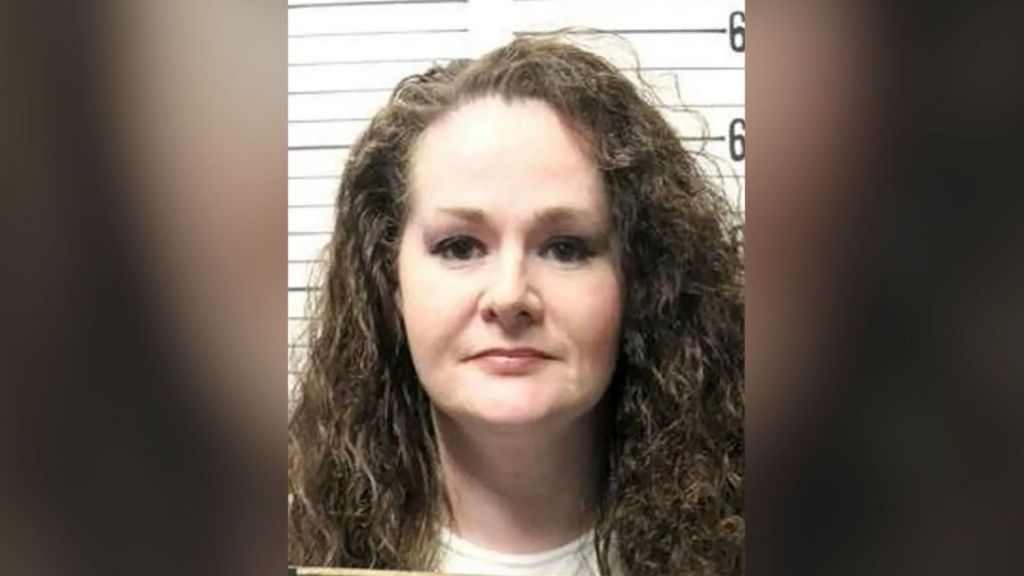
A botched lethal injection execution attempt has thrown Tennessee’s capital punishment system into crisis, leaving the state’s only female death row inmate critically ill after corrections officials failed to end her life as scheduled.
Christa Pike, 50, who was sentenced to death for the 1995 brutal murder of 19-year-old Colleen Slemmer, was administered two full doses of the lethal drug pentobarbital Wednesday during the planned execution. Instead of dying as intended, she survived, and was transported by ambulance to a Nashville-area hospital for emergency care. By Thursday night, court filings from her legal team confirmed Pike remained unconscious, intubated and dependent on a ventilator while medical staff work to flush the drug from her system and save her life.
Court documents detail a harrowing sequence of errors during the execution procedure. According to Pike’s attorneys, execution team members used at least seven separate needles in repeated attempts to place a functional intravenous (IV) line, with one needle bending to a 90-degree angle before it was removed. At one point, Pike herself was forced to guide the team to potential vein sites. Throughout the administration of the lethal doses, her lawyers report, Pike could be heard crying, whimpering, and breathing heavily in obvious distress.
Pike’s legal team had long warned of the high risk of complications for this execution. The inmate lives with thrombocytosis, a blood-clotting disorder, and has naturally small veins, conditions her attorneys argued would make lethal injection unnecessarily painful and difficult to carry out successfully. Their latest court filings allege that at no point during the procedure did the execution team recognize that IV lines had not been correctly placed, and that veins had ruptured, meaning all or part of the pentobarbital never entered Pike’s bloodstream properly.
An independent anesthesiologist advising the defense, Dr. Joel Zivot, confirmed that two full doses of pentobarbital would have been sufficient to cause death if the drug had entered normal circulation. He told the court the only plausible explanation for Pike’s survival is that the pentobarbital never reached a lethal concentration in her blood. Blisters found on Pike’s arm after the attempt, Zivot added, point to ruptured veins that caused the drug to leak into soft tissue under her skin rather than entering circulation. He also noted that Pike’s thrombocytosis may have contributed, forming blood clots at the injection site that blocked the drug from moving into veins, while degraded pentobarbital from poor manufacturing or improper storage is another potential contributing factor.
In the wake of the failed execution, Pike’s legal team has taken two major actions: they have filed an emergency motion demanding that all physical, written and electronic evidence related to the botched procedure be preserved for investigation, and they are now pushing to have Pike’s death sentence commuted, arguing the botched attempt constitutes cruel and unusual punishment.
The botched execution went forward despite multiple last-minute legal challenges. The U.S. Supreme Court rejected two separate bids to halt the procedure, and Tennessee Governor Bill Lee denied Pike’s request for clemency ahead of the attempt.
To contextualize the case: Pike was just 18 years old when she, alongside her then 17-year-old boyfriend Tadaryl Shipp, tortured and killed Slemmer, a fellow college student, in Knoxville. The murder was motivated by Pike’s belief that Slemmer had insulted her and tried to steal Shipp. Shipp was spared the death penalty under Tennessee law because he was a minor at the time of the crime, and remains incarcerated on a life sentence with the possibility of parole. The case drew intense local media attention, leading to Pike’s death sentence in 1996.
In response to the botched attempt, Governor Lee has ordered a independent external review of the incident, and has immediately suspended all scheduled executions in Tennessee for the remainder of the year. The Tennessee Department of Corrections has thus far defended its execution protocol, stating that its procedures do not allow for additional steps beyond those that were carried out during the attempt. State authorities have not yet offered any public explanation for what went wrong, nor have they confirmed whether they will attempt to execute Pike a second time in the future.