For years, productive dialogue between British Muslim civil society groups and the UK central government was largely non-existent. The blame for this disconnection does not lie with Muslim communities, but with successive Conservative Party governments that made little to no effort to build open, trusting relationships with mainstream Muslim organizations — a gap that grew particularly pronounced after 2020, before the Conservatives were voted out of power in 2024.
Today, that landscape has shifted dramatically. At the 2026 Labour Party conference in Liverpool, attendees across Muslim MPs, party members and civil society representatives shared a widespread sense of cautious optimism: after years of estrangement, relations between the government and British Muslim communities are finally on the mend. One senior parliamentary advisor even described the shift as “a new hope,” echoing the iconic line from *Star Wars* to capture the mood of change.
This transformation is widely credited to Prime Minister Andy Burnham’s leadership. While Keir Starmer’s previous Labour government did take initial steps to improve engagement, the relationship remained deeply strained. A large share of Muslim voters abandoned Labour over the party’s unwavering support for Israel during the Gaza conflict, creating a rift that took time to heal. Under Burnham, however, ties between the government and Muslim civil society are now closer than they have been in decades.
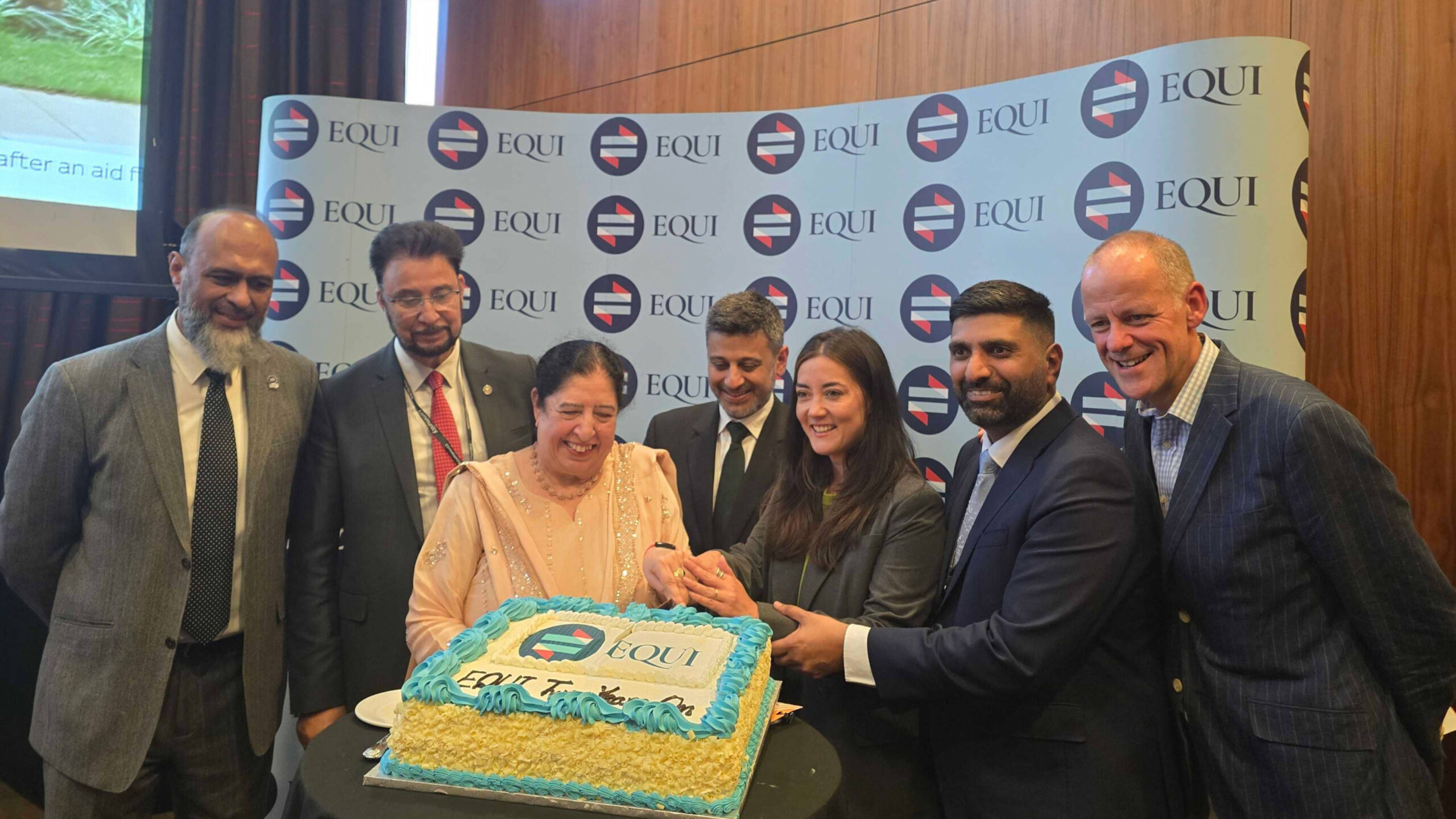
The shifting dynamic was on clear display at a Sunday evening event hosted at Liverpool’s Hilton Hotel, marking the second anniversary of Equi, a prominent Muslim think tank based in the UK. The venue was filled to capacity with representatives from Muslim civil society groups, rank-and-file Labour members, and multiple sitting MPs.
Professor Javed Khan, director of Equi, opened his remarks by sharing a landmark moment of engagement: just days before the conference, he was invited to the Foreign Office by Foreign Secretary Ed Miliband, ahead of Miliband’s official announcement of new sanctions targeting illegal Israeli settlements in the occupied Palestinian territories.
Khan explained: “We were invited because the Foreign Office recognizes that every action it takes internationally has a ripple effect here at home. I came out of that meeting quite enthused. There is still a long journey to travel on these issues, but what this government has done already is far better than any previous British government. To sit with the foreign secretary and hear him directly lay out the logic and purpose of his policy was particularly impressive.”
Foreign Office minister Uma Kumaran followed with a keynote address, acknowledging the long history of exclusion that British Muslim communities have faced. “I know that over the past two years, there have been many moments when British Muslim voices and this community have felt like they have not been heard,” she said. “I am not going to stand here and pretend otherwise. This is something I have spoken about openly, and Foreign Secretary Ed Miliband has acknowledged that this has to change. I hope you have already seen the first shoots of that change over the past few weeks.”
Even amid the celebration of progress, attendees and speakers universally highlighted a pressing shared threat: the rapid rise of far-right extremism across the UK, which targets Muslim communities and seeks to deepen societal division. “They want to divide us because a divided Britain suits their agenda and their politics,” Kumaran said. “What we cannot do is fall victim to that division. Instead, we have to join this fight together.”
Bolton South and Walkden MP Yasmin Qureshi echoed this sentiment, noting that public discourse around British Muslims too often frames the community as a source of problems, rather than core contributors to British society. “Muslims are constantly talked about in relation to challenges, not recognized as full members of this society who contribute so much to every part of our national life,” she said.
Later in the event, former faith minister Lord Wajid Khan took the stage, with Javed Khan joking that the peer “broke all land speed records for the number of meetings he held as minister — the civil servants are still recovering.” In his remarks, Lord Khan framed faith communities as a critical resource for the UK, calling them an “emergency service” that reaches parts of society the government often cannot. He pointed to key examples: the work of faith groups during the coronavirus pandemic, the national vaccine rollout, and the 2024 race riots, where community organizations stepped in to de-escalate tension and support vulnerable neighborhoods when official response fell short.
The event also featured remarks from Osman Koray Ertas, Turkish ambassador to the UK, who noted that divisive, populist rhetoric is a global challenge, not just a British one. “We are all living in a world where divisive politics and rhetoric is rampant, not only here, but in all corners of the world, all the way from Asia to Europe and then the Americas,” he said. “The work Equi is doing is not only valuable for this country, but globally.”
Alongside its anniversary celebrations, Equi used the event to launch a new landmark report on migration to the UK, copies of which were distributed to all attendees. The report challenges widespread misperceptions about migration in Britain: while two-thirds of the UK public believe migration levels are still rising, the data shows migration has actually fallen sharply in recent years. It draws on official data to highlight the widespread economic contributions of migrant communities, noting that migrant-owned businesses sustain more than 400,000 jobs across the UK, and that migrant nurses and doctors contribute £166,000 more in tax over their lifetimes than they draw in public services, according to the UK government’s own Migration Advisory Committee.
To build greater public understanding of migration’s role in British society, the report recommends embedding migration history into the national curriculum as part of the Department for Education’s ongoing reforms to bring diverse communities together. Writing in the report’s foreword, Fraser Nelson, former editor of *The Spectator*, praised Equi’s balanced, fact-based approach: “Equi does not pretend that migration is simple, nor does it shy away from the pressures that immigration creates. But any serious discussion must begin with facts. And the facts are striking. Migrants have been central to Britain’s economic success, from pre-war Britain to sustaining the NHS today.” Nelson added that “immigration works when those who arrive can find jobs, homes and schools and play their parts as citizens. It fails when the pace of change outruns the ability of communities and public services to absorb it.”
After speeches from additional Labour MPs including Sarah Owen, Zubir Ahmed and Afzal Khan, attendees gathered to cut and share a large anniversary cake marking Equi’s two years of work.
Conventionally, meaningful engagement with all segments of civil society — including faith-based groups and representative organizations — is a core pillar of Britain’s model of multicultural governance. But for British Muslims, this basic standard of engagement has been out of reach for years, a lingering legacy of Conservative Party policy. Even under the new Labour government, gaps remain.
Most notably, the Muslim Council of Britain (MCB), the UK’s largest umbrella body for Muslim civil society with more than 500 affiliated organizations and a democratically elected leadership, remains excluded from official government engagement. The boycott originated under the Conservative government (it has never been formalized as official policy) and was inherited by Labour, and no government department has been able to publicly explain why the exclusion remains in place. While Equi holds significant influence and credibility across British Muslim civil society, it cannot replace the MCB’s role as the nation’s peak representative body for Muslim communities, nor can other groups like the British Muslim Trust, which monitors anti-Muslim hate, fill that gap.
Still, one anonymous Labour MP told Middle East Eye that the status quo is set to shift soon, with ministers preparing to resume formal engagement with the MCB. Whether that change comes to pass remains to be seen. What is undeniable, however, is that Andy Burnham’s government has turned a decisive new page in the relationship between the UK government and British Muslim civil society, ending years of estrangement and opening a new era of dialogue.