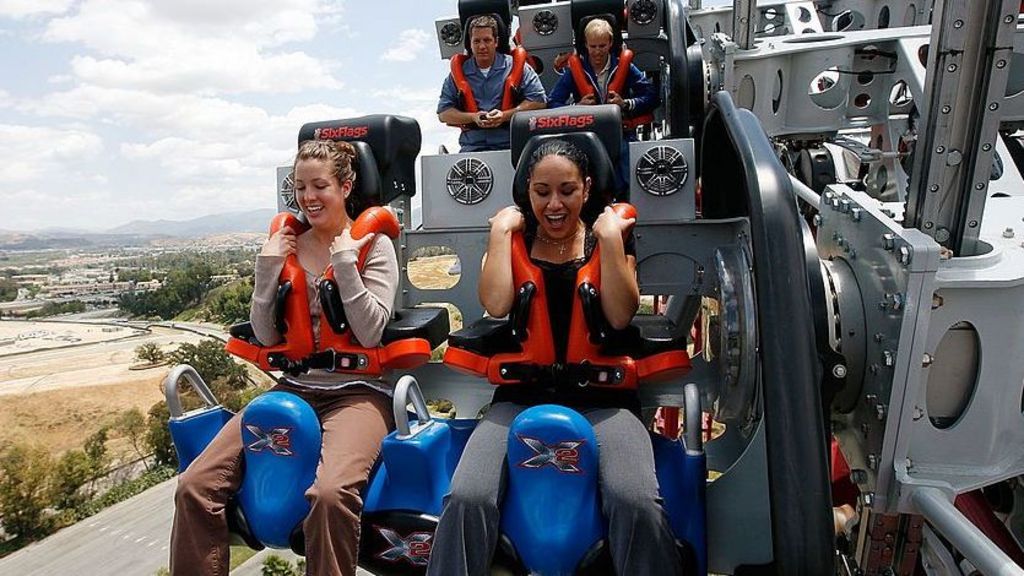
One of Southern California’s most iconic and high-adrenaline amusement park attractions is closing its gates for good, following years of safety allegations, hundreds of injury claims, and a high-profile wrongful death lawsuit that put the ride’s design under intense public scrutiny. Six Flags Magic Mountain, located north of Los Angeles, confirmed this week that it will permanently retire the X2 roller coaster, a 22-year-old 360-degree spinning thrill ride that long drew packed lines and a reputation as one of the park’s most exciting offerings. The ride has been shuttered since July this year, and the permanent closure announcement comes amid mounting legal pressure from hundreds of former visitors who allege the ride caused life-altering brain damage.
In a public statement announcing the permanent retirement, Six Flags Magic Mountain President Brian Oerding emphasized that the company’s own internal testing had not found active safety failures. “Ride safety has always been the foundation of our operations,” Oerding said. “When we recognized that guest trust in this ride had been irreparably impacted, we made the decision to retire it because it was the right thing to do for our community and our visitors.”
But for the law firms representing the hundreds of claimants, the decision comes far too late to undo the harm done. Dordick Law Corporation, which represents dozens of plaintiffs in civil suits against Six Flags over X2, says it has been contacted by more than 700 people who say they developed serious brain injuries after riding the coaster. “Visitors got on X2 looking for a fun, thrilling day out,” the firm said in a statement responding to the closure. “Instead, they walked away with catastrophic, life-changing brain injuries. Some required emergency brain surgery, and others are still fighting years later to rebuild the lives they lost.” While the firm acknowledged that closing the ride will prevent future harm to new visitors, it noted that the decision provides no compensation or remedy for the people already injured by the attraction.
The history of X2 stretches back to 2002, when the ride first opened to the public under the original name X. Almost immediately after opening, reports of design flaws forced Six Flags to shut it down for months of emergency repairs, the Los Angeles Times first reported. The ride reopened only to be shuttered again in 2007, when park officials replaced the original heavy trains with lighter models to reduce stress on the track and structures. It reopened under the new name X2 in 2008, and over its decades of operation, more than 16 million visitors rode the attraction, according to Six Flags data.
The most high-profile case linked to X2 is the 2022 death of 22-year-old Christopher Hawley, who died days after riding the roller coaster. Hawley’s family reached a settlement in their wrongful death lawsuit against Six Flags this past August. In a statement to the BBC, Brent Wisner, an attorney with Wisner Baum LLP representing the Hawley family, said the closure does not erase the failure that allowed a dangerous ride to operate for nearly 20 years.
“The Hawley family is relieved to know that no other visitors will be put at risk on X2, but that does not bring Christopher back, and it does not change the fact that he was killed by a dangerous roller coaster that was permitted to operate for almost two decades,” Wisner said. He called the closure insufficient, and argued that the case points to a broader failure of regulatory oversight in the amusement park industry. “That tragedy can never be undone,” Wisner added. “We cannot depend on profit-focused corporations to do the right thing only after hundreds of people have been injured and one has been killed. We need legal reform, stronger proactive regulation, and consistent governmental oversight to keep visitors safe. We can only hope that whatever attraction replaces X2 meets far higher safety standards.”