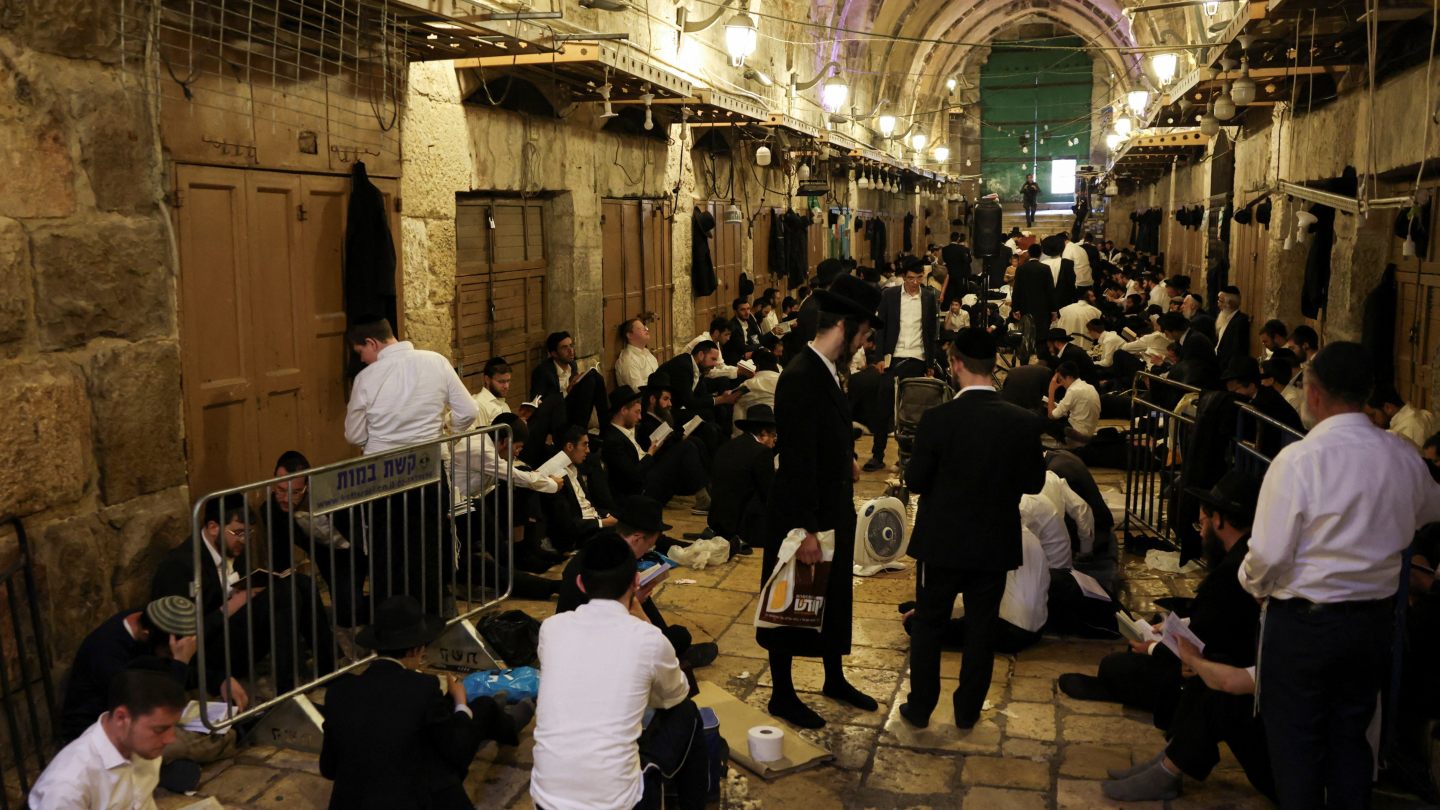
Long-simmering tensions around Jerusalem’s highly contested Al-Aqsa Mosque compound have surged to a new boiling point this month, after a series of high-profile Israeli incursions into the holy site drew fierce condemnation from Palestinian and Muslim leaders globally.
In a public statement released recently, Khaled Meshaal, a senior member of Hamas’ political bureau, issued a stark warning that the incremental measures Israel has enacted around the Al-Aqsa compound are systematically clearing the path for full Israeli control over the site. Meshaal outlined multiple concerning actions: a reported 40-day closure of the mosque, the implementation of what he called temporal restrictions to allow repeated incursions by extremist Jewish factions, and ongoing efforts to create a spatial partition by clearing out critical communal facilities within the mosque’s courtyard.
Meshaal emphasized that Al-Aqsa has reached a defining turning point, calling for coordinated action to defend the site, including what he framed as a organized strategy of resistance. He further appealed to Arab and Muslim-majority nations to stand in solidarity with the Palestinian people, and urged Palestinians to maintain a constant, unyielding physical presence at the compound to safeguard its status.
Meshaal’s remarks came exactly one week after Israeli Prime Minister Benjamin Netanyahu made a highly provocative visit to excavated tunnels running beneath the Al-Aqsa compound, a move that came as hundreds of Israeli settlers staged a large incursion into the holy site. The visit coincided with Netanyahu’s attendance at annual Selichot prayers held at the Western Wall, a Jewish holy site located just adjacent to the Al-Aqsa complex, in the lead-up to Yom Kippur, the holiest observance on the Jewish religious calendar.
Netanyahu later shared a public video of the tour featuring himself and his wife Sara, telling supporters: “It is moving to touch the rock of our existence. We are here very close to the Holy of Holies. We are here, and we will always remain here.”
Just days earlier, on September 20, hundreds of Israeli civilians and officials, including far-right National Security Minister Itamar Ben Gvir, pushed into the Al-Aqsa compound. Footage captured Ben Gvir praying openly within the complex under a heavy guard of Israeli security forces. The Palestinian Authority’s Jerusalem Governorate put the total number of raiders at approximately 800.
The incursions drew immediate widespread condemnation from international Muslim bodies. The Muslim World League issued a sharp statement rejecting the raids, with Secretary-General Dr. Muhammad Al-Issa denouncing the actions as provocative provocations that inflame religious sensitivities among Muslim communities across the globe. Al-Issa called on the international community to intervene to put a stop to repeated Israeli violations of the mosque and its long-standing legal status quo.
The status quo agreement at the center of the dispute is a decades-old regulatory framework that governs access and administration of the 14.4-hectare Al-Aqsa compound. Under the terms of the arrangement, the entire site is formally recognized as an Islamic holy site, with full responsibility for access management, prayer arrangements, maintenance, and archaeological oversight assigned to the Jerusalem Islamic Waqf, the Palestinian religious trust that administers the site.
However, since Israel occupied East Jerusalem in the 1967 Six-Day War, it has gradually eroded the Waqf’s authority and undermined the status quo through persistent measures, including the approval of near-daily incursions by Jewish visitors and open Jewish prayer at the site – changes that have steadily shifted the long-held balance of control at one of the world’s most religiously sensitive sites.