Tensions between Russia and Western-backed NATO have escalated sharply this week, following a suspected act of sabotage at a key Starlink satellite internet station in central Poland, new warnings of rising hybrid warfare risks, and a wave of deadly Russian airstrikes across Ukraine that spilled into neighboring EU states.
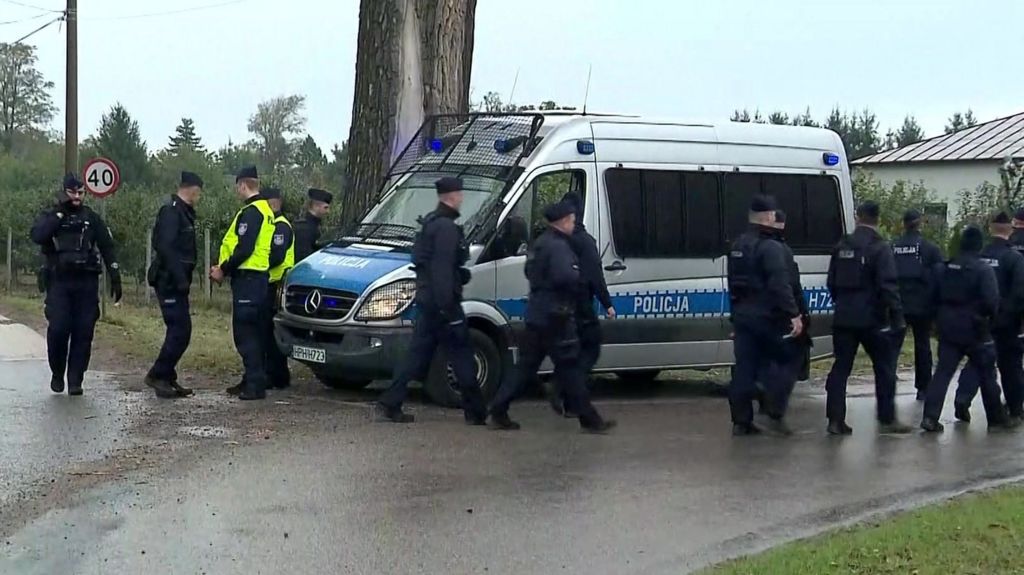
Poland’s Deputy Prime Minister Krzysztof Gawkowski has publicly labeled Wednesday night’s fire at the facility in Wola Krobowska, Masovian Voivodeship, as a deliberate sabotage attack targeting internet connectivity supplied to Ukraine’s military. Speaking to public broadcaster TVP Info, Gawkowski said the incident was designed to disable the station, which routes Starlink internet traffic provided by SpaceX through Polish territory to Ukrainian forces and other institutions. While the station remains fully operational despite the damage, Gawkowski noted multiple lines of evidence point to the attack aligning with a new Russian doctrine of asymmetric targeting of critical infrastructure. The Kremlin has not yet issued any response to the accusation.
Polish Prime Minister Donald Tusk struck a more cautious tone during a joint press conference with Bulgaria’s prime minister on Thursday, saying he was reluctant to definitively label the incident as sabotage rather than an accident without conclusive proof, but acknowledged the circumstances looked suspicious. The fire came on the same day Poland confirmed a Russian military helicopter had briefly violated its airspace, prompting the Polish air force to scramble fighter jets to intercept the aircraft.
Across the Baltic Sea, Denmark’s intelligence service has published an updated national threat assessment that supports the growing consensus across European capitals that Russia is preparing to escalate its campaign of hybrid warfare against NATO members in the coming months. While the assessment stressed that a full-scale military attack on Denmark remains highly unlikely, officials warned the risk of limited, covert Russian attacks against critical infrastructure is low but growing. This warning echoes recent statements from several other NATO European members, who have publicly warned Russia is carrying out preparatory operations to test the alliance’s collective defense commitment amid its ongoing full-scale invasion of Ukraine. Moscow has consistently denied these accusations.
Just weeks ago, Germany formally blamed Russian actors for an attempted drone attack on Leipzig/Halle Airport, while French authorities have ordered a national security plan to harden protections for critical infrastructure and domestic defense industry sites against potential attacks. Hybrid warfare, a term used to describe non-conventional, covert attacks designed to destabilize an adversary without triggering a full-scale military conflict, commonly includes tactics such as infrastructure sabotage, cyberattacks, and misinformation campaigns, with attacks often carried out by proxy actors to allow the sponsoring state to deny involvement. Despite mounting evidence pointing to Russian involvement in a string of such attacks across Europe, Moscow has consistently rejected any claims of responsibility.
The rising tensions over hybrid threats coincided with one of the deadliest nights of Russian aerial attacks on Ukraine in recent weeks, with strikes hitting residential and civilian sites in both Kharkiv and Kyiv. In the Kharkiv region village of Stara Hnylytsia, a Russian strike hit a working vegetable farm, killing six agricultural workers – four of them women – and wounding 12 more. In Kyiv, overnight strikes left two civilians dead, injured eight others, and damaged more than 50 civilian facilities, including a maternity hospital. Remarkably, as the attack unfolded, a pregnant woman sheltering in the hospital’s basement gave birth to a healthy baby boy, with the hospital director noting that “even on such a terrible night, life goes on.”
The Russian defense ministry claimed it had exclusively targeted legitimate military objectives, including Ukrainian defense facilities, logistics hubs, and telecommunications centers, as well as military vessels. The wave of Russian drones launched in the attack crossed multiple international borders, with Moldova’s president confirming four Russian drones entered Moldovan airspace, at least one of which detonated inside the country. Romania also confirmed one Russian drone crashed on its territory, marking another instance of Russian strike debris landing on NATO sovereign territory amid the ongoing war.
Russian aerial attacks have grown increasingly deadly and difficult to defend against in recent months, after Russia introduced a new fleet of jet-powered assault drones that fly faster and are far harder to shoot down than older, slower designs. Ukraine’s military is now racing to develop low-cost counter-drone weapons, as existing air defense missiles and fighter jet interceptions are prohibitively expensive to use against the relatively cheap unmanned vehicles.
Speaking at the United Nations General Assembly in New York on Wednesday, Ukrainian President Volodymyr Zelenskyy reiterated his appeal to Western allies, particularly the United States, to provide additional ballistic missile interceptors to protect Ukrainian civilian populations from Russian airstrikes. Zelenskyy argued that Russian leader Vladimir Putin must be stopped from expanding the war beyond Ukraine’s borders, saying “Putin is always looking for someone who can help him kill more, kill more people for every kilometre of land.” He also confirmed Ukraine plans to target Russian energy infrastructure through the coming winter months, a tactic both sides have used in previous years of the conflict.
Zelenskyy’s comments came as a Russian presidential envoy, Kirill Dmitriev, traveled to the United States to hold meetings with former senior officials from Donald Trump’s administration, including ex-special envoy Steve Witkoff and former White House senior advisor Jared Kushner, according to Reuters, which cited two unnamed sources familiar with the trip. On Wednesday, Russian Foreign Minister Sergei Lavrov told the UN Security Council that Russia would not agree to any ceasefire or pause in the full-scale invasion it launched in February 2022, when Putin ordered troops across Ukraine’s border. Moscow currently controls approximately 20 percent of Ukraine’s internationally recognized territory, including the Crimean peninsula, which it illegally annexed in 2014.
Russian leaders have repeatedly denied any plans to attack NATO member states, though Lavrov warned this month that if Europe launched an attack on Russia, the resulting conflict would be “completely different” from the war in Ukraine and “very short.”