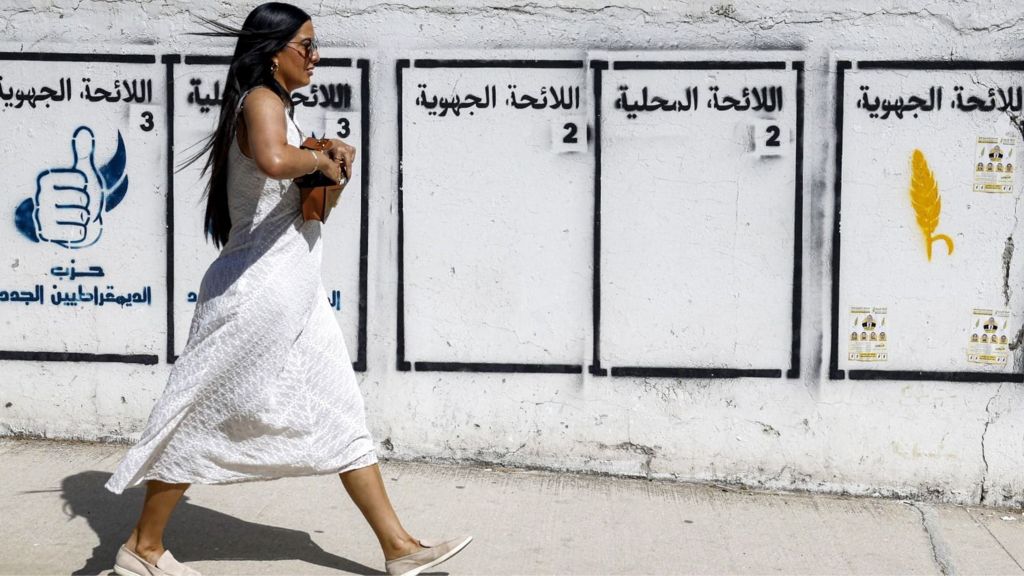
As Morocco prepares to hold its parliamentary elections this Wednesday, 27 political parties are competing for 395 seats in the country’s House of Representatives, with disillusioned young voters emerging as the central demographic all campaigns are scrambling to win over. In a political system structured as a constitutional monarchy, where King Mohammed VI holds ultimate executive authority—appointing the prime minister from the top-performing party and presiding over the kingdom’s highest policy-making body, the Council of Ministers—this election comes against a backdrop of growing youth frustration over systemic economic stagnation and political disconnect. Just weeks before voting day, a historic mass migration event laid bare the depth of this discontent: roughly 60,000 people, most of them young Moroccans desperate for better opportunities, risked their lives crossing from northern Morocco to the Spanish enclave of Ceuta, a surge that left at least 100 dead in the deadliest crossing event the enclave has seen in modern history. This moment of crisis followed a nationwide wave of Gen Z-led protests that erupted in September 2025, when thousands took to the streets to decry sky-high youth unemployment, failing public healthcare, and soaring living costs. Demonstrators chanted calls for “freedom, dignity, and social justice,” before their demands escalated to targeted calls for current Prime Minister Aziz Akhannouch to step down. The government’s crackdown on the unrest resulted in more than 2,400 protesters facing criminal prosecution, but the movement has nonetheless pushed a small cohort of young activists to run for office themselves, seeking to channel grassroots anger into institutional change. Among these new candidates is 29-year-old Hamza El Kharroubi, a former protester who was briefly detained during last year’s demonstrations. Running for a parliamentary seat with the small, green-aligned Environment and Sustainable Development Party, El Kharroubi represents the small but growing number of young people choosing to enter politics despite deep systemic skepticism. A native of Tetouan, just 21 miles from the Fnideq beach where the Ceuta migration surge began, he has made accountability for the crossing victims a core part of his platform, calling for financial compensation for the families of those who died. El Kharroubi frames the mass crossing as a direct consequence of Morocco’s long-running economic crisis: IMF data puts national unemployment at 13% for last year, with youth unemployment (for 15 to 24-year-olds) reaching a staggering 37.3%. Rather than aiming to defeat the country’s established political heavyweights this cycle, he says his goal is to claim a parliamentary seat to lay groundwork for a stronger youth-led political bloc by 2031. “As young people, we have to enter the parliament so by 2031 we have strong young politicians who can compete for a seat in the government,” he explained. Not all young activists share his belief in institutional change, however. Siham Azeroual, a 32-year-old environmental activist from the Atlas region, says she sees the current political landscape as little more than performative spectacle. “I have no hope for this election. I’m ashamed of our political scene. It’s a complete circus,” she told the BBC. Azeroual, who has taken part in both the 2011 February 20 movement that rewrote Morocco’s constitution and last year’s Gen Z protests, argues that meaningful change must start at the grassroots community level rather than inside parliament. Still, she says she plans to cast a ballot on Wednesday, seeing even incremental participation as a necessary step toward progress. While many young voters remain deeply skeptical of traditional parties, one political outsider has emerged as a surprise breakout star of the 2026 campaign: Fouzi Lekjaa, the wildly popular head of the Royal Moroccan Football Federation, who is also a senior finance ministry official. Credited with driving the success of the Moroccan men’s national team, the Atlas Lions, which became the first Arab and African squad to reach a World Cup semi-final in 2022, Lekjaa joined the centrist Party of Authenticity and Modernity (PAM) back in July. With Morocco set to co-host the 2030 World Cup alongside Spain and Portugal, the football-mad nation has latched onto Lekjaa’s campaign, with videos of his rallies going viral online and crowds chanting the iconic “Sir” (meaning “Go” in Moroccan Arabic) catchphrase that defined the 2022 World Cup run. Lekjaa has leaned into this popularity, promising to lift Morocco to a top-six global ranking in education and healthcare—matching the current FIFA ranking of his national team. The ruling National Rally of Independents (RNI), led by incumbent Prime Minister Akhannouch, is seeking a second term, and has renewed its core campaign pledge to create one million new jobs by 2030, a promise that echoes across previous election cycles. Political analyst Rachid Aourraz, of the Moroccan Institute for Policy Analysis, says such promises are hollow. “The slogan ‘one million jobs’ has become an overused electoral slogan. There is also talk of raising the minimum wage, but what is proposed cannot withstand a structural inability to create stable net jobs,” Aourraz noted, adding that Morocco’s major parties do not compete over alternative governing models—only over how to implement policies already outlined by the royal palace. Alongside economic promises, foreign policy has also become a key dividing line in the campaign, with the Islamist Justice and Development Party (PJD) seeking a political comeback by weaponizing widespread public anger over Israel’s actions in Gaza. Morocco normalized diplomatic relations with Israel in 2020 as part of the US-brokered Abraham Accords, a deal negotiated when the PJD held power. Now led by populist former prime minister Abdelilah Benkirane, the party is running on a promise to fully cut diplomatic ties with Israel, calling the 2020 normalization a historic mistake. Widespread pro-Palestinian protests have rocked Morocco throughout the Gaza war, with tens of thousands demonstrating weekly in the capital Rabat, leading to the closure of Israel’s liaison office and the suspension of direct flights between the two countries. Despite this public outcry, Morocco and Israel announced earlier this month an agreement to reopen full reciprocal embassies, following talks between their top diplomats and the US ambassador to the United Nations. Benkirane has seized on the announcement to rally supporters, telling a Marrakesh campaign rally: “If we work hard, the king will close the Israeli embassy. The king does not like going against his own people.” For all the focus on winning youth votes, demographic data shows young people remain drastically underrepresented among the electorate: while more than half of Morocco’s 38.8 million population is under 35, just 4% of the 15.8 million registered voters are between 18 and 24. Many young Moroccans in the diaspora have also been shut out of participation, despite being at the forefront of last year’s protest movement. Hiba, a 27-year-old Moroccan living in Montreal, Canada—home to a community of more than 100,000 Moroccan expats—co-organized multiple pro-protest events for Gen Z in the city, where activists could speak freely without fear of prosecution that they would face at home. She says she would have voted via proxy, the only option for diaspora voters, but was unable to arrange for a representative in Morocco. Even so, she sees the protest movement as having already delivered small wins: “Gen Z protests didn’t go in vain. We achieved something. At least now we see more debates with young people on state TV,” she said. As polling stations open across the kingdom on Wednesday, the election will not only determine the makeup of the next government—it will also serve as a critical test of whether Morocco’s political establishment can address the deep-seated frustrations that have pushed a generation of young people to protest, risk dangerous migration, and question the status quo.