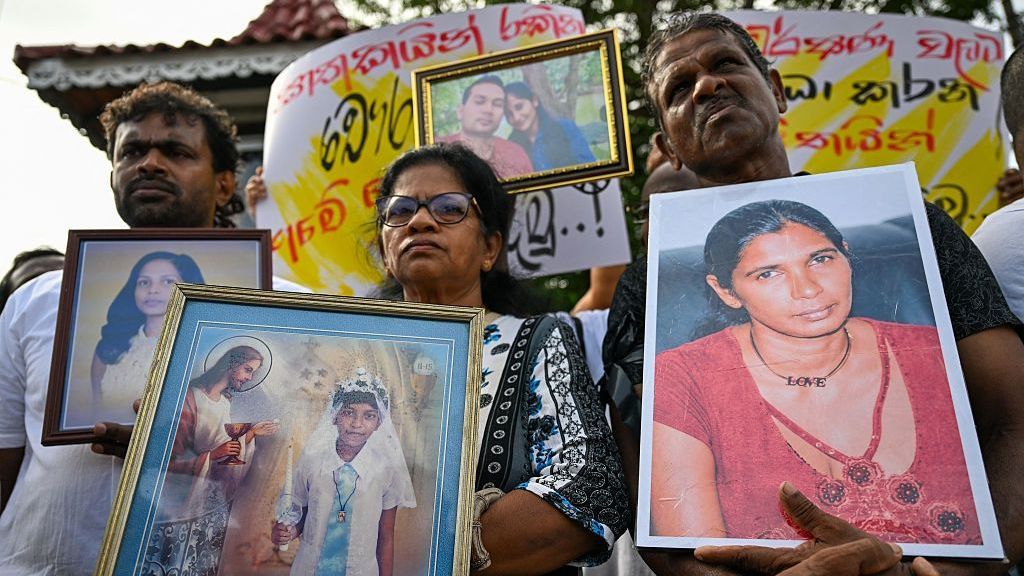
Five years after the coordinated suicide bombings that shattered Sri Lanka’s Easter holiday and left hundreds dead, a Sri Lankan court is preparing to deliver its long-awaited verdict on the high-profile case targeting the alleged ringleader and 23 other co-accused individuals linked to the 2019 attacks.
On Easter Sunday 2019, a wave of bombings targeting packed churches holding Easter worship services and three upscale luxury hotels across the country killed 270 people and left more than 500 others injured. The attack remains the deadliest act of large-scale violence to hit Sri Lanka in the decade following the end of the country’s 26-year civil war in 2009.
Among the 24 defendants facing judgment are associates and family members of the nine suicide bombers who carried out the coordinated attacks. All defendants collectively face more than 23,000 criminal charges, ranging from murder and conspiracy to commit terrorist acts to illegal possession of firearms and explosive materials.
Prosecutors have identified Naufer Moulavi as the primary organizer and mastermind behind the coordinated bombings. During the trial proceedings, the prosecution submitted a confession that they say Moulavi gave voluntarily, in which he admitted his central role in planning the attacks, a document the court formally accepted into evidence. However, Moulavi later walked back this admission, telling the three-judge panel hearing the case that he was not shown the content of the document he signed, and has repeatedly denied all allegations against him.
The multi-year trial has drawn on testimony from more than 2,300 prosecution witnesses, and includes more than 2,000 pieces of material evidence, ranging from unexploded explosives to weapons seized during investigations into the attack network.
The 2019 bombings exposed catastrophic systemic failures in Sri Lanka’s national security and intelligence apparatus. In the immediate aftermath of the attacks, authorities acknowledged a major intelligence lapse, with parliament revealing that a detailed advance tip-off about the planned attack from Indian intelligence services was never properly circulated or acted on by senior Sri Lankan security officials.
In the years since the attack, legal consequences have already been handed down for senior officials linked to the security failures. In 2023, the country’s Supreme Court found former Sri Lankan president Maithripala Sirisena legally responsible for the national security breakdown that enabled the attacks, ordering him to pay millions of rupees in compensation to victims and their families. Just last month, two former senior security officials were sentenced to death on charges of criminal negligence connected to the attack. While death sentences are still handed down in Sri Lanka, a decades-long moratorium on executions means most such sentences are ultimately commuted to life imprisonment.
For five years, victims’ families and activists have held repeated public demonstrations across Sri Lanka, demanding full accountability and justice for the hundreds of lives lost in the attacks. Tuesday’s verdict comes as a separate, parallel investigation proceeds against former intelligence chief Suresh Sallay, who stands accused of colluding with Islamist extremist groups to orchestrate the bombings.
These allegations echo explosive claims made in a 2023 documentary by British public broadcaster Channel 4, which featured whistleblower testimony claiming the attacks were intentionally allowed to proceed to boost the political popularity of the Rajapaksa family, a political dynasty that has dominated Sri Lankan politics for decades. Sallay, who was arrested in connection with the case in February, has denied all allegations against him. Former president Gotabaya Rajapaksa, who was elected just months after the 2019 attacks running on a hardline platform of combating Islamist extremism, has also denied any connection to the plot. Currently barred from leaving Sri Lanka, Rajapaksa has filed a court petition seeking protection from potential arrest amid the ongoing investigations.