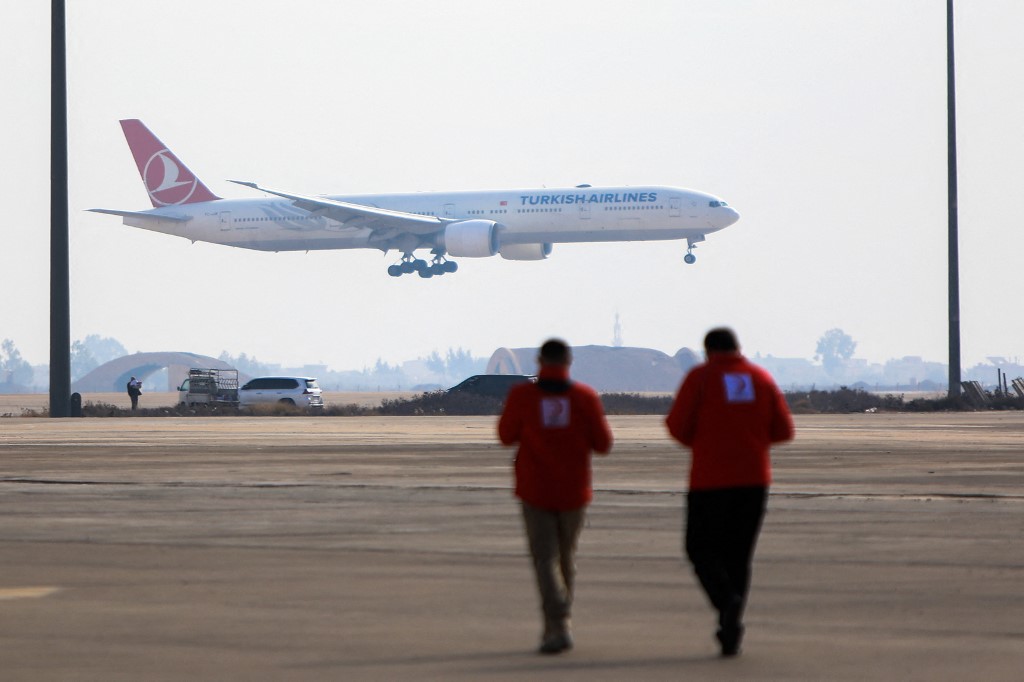
Three of Turkey’s major air carriers—national flagship Turkish Airlines, low-cost operator AJet, and budget competitor Pegasus—have halted all incoming and outgoing flights between Turkey and Iran starting September 21, according to an investigation by Middle East Eye, a move directly tied to the enforcement of updated United States sanctions against Tehran.
A public check of Turkish Airlines and AJet’s official booking platforms shows no available route options for travel between the two countries through the end of March 2027. For Pegasus, all listings for Iranian destinations have been fully removed from the airline’s booking system indefinitely, with no timeline for their return posted publicly. In a separate report, Iran International cited an anonymous Turkish Airlines representative confirming that the airline cannot even guarantee that service will resume after the March 2027 window currently marked on its schedules.
A source with direct knowledge of the decision told Middle East Eye that the sweeping scope of US Treasury sanctions targeting Iran’s aviation sector left Turkish carriers with no viable path to continue operating the routes. The source explained that while restrictions on US-built aircraft such as Boeing models were expected, the updated sanctions also bar European-made Airbus jets from entering Iranian airspace, a consequence of the fact that all Airbus aircraft include core components manufactured in the United States. With every major commercial jet in global operation incorporating US-manufactured parts, the source added, carriers had no alternative but to suspend service to comply with sanctions rules.
A senior Turkish government official clarified that as of Monday September 20, only one Iranian air carrier—Mahan Air—faces a ban on entering Turkish airspace. All other Iranian airlines are currently permitted to continue operating flights between the two countries for the time being, the official confirmed.
The flight suspensions come as a notable shift in the economic relationship between Ankara and Tehran. The two neighboring countries have long maintained stable diplomatic relations and extensive cross-border energy and commercial ties, even as the United States has imposed multiple rounds of sanctions on Iran over the last decade. However, since former US President Donald Trump ramped up economic pressure on Tehran, Turkish President Recep Tayyip Erdoğan’s administration has moved gradually to comply with US sanctions measures.
In just the past two weeks, Turkey has taken two additional high-profile steps aligned with US sanctions. Over the weekend, Turkish regulators revoked the decades-old banking license of Iran’s Bank Mellat, which had operated in the country for more than 30 years. The previous week, Turkey’s banking regulation agency seized control of Golden Global Investment Bank after US authorities placed sanctions on the institution over allegations that it facilitated illicit fund transfers to the Iranian government.
Middle East Eye, an independent news outlet focused on the Middle East and North Africa region, provides original, unfiltered coverage of geopolitical and economic developments across the area.