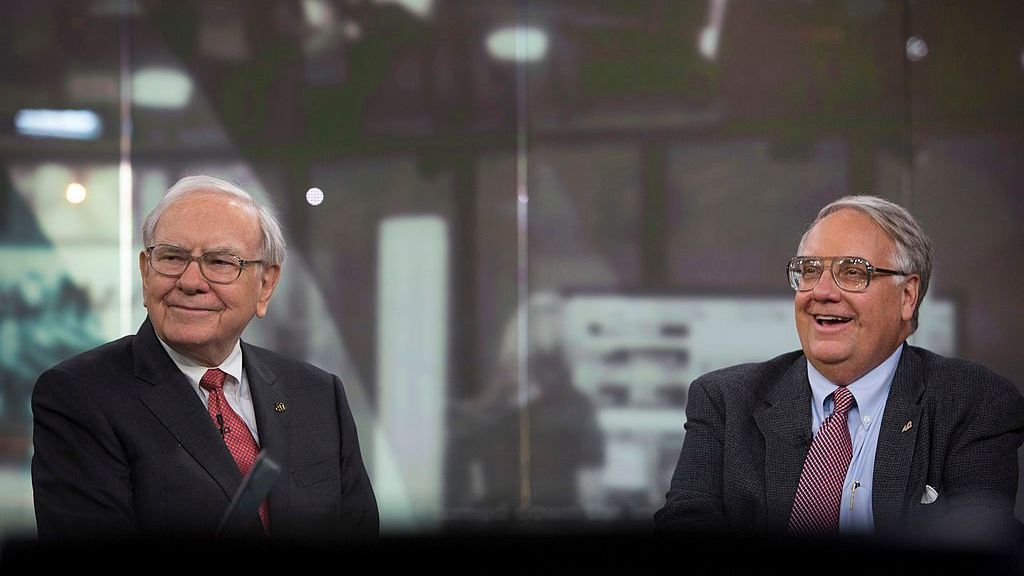
After nearly six decades at the helm of one of the world’s most powerful corporate giants, legendary investor Warren Buffett has formally stepped down as chairman of Berkshire Hathaway, capping off a years-long leadership succession plan that brings his son Howard Buffett into the top board role.
Now 96 years old, the investor widely known as the “Oracle of Omaha” will transition into the honorary position of chairman emeritus, where he will retain a seat on the company’s board of directors to continue contributing his decades of wisdom, judgment and unique market perspective to the firm, according to an official letter released to shareholders this week.
The leadership handover comes nine months after Buffett already passed the title of chief executive officer to Greg Abel, who now oversees all daily corporate strategy and capital allocation decisions. Howard Buffett, who has served as a Berkshire Hathaway board director since 1993, will take on the non-executive chairman role, with his core responsibility defined as stewarding the multinational conglomerate’s foundational culture and core values. A former farmer, county sheriff and active philanthropist, the younger Buffett brings more than 30 years of boardroom experience to the new position.
Buffett built Berkshire Hathaway from a struggling 19th-century New England textile mill, which he took control of in 1965, into a $1.1 trillion global conglomerate with a diverse portfolio that spans major household brands. Today, the company owns full operations across industry leaders including auto insurance giant GEICO, fast-food chain Dairy Queen, and freight railway network BNSF, while holding major equity stakes in blue-chip companies including Apple and Coca-Cola — a brand closely associated with Buffett, who has long been open about his habit of drinking five cans of the soda daily.
A pioneer of value investing, Buffett revolutionized modern investment strategy by popularizing an approach focused on identifying undervalued companies with strong, sustainable fundamentals, purchasing stakes at fair market prices, and holding those investments for decades to generate long-term growth. Beyond his unmatched investment track record, his plain-spoken annual shareholder letters and the hugely popular, festival-style annual Berkshire Hathaway shareholder meetings turned him into a globally respected mentor for generations of investors and business leaders across the financial industry.
The transition has been planned for years, and industry analysts frame the move as an orderly passing of the torch rather than a sudden disruption to the firm. Buffett wrote in his letter that the timing felt right to complete the succession process, noting that he recently marked his 96th birthday alongside the first birthday of one of his great-grandchildren — who, he joked, “is moving a bit faster” than he these days.
Berkshire Hathaway has moved to reassure investors that all day-to-day business operations will remain unchanged and stable following the leadership shift. In closing his letter, Buffett reflected on his decades leading the firm, writing that serving as chairman has been the “privilege of a lifetime,” while acknowledging the inevitability of transition, noting that “Father Time always wins.”