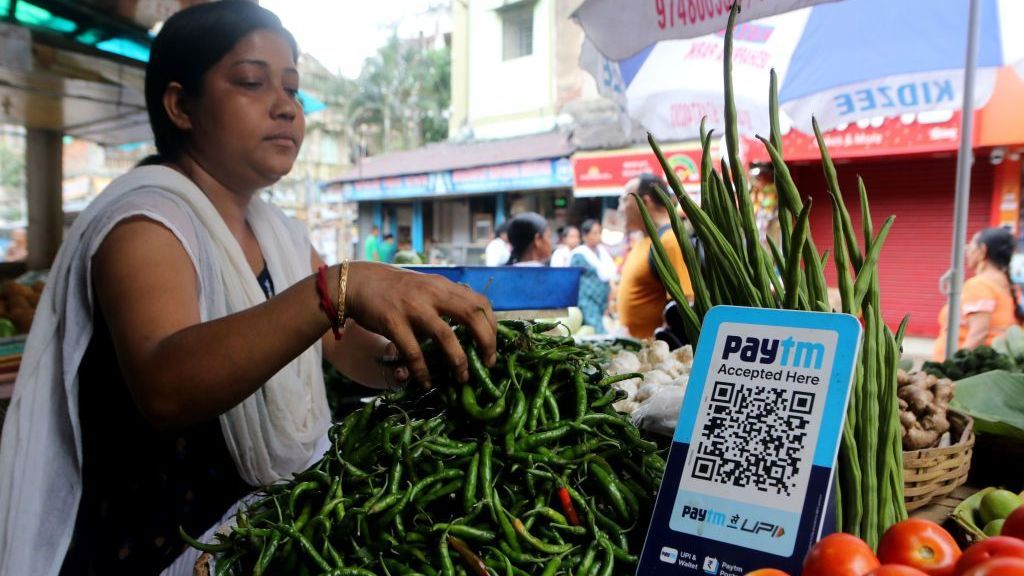
Since its 2016 launch, India’s Unified Payments Interface (UPI) has cemented its reputation as the backbone of the country’s digital economy, transforming how individuals and businesses transfer money and complete purchases. Now, a planned new fee for certain merchant transactions through the ubiquitous platform has ignited broad debate across India’s business and tech sectors, with conflicting views on whether the charge will sustain the system’s growth or undermine its widespread adoption.
The National Payments Corporation of India (NPCI), which operates UPI, announced Tuesday that starting October 15, a 0.4% Merchant Discount Rate (MDR) will apply to eligible UPI payments over 2,000 rupees ($21) made by customers to merchants. Critically, the regulation requires merchants to absorb the full cost of the fee, and explicitly bars them from passing the expense on to consumers. A separate flat 5-rupee fee applies to specific high-value merchant transactions including rail tickets, fuel purchases, telecom bills, insurance premiums and agricultural input payments over the 2,000-rupee threshold. For all other eligible transactions over 2,000 rupees, the 0.4% fee is capped at 300 rupees per transaction, limiting costs for very large payments.
The new structure carves out wide exemptions to limit disruption for most users. All person-to-person transfers remain free, no matter the transaction amount. All merchant payments under 2,000 rupees also stay free of charge, as do QR code-based merchant transactions in rural and semi-urban regions. According to the Indian government, roughly 96% of all person-to-merchant UPI transactions will remain entirely unaffected by the new fees, falling either below the threshold or into one of the exempt categories.
For years after UPI’s launch, the cost of building, operating and expanding the payments infrastructure has been covered primarily by the national government, partner banks and payments service providers. Indian officials frame the new MDR as a necessary step to keep the system sustainable for the long term. In an official press release, the finance ministry clarified that the MDR is not a government-imposed tax; all revenue collected from the fee will be distributed to payments providers, including banks, to fund ongoing operations, infrastructure upgrades, cybersecurity improvements, innovation and future expansion of the UPI network. The government argues that shifting to this market-linked pricing model reduces the burden on public tax revenue that currently covers UPI subsidies, placing the cost on the large businesses that derive the most benefit from the platform.
Despite these justifications, the policy has drawn sharp criticism from analysts and business leaders who warn it could raise operational costs for enterprises and discourage UPI adoption, particularly for larger transactions. Some social media users have pointed out that the zero-cost model has long been UPI’s biggest draw for both merchants and consumers, and introducing fees could erode its core advantage over cash and other payment methods. High-profile voices have echoed these concerns: former Indian government chief economic adviser Krishnamurthy Subramanian has questioned the existing framework’s private cost-benefit analysis, while prominent Indian entrepreneur Ashneer Grover warned in an interview with CNN-News18 that some small shopkeepers may simply refuse large UPI payments and demand cash instead, reversing years of progress toward digitalization.
Bipin Preet Singh, CEO of leading Indian fintech firm MobiKwik, has pushed back on that criticism, supporting the fee as a necessary investment in the system’s future. “When government funds the subsidies paid for UPI, that amount comes from tax payers’ pocket. Moving to market-linked pricing mechanism removes this tax burden and directly links the cost to large businesses which benefit from UPI,” Singh explained.
UPI’s growth over the past decade has been nothing short of revolutionary, cementing its status as the world’s largest digital real-time payments system by transaction volume. NPCI data shows that in August 2025 alone, UPI processed a record 24.51 billion transactions worth a total of 29.82 trillion rupees, approximately $311 billion. It is now a universal tool in India, used by everyone from street-side vegetable vendors to large corporate enterprises, and is credited with accelerating financial inclusion across the country. As the October 15 implementation date approaches, industry observers are closely watching whether the new fee structure will alter usage patterns, especially for large-value transactions, and whether it will strike the right balance between long-term system sustainability and accessible digital payments for all.