As Egypt prepares to implement a long-awaited reform to its criminal justice system next month, hundreds of pretrial detainees held for years behind bars are making an urgent plea: they want the new statutory pretrial detention limits to apply to their ongoing cases, which have dragged on for years in many instances.
The reform in question, the revised Criminal Procedure Code, was approved by Egyptian authorities in November last year and is scheduled to enter into force in October 2025, with the key change being a formal cap on the total length of time a defendant can be held in detention before their trial concludes. In an open letter addressed to the Egyptian government and obtained by Middle East Eye (MEE), an anonymous coalition of long-term pretrial detainees expressed cautious support for the new legislation, while calling for full inclusion of their cases.
“We hope that it will allow us once again to enjoy freedom and the rights of citizenship,” the letter reads. “And that each of us may return to making a positive contribution, with dedication and sincerity, to the advancement of our country and society in every sphere of life, within what is possible and legally permitted.” The letter also notes that detainees have moved past past circumstances, and are ready to rejoin society if granted release.
One prominent example highlighted by an anonymous source (who requested anonymity out of fear of government retaliation) is a 70-year-old physician who has been held in pretrial detention for more than six years. During his detention, his health has declined sharply after undergoing open-heart surgery; he now remains confined to his cell, suffering from extreme weakness, weight loss, and limited mobility, with no access to the consistent specialized medical care he requires. A second signatory, a man in his mid-30s, has already spent 11 years in pretrial detention, according to Saif Alislam Eid, a political researcher and former prisoner who maintains contact with the detainee coalition.
Shortly after the first letter was circulated, a second group of detainees from multiple Egyptian prisons issued a separate statement titled “Enough is enough,” which takes a harder stance on systemic detention abuses. The statement calls for the immediate release of all detainees, and condemns a long list of pervasive practices: prolonged pretrial detention, the arrest and imprisonment of women and children, extrajudicial detentions, enforced disappearances, and the widespread practice known locally as “tadweer,” or charge recycling, where authorities file new or identical charges against prisoners immediately after their release or completion of a sentence, trapping them in indefinite detention. Eid confirmed to MEE that the coalition plans to launch a coordinated prison strike if the government fails to address their demands.
Human rights defenders have publicly thrown their support behind the detainees’ call for inclusion. Samar Elhussieny, executive director of the Egyptian Human Rights Forum, told MEE that detainees are proactively pushing to guarantee they do not get locked out of the reforms they have waited years for. “They’re trying to get a step ahead,” Elhussieny explained. “They’re saying we’re committed to doing whatever you want, just don’t exclude us from the pretrial detention cap.”
Despite the limited progress of the new pretrial detention cap, Elhussieny and other rights advocates remain deeply skeptical that the new law will lead to large-scale releases of the estimated 60,000 political and pretrial detainees currently held in Egyptian prisons. The original draft of the code faced intense pushback from global and local rights groups, the Egyptian Lawyers’ Syndicate, Journalists’ Syndicate, and independent UN experts, leading President Abdel Fattah al-Sisi to send the bill back to parliament for revisions in September 2024. Critics of the initial draft warned that it would vastly expand police and prosecutorial power, and entrench existing human rights violations including arbitrary detention, restricted access to defense lawyers, prolonged travel bans, and expedited, unfair trials.
Elhussieny argues that the revised, final version of the code approved last November remains just as flawed, with the pretrial detention cap being the only genuinely positive amendment. “When Sisi sent the draft bill back we were expecting a better version. This didn’t happen,” she said. “It was more of a gesture from the president that I’m listening to your concerns. This law was supposed to be fixing the issues in the current law, but it’s actually more problematic.” Key unaddressed issues include the persistent practice of charge recycling, which allows authorities to keep detainees imprisoned indefinitely, and a provision that allows police to conduct interrogations without a defense lawyer present – a direct violation of the International Covenant on Civil and Political Rights, which guarantees access to legal counsel at every stage of the criminal justice process.
Furthermore, in the months leading up to the law’s passage, between October 2024 and January 2025, the Egyptian government referred thousands of detainees to formal trial, which reclassified them to remove their status as pretrial detainees – a move widely seen as a tactical workaround to avoid applying the new detention limits to thousands of long-held prisoners. “The Egyptian government for many years now has been manipulating this idea of releasing pretrial detainees,” Elhussieny said. She added that the detainees’ urgent plea is a clear sign of their desperation to avoid being excluded from the impending reform.
Previous Egyptian government efforts to address the crisis of prolonged pretrial detention, such as the establishment of a Presidential Pardon Committee that periodically announces small batches of releases, have done little to resolve the crisis. Elhussieny notes that the committee has only facilitated the release of dozens of detainees, while roughly 60,000 pretrial detainees remain behind bars. While the Egyptian government does not publish official data on the size of its pretrial detainee population, a 2022 estimate from the U.S. State Department placed Egypt’s total prison population at around 120,000, with pretrial detainees accounting for one-third of that total. Rights groups have also criticized the pardon committee for a pervasive lack of transparency, accusing the body of circulating “fake pardon lists” that claim to release political detainees who actually have had their detention extended by prosecutors.
Elhussieny argues that the new legislation was largely introduced as a diplomatic gesture to ease international pressure from the European Union and United Nations, which have repeatedly raised concerns about Egypt’s growing pretrial detainee population. The final installment of a large EU economic aid package meant to shore up Egypt’s struggling economy and reduce migration flows to Europe is scheduled to be disbursed in December 2025, two months after the new law takes effect. Rights activists have heavily criticized the aid package, accusing the EU of making major concessions on human rights to clear the package for approval. Elhussieny noted that the EU is likely to review pretrial detention numbers before approving the final disbursement, creating a small incentive for the Egyptian government to implement visible reforms.
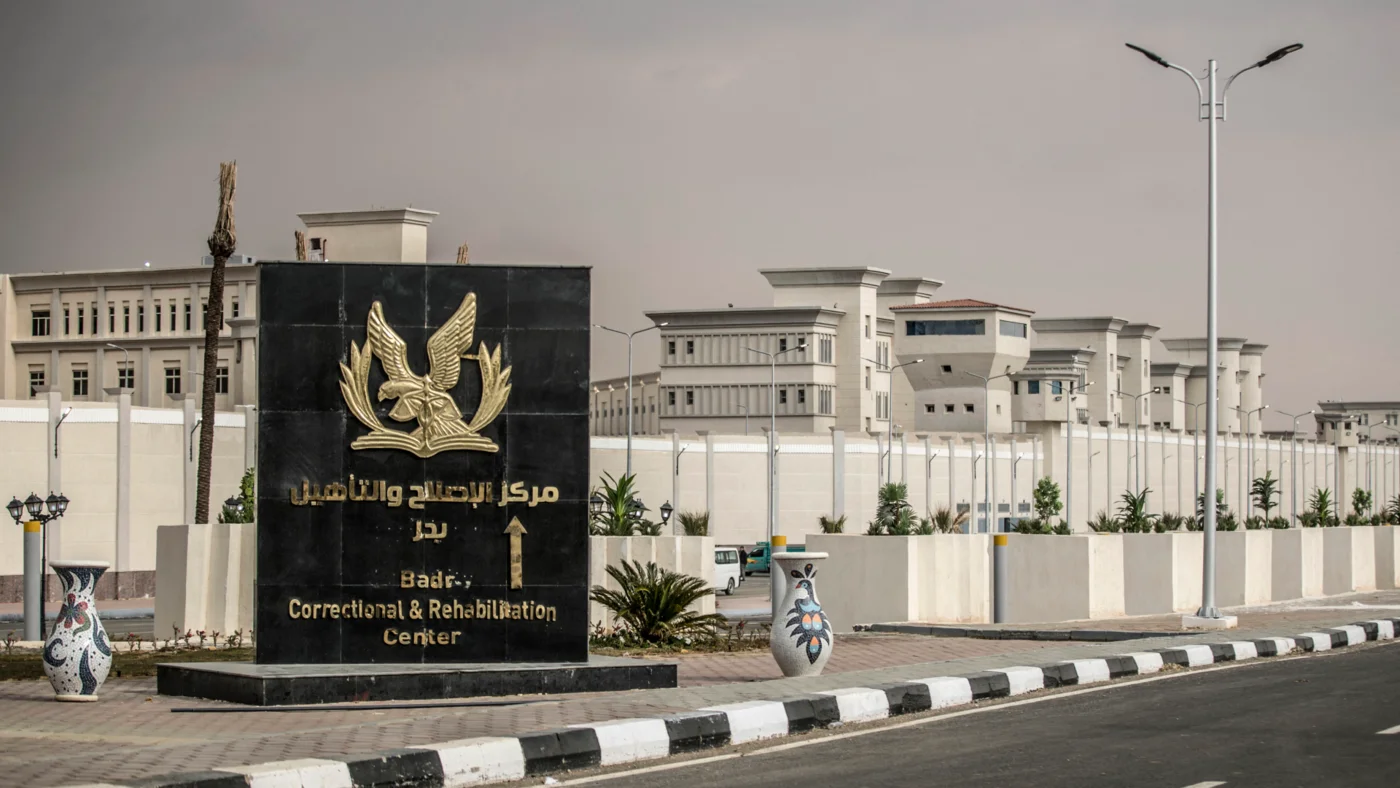
The detainees’ appeals come as the Egyptian government has enforced a near-total information blackout on prison conditions across the country. Since mid-2024, after reports of widespread hunger strikes at the notorious Badr prison and a sharp rise in prisoner deaths, authorities have cracked down on detainees’ rights advocates and family members of detainees. Elhussieny described Egypt’s prisons as a “black box,” with almost no outside communication allowed. “Lawyers don’t have any access, families of detainees that are deemed to be a risk are banned from visiting,” she said.