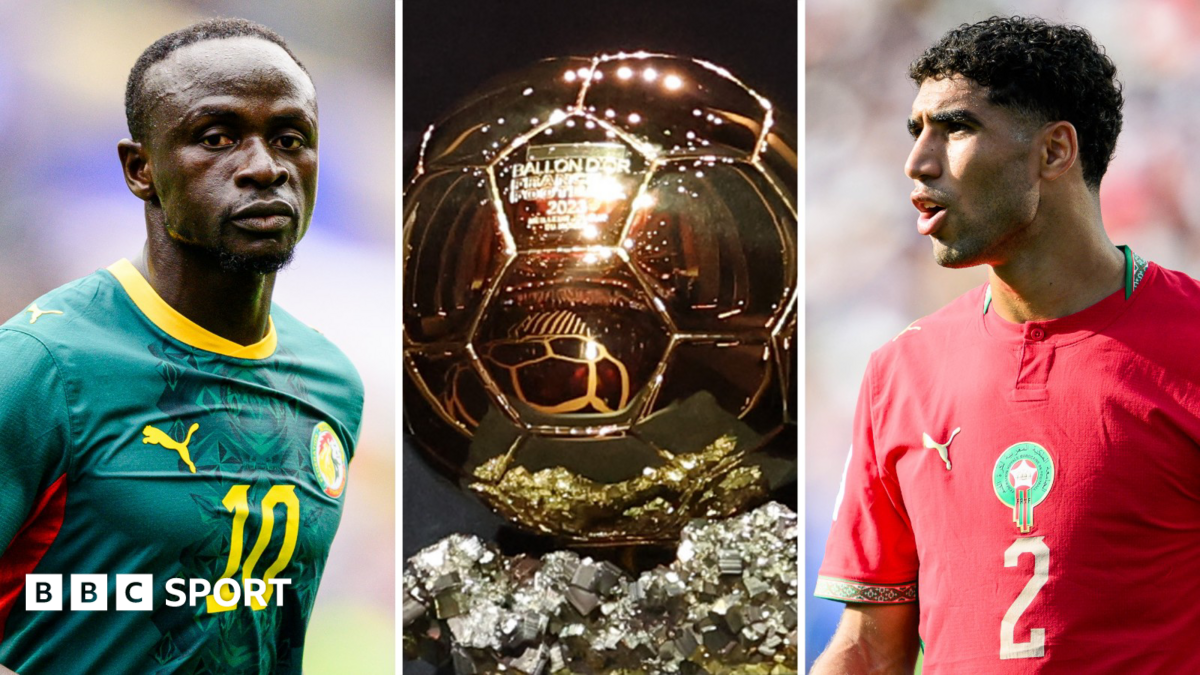
When the 30-player shortlist for the 2026 men’s Ballon d’Or was revealed this week, African football fans saw a familiar pattern: only two players from the continent, Morocco captain and Paris Saint-Germain right-back Achraf Hakimi and Senegal star winger Sadio Mane of Al-Nassr, earned a spot in the running for the sport’s most prestigious individual prize.
Both veterans are no strangers to Ballon d’Or contention, having previously cracked the top six in final voting. However, football analysts widely agree their odds of lifting the 2026 trophy are extremely slim, following a standout 12 months that saw Spain claim the FIFA World Cup crown and France’s Kylian Mbappe smash the tournament’s all-time scoring record with 10 goals. This limited representation continues a decades-long trend of underrepresentation for African footballers in the iconic award.
To understand the scope of this trend, it is necessary to look back at the award’s restrictive origins. First launched in 1956 by France Football magazine, the Ballon d’Or barred players from non-European nations from eligibility for nearly 40 years. It was not until 1995 that the rules changed, opening the field to global talent — and it was in that very same year that Liberian striker George Weah, then in elite form for PSG and AC Milan, became the first and still only African man to win the award. Weah, who later went on to serve as Liberia’s president from 2018 to 2024, set a benchmark no African man has matched in the three decades since.
In the years following Weah’s historic win, African players have made only sporadic impact on the final rankings. The only other time an African man landed in the top three came in 2022, when Mane finished second behind France’s Karim Benzema. For the vast majority of the 21st century, the award has been dominated by two global superstars: Lionel Messi and Cristiano Ronaldo, who combined to claim 13 of the 15 Ballons d’Or awarded between 2008 and 2023, crowding out other contenders.
An analysis of 31 years of post-eligibility data puts the extent of African underrepresentation in stark perspective. Since 1995, African players have earned just 76 total nominations, accounting for only 6.62% of all shortlisted players across that period.
Cameroon icon Samuel Eto’o holds the record for the most nominations among African players, earning nine consecutive spots on the shortlist between 2003 and 2011, with a career-best fifth-place finish in 2009 after scoring in Barcelona’s Champions League final win over Manchester United. Didier Drogba of Ivory Coast follows with eight nominations, while Egypt’s Mohamed Salah has six. Mane, the 34-year-old Senegal star, boasts the longest tenure of any African contender: his first and 2026 nominations come 10 years apart, marking a decade of consistent elite play.
By country, Nigeria has produced the most individual nominees, with eight players earning spots, and Victor Osimhen’s eighth-place finish in 2023 stands as the best result in the nation’s history. Despite this, 39 African nations have never had a single player shortlisted, even as higher-ranked nations like the DR Congo (43rd in the FIFA rankings) and South Africa (54th) remain locked out of the shortlist entirely. Notably, no African player representing a domestic club based on the continent has ever earned a nomination.
Over the years, there have been nine years since 1995 where just one African player made the shortlist, most recently in 2024, when Nigeria’s Ademola Lookman claimed 14th place after a standout campaign that included a hat-trick in the Europa League final for Atalanta. There have even been four instances where shortlisted African candidates failed to receive a single vote from the journalist panel, including cases in 1998, 2000, 2001 and 2003.
Leading African nations by total nominations are Ivory Coast (15 total, led by Drogba’s eight), Cameroon (12, 9 from Eto’o), Nigeria (10), Senegal (8), Ghana (6), and Egypt (6, all from Salah).
The underrepresentation extends to the women’s side of the award as well. Since the women’s Ballon d’Or launched in 2018, only four African women have earned nominations, with no more than two African players shortlisted in any single year. Across all editions, African women account for just 10 total nominations out of 195 overall shortlisted spots.
Nigeria’s Asisat Oshoala became the first African woman to earn a nomination, landing spots on the 2022 and 2023 shortlists. Zambia captain Barbra Banda has been nominated every year since 2022, while Malawian sisters Tabitha and Temwa Chawinga joined the ranks in 2024 and 2025 respectively. Temwa Chawinga earned her second consecutive nomination in 2026 after claiming the golden boot at this year’s Women’s Africa Cup of Nations.
The 2026 Ballon d’Or winner will be decided by votes from journalists representing the top 100 nations in the FIFA rankings, with the winner set to be announced at a 26 October ceremony in London. The venue was selected as a symbolic tribute to Sir Stanley Matthews, the English winger who claimed the very first Ballon d’Or in 1956, marking the award’s 70th anniversary this year. For African football, however, the ceremony looks set to extend the continent’s long wait for a second winner of the sport’s biggest individual prize.