In the East African economic hub of Kenya, the national government has officially launched a 90-day compliance push that requires all foreign nationals operating businesses within the country to secure or renew mandatory documentation, ranging from work permits to official business licenses. The regulatory move comes in the wake of public comments from President William Ruto that triggered widespread fear and uncertainty among immigrant communities across the nation.
Presidential spokesperson Hussein Mohamed confirmed that Kenyan government agencies will coordinate with foreign diplomatic missions throughout the process to streamline the registration and renewal steps. In a public statement, Mohamed explicitly prohibited any threats, harassment, or intimidation targeting foreign entrepreneurs, emphasizing that the exercise is not intended to target law-abiding foreign business owners.
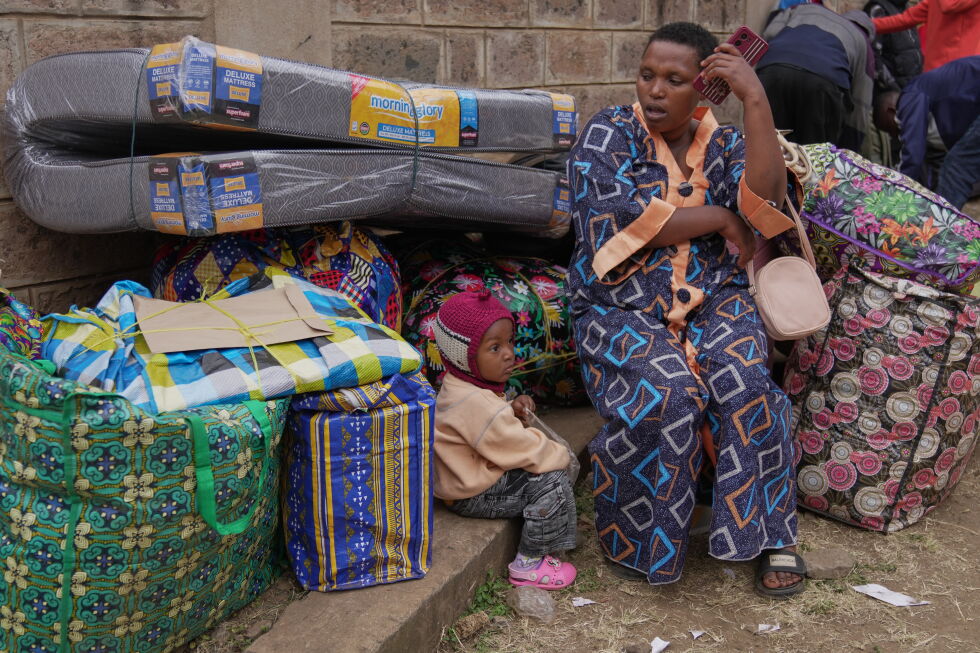
The uncertainty that followed President Ruto’s initial remarks prompted hundreds of Burundian nationals living and working in Kenya to flock to their country’s embassy in Nairobi on Monday to rush through document applications. A number of residents even made plans to return to Burundi, citing grave fears for their personal safety following targeted attacks and hostile rhetoric.
Tensions over foreign business activity have simmered in Kenya for months, as many local citizens have raised complaints that foreign migrants have taken entry-level manual jobs and launched small informal businesses, creating unfair competitive conditions for Kenyan-owned enterprises. As the largest and most stable economy in East Africa, Kenya has long drawn both foreign investors and cross-border laborers from neighboring countries including Burundi, the Democratic Republic of Congo, and Uganda, creating a steady flow of migrant workers and small business owners.
Last week, President Ruto publicly acknowledged that he had received widespread complaints from local small business owners who claimed foreign operators were competing through unfair, unregulated practices. In response, he directed Kenyan legislators to amend an existing bill currently under parliamentary review. The revised legislation will formalize rules for foreign participation in small-scale business sectors and carve out specific industry segments reserved exclusively for local Kenyan ownership.
That initial presidential directive quickly sparked panic across Burundian and Congolese migrant communities. Eric Munahayo, a Burundian small business owner based in Nairobi, told local media that his suburban shop was attacked by unidentified assailants after the remarks. Despite holding all required, valid business licenses and having integrated into the local community for years, Munahayo says he now faces rising hostility that has disrupted his livelihood.
In an effort to de-escalate tensions, senior Kenyan officials have moved to clarify the purpose of the new regularization drive. Mohamed emphasized that the registration process is designed to bring all foreign business operations into alignment with existing Kenyan national law and East African Community regulations that govern cross-border movement of goods, labor, and services. “Every person conducting business in Kenya is required to comply with applicable immigration, work-permit, registration and licensing requirements. Over the next 90 days, the government will conduct an orderly regularization exercise to facilitate compliance,” Mohamed explained in his official statement.
Korir Sing’oei, Permanent Secretary of Kenya’s Foreign Ministry, personally visited the group of Burundian citizens gathered at their Nairobi embassy on Monday, where he offered a formal apology for the widespread misinterpretation of the president’s original directive. Sing’oei stressed that the registration process ultimately serves to protect foreign residents, saying, “We just want to know who you are, where you live and what you do so that we can provide security even for you all.”
As of Tuesday, the Burundian government had not released an official formal statement on the latest developments. But Burundian Foreign Minister Edouard Bizimana ignited cross-border tension over the weekend when he shared a video of a Kenyan individual making hostile threats against Burundian residents in Kenya. In his accompanying post, Bizimana noted that Kenyan nationals live and operate peacefully in Burundi, and warned that if the current wave of hate speech targeting Burundians continues, bilateral conditions will shift dramatically. He held the Kenyan government explicitly responsible for the safety and security of all Burundian citizens residing within Kenyan borders.