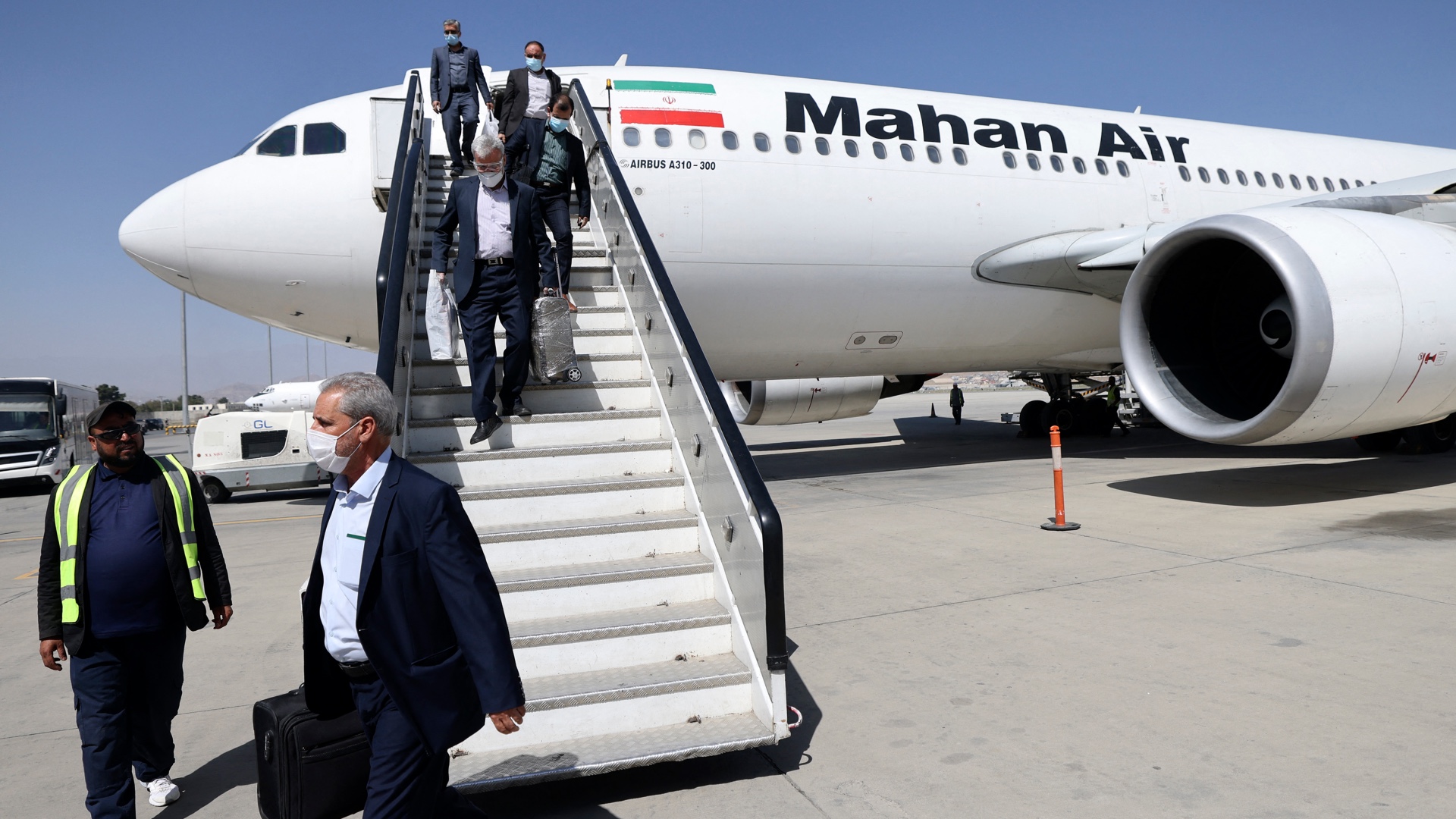
On a Tuesday announcement, the Trump administration rolled out a new round of punitive measures targeting 27 Iranian air carriers, part of a broader campaign to block the Tehran government from moving weapons, military personnel and undeclared illicit cargo, according to an official statement released by the U.S. Department of the Treasury.
This new action forms the core of Operation Economic Outcast, an expanded sanctions initiative that Treasury Secretary Scott Bessent says is designed to cut off Iran’s access to the interconnected global economy. The United States first imposed sanctions on a major Iranian commercial airline, Mahan Air, back in 2011, marking the start of this targeted pressure campaign on Iran’s aviation sector.
“Let this be a warning to anyone doing business with Iran’s remaining airlines, all of which we sanctioned today: You are at risk of being cut off from the global financial system,” Bessent stated during Tuesday’s press briefing. Among the newly sanctioned carriers are prominent Iranian aviation operators including Ava Airlines, Fly Persia, and Mehr Airways.
In total, the Treasury added 36 distinct entities and individuals to its blacklist. Beyond the air carriers, the designation also covers what the department describes as covert front companies, foreign-based intermediaries, and deceptive transshipment networks that Iran leverages to acquire U.S.-manufactured aircraft and sensitive aviation technology. Notable non-Iranian entities named include the United Arab Emirates-based ECT Aviation Support LLC, its Egyptian chief executive Ibrahim Ali Mohamed Mohamed Mahran, and Turkey-based logistics firm Sky Phoenix.
To back up the new sanctions, the Treasury’s Financial Crimes Enforcement Network issued a global advisory calling on financial institutions worldwide to flag transactions linked to procurement networks that support Iran’s aviation industry. Meanwhile, the department’s Office of Foreign Assets Control moved to suspend existing authorizations that previously allowed non-U.S. airlines to operate routes or use U.S.-built aircraft that eventually enter Iranian airspace. The change is expected to complicate travel for Iranian Americans with family based in Iran and cuts off the Tehran government from collecting critical overflight fees from international carriers.
The Treasury emphasized its broad enforcement scope: “Any person that assists Iran’s aviation sector, from the provision of general sales agent services through to support to Iran’s covert aircraft procurement schemes, will be held accountable.” All sanctioned individuals and entities will have any U.S.-based assets frozen, lose access to the U.S.-dominated global banking system, and face prohibitions on any transactions with U.S. persons and permanent residents.
This latest round of sanctions builds on an initiative Bessent launched just one month prior, when he announced a new sweeping pressure campaign targeting Iran and its international partners, aimed at what he called the “asphyxiation of this regime” amid rising tensions over the Strait of Hormuz. Speaking to reporters in Washington, D.C., Bessent framed the pressure as a stark choice for Iranian leadership: “Iran now faces a very clear choice, with only two paths before them: complete global isolation and a subsistence economy, or a path back to normalcy with an opportunity to rejoin the global economy.”
To date, the Trump administration has consistently tightened sanctions on Iran since its first term starting in 2017, and no concrete details have been released on how “a path to normalcy” would be structured or what concessions would be required from Tehran. Bessent made clear the goal of the new operation is to eliminate all alternatives for the Iranian regime: “We are launching Operation Economic Outcast to foreclose every other option available to the Iranian regime. America is no longer managing the Iranian threat. We are ending it.”
Bessent added that the Treasury has taken what he calls a “zero-leakage approach” to mapping Iranian sanctions evasion networks, saying officials have mapped every node, facilitator, and network Iran has used to smuggle oil and bypass existing international restrictions. He also confirmed that President Donald Trump has already held phone calls with global heads of state, issuing specific requests for those countries to end all commercial and diplomatic interactions with the Iranian regime, though he declined to name the countries involved.
When pressed by reporters on why the sanctions are not being enforced with immediate effect globally, Bessent pushed back on the idea of immediate universal implementation, asking: “Why would I want to blow up the global financial system?” He explained that all countries have been given a clear timeline to wind down the activities identified by U.S. officials, and added: “If they do not take action, we will do so unilaterally through Treasury authorities.”
This report was originally prepared by independent outlet Middle East Eye, which specializes in original coverage and analysis of the Middle East, North Africa, and broader global affairs related to the region.