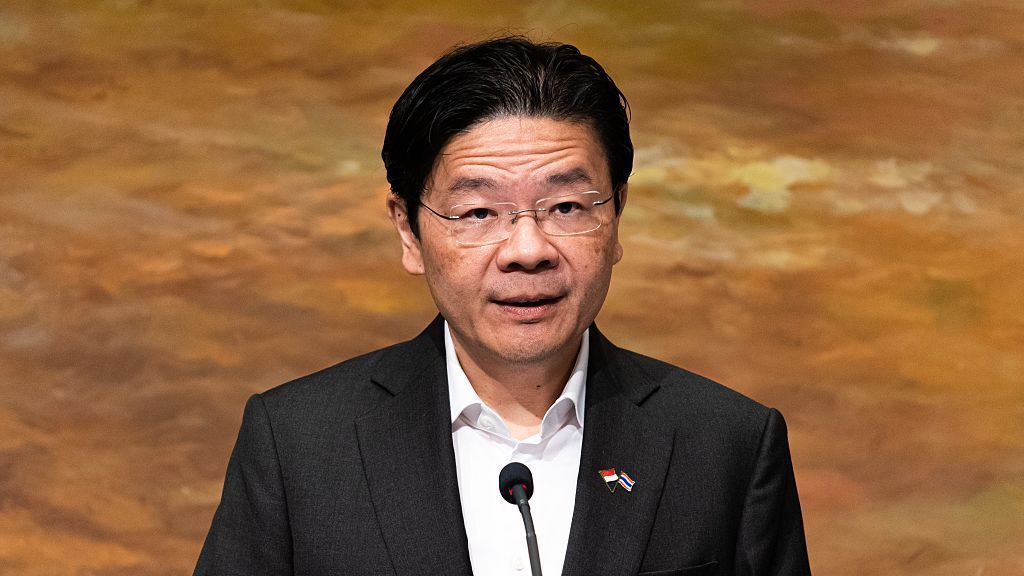
Singapore’s government has sparked widespread public debate after unveiling a controversial plan to raise annual salaries for top political office holders, including Prime Minister Lawrence Wong — a move that will cement his position as the world’s highest-paid elected political leader. Under the new salary framework, Wong’s annual compensation will jump more than 60% from the current S$2.2 million to S$3.6 million, representing a one-year increase of S$1.4 million (US$1.1 million). In a response to early criticism, the prime minister announced he would donate the entire additional pay increment to charity over the next five years.
Wong defended the adjustment in remarks to the public on Tuesday, framing the pay raise as a critical policy to attract high-capacity talent to Singapore’s political leadership. The prime minister acknowledged that the existing gap between private sector executive earnings and ministerial pay had created significant barriers to recruiting experienced business leaders and top-ranking civil servants to run for public office. While the government cannot match the top end of private sector compensation, he argued, eliminating unnecessary financial barriers encourages capable Singaporeans to leave their private careers and enter public service. “Overall, I believe this will give me and future prime ministers a better chance of persuading capable Singaporeans to step forward, and of building the strongest possible team for Singapore,” Wong said.
For the country’s ministerial cohort, the new scheme raises the base annual salary from S$1.1 million to around S$1.2 million, with performance-based bonuses pushing the average total pay for sitting ministers to roughly S$1.35 million by the end of the current government term. A portion of all ministers’ compensation is tied to the country’s achievement of key economic and social targets, including GDP growth, median income growth, and national unemployment rate goals. This structure, the government argues, aligns leadership pay with broader national progress.
The policy has long followed a core government rationale: competitive political salaries act as a deterrent to corruption. Singapore consistently ranks among the top least corrupt countries globally in Transparency International’s annual Corruption Perceptions Index, which the government cites as evidence that the current pay model delivers results. For comparison, global political leaders earn far less: Hong Kong Chief Executive John Lee receives roughly US$719,000 annually, Swiss President Guy Parmelin earns US$606,000, U.S. President Donald Trump draws a US$400,000 annual salary, and British Prime Minister Keir Starmer (corrected from the original text’s misattribution) earns approximately US$230,000.
Even before the raise, Wong’s salary far outpaced that of any other sitting world leader. The announcement has drawn sharp criticism from Singaporeans at a moment of widespread economic anxiety: the country’s median monthly personal income stands at just S$5,773, and official data shows that layoffs (retrenchments) hit a five-year high in the final quarter of the most recent reporting period. Public concerns are already running high over job security for workers, employment prospects for new graduates, and persistent inflation driving up the cost of living. On Tuesday, thousands of critical comments circulated across Singaporean social media, with many describing the pay hike as “tone deaf” to the economic struggles of ordinary households.
This is not the first time that high ministerial pay has been a flashpoint for public anger against the ruling People’s Action Party (PAP), which has governed Singapore continuously since the country gained independence. In the 2011 general election, the PAP secured its lowest vote share in post-independence history, driven in large part by voter dissatisfaction over ministerial pay and immigration policies. The government responded with an across-the-board cut to political salaries the following year. The current move mirrors a 2007 precedent, when then-Prime Minister Lee Hsien Loong, Wong’s predecessor, also pledged to donate his incremental salary increase to charity.
Public opinion on the new policy remains split. A small share of commentators and members of the public have supported the adjustment, arguing that recruiting the most qualified candidates to lead the country requires competitive compensation. For the majority of the public, however, the gap between top political pay and ordinary household incomes continues to be a source of deep frustration, and the latest announcement has done little to resolve that long-running tension.