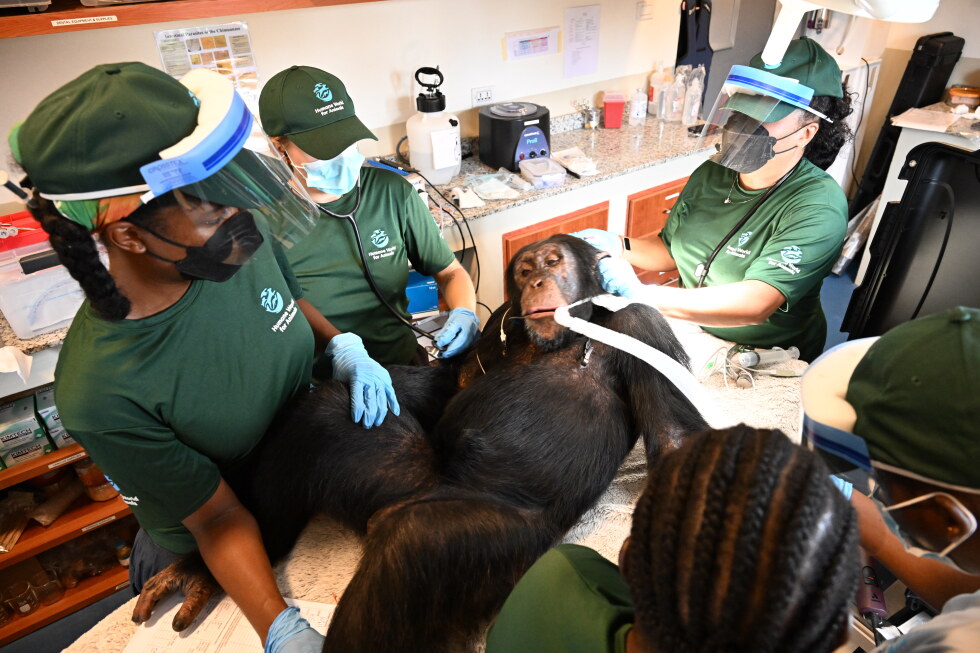
For decades, hundreds of West African chimpanzees lived confined to laboratories, used as test subjects in invasive hepatitis B vaccine research led by U.S. scientists. Today, a group of these survivors is getting a new lease on life, receiving thorough full-body health assessments at a dedicated Liberian sanctuary designed to give these critically endangered primates a dignified retirement.
Liliana Pacheco Ricote, director of the Humane World for Animals Second Chance Chimpanzee Refuge located in central Liberia, confirmed to the Associated Press that the recent wellness checks covered everything from professional dental cleaning and diagnostic X-rays to routine nail grooming, all carried out under controlled anesthesia to keep the animals calm and safe.
The history of these chimpanzees traces back to research programs that operated in Liberia from the 1970s through the early 2000s. Records show more than 400 chimpanzees were used in the hepatitis B vaccine studies, with the vast majority captured as wild infants torn from their natural habitats. When the research program concluded, the animals were left without permanent care, until Humane World for Animals took over full, long-term responsibility for 60 remaining chimpanzees back in 2015. Today, these primates live in a semi-wild sanctuary setting across a cluster of mangrove forest islands, where they can roam and socialize far from the laboratory cages they once occupied.
West African chimpanzees hold significant conservation value: Liberia is home to the second-largest population of the subspecies in West Africa, trailing only Guinea. The International Union for Conservation of Nature currently classifies West African chimpanzees as critically endangered, with wild populations dropping sharply due to habitat loss, poaching, and historical exploitation for research.
Animal care teams at the sanctuary explained that the comprehensive health screenings are a core part of long-term care for the aging chimpanzee population, whose average age now falls between 30 and 35 years old. The full-body assessments allow veterinarians to spot early signs of age-related or chronic illness, evaluate the long-term physical and psychological damage left by decades of invasive research, and build personalized care plans adapted to each chimpanzee’s unique needs. In addition to diagnostic testing, the chimpanzees received routine booster vaccinations and routine grooming during the check-ups, and the sanctuary has scheduled similar assessments for the remaining chimpanzees in its care.
Belen Perez Hernando, the lead veterinarian at the sanctuary, emphasized that proactive health monitoring is non-negotiable for these animals that have already endured significant trauma. While full analysis of the assessment results is still ongoing, researchers do not yet have a complete picture of the long-term health impacts of the experiments on the chimpanzee colony. Ricote noted that even after years of sanctuary life, the residual trauma of the research is still visible in the animals’ behavior.
Despite that grim legacy, Ricote says the sanctuary work offers a chance to repair some of the harm caused by human exploitation. “Seeing the lingering harm from what we did to these animals makes the work of giving them this second chance to live the dignified life they deserve incredibly meaningful,” she said.