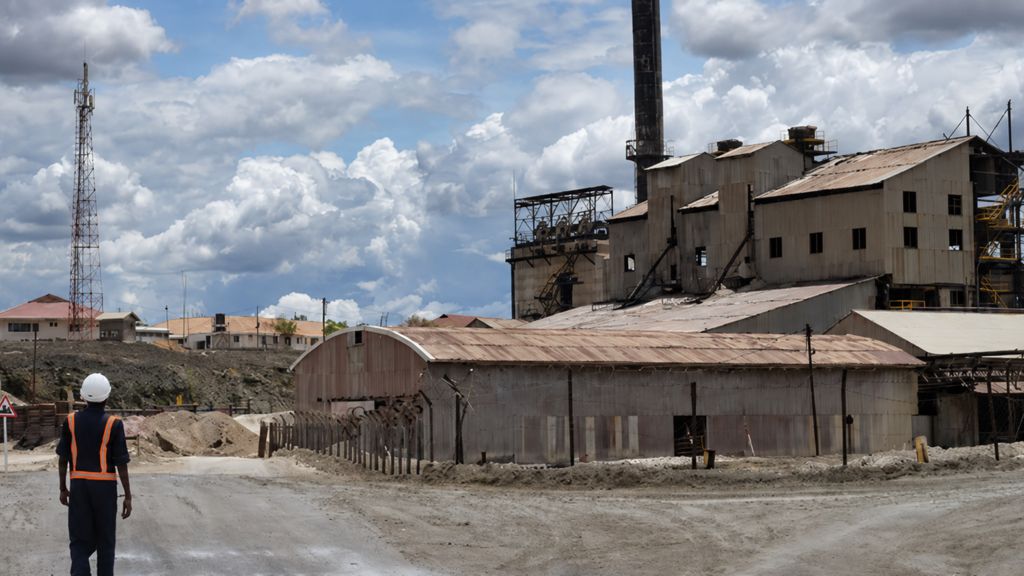
A major economic and diplomatic shift is unfolding in Kenya, where President William Ruto has publicly ordered Tata Chemicals, an Indian multinational chemical giant part of the sprawling Tata Group conglomerate, to cease operations and leave the country over accusations that the firm has failed to deliver sufficient local economic benefits. The announcement was made during Ruto’s recent visit to Kajiado County, the location of Tata Chemicals Magadi’s flagship soda ash extraction and processing plant on the shores of Lake Magadi, roughly 75 miles southwest of the Kenyan capital Nairobi.
For more than a century, the Magadi site has hosted soda ash operations, with Tata taking control of the facility in 2005 after acquiring the previous owner, UK-based Brunner Mond Group. Today, the plant stands as Africa’s largest producer of natural soda ash – the industrial-grade sodium carbonate that serves as a core input for glass manufacturing, chemical production, battery manufacturing, water treatment, detergent formulation, and paper and textile production. Kenya itself ranks as the world’s fourth-largest natural soda ash producer, contributing roughly 1% of total global output, according to data from the U.S. Geological Survey.
Under Tata’s management, the facility exports over 350,000 tonnes of soda ash annually, with more than 95% of its total product shipped to overseas markets including India, Southeast Asia, the Middle East, and other regional African economies. The operation also produces industrial and animal-feed grade natural salt. In its 2024 financial reporting, Tata Chemicals Magadi recorded roughly $78.7 million in turnover from 245,000 tonnes of soda ash sales. The firm directly employs approximately 500 local workers, and states that its community outreach programs deliver basic services including clean water, healthcare access, school infrastructure, and public works development that benefit an estimated 30,000 residents in the Magadi region.
Despite this footprint, President Ruto has leveled sharp criticism at the company, arguing that its century-long operating contract has failed to deliver inclusive growth for Kenya and local communities in Kajiado. Speaking in Swahili during his site visit, Ruto accused the firm of extracting Kenya’s natural resources for export without adding local value, specifically saying the company has chosen to ship raw soda ash abroad instead of building domestic downstream processing facilities to manufacture finished glass and chemical products. “Tata Chemicals Magadi has had a contract for 100 years, and they have done nothing. I told them the other day to pack up and leave,” Ruto said. “They have not built anything in Kajiado, they have not built any factory in Kajiado.”
Ruto added that the Kenyan government has already identified two new domestic and international investors to take over the Magadi operations, with a core mandate to expand local job creation, drive additional capital investment, and develop downstream manufacturing to capture more value for Kenya’s economy.
The order to exit is the culmination of escalating regulatory tensions between Tata and the Kenyan government. Five weeks before Ruto’s public announcement, Kenya’s mining cabinet secretary had already ordered the firm to suspend all operations, citing alleged failures to pay required royalties and meet other local regulatory obligations. In response to that order, Tata released a statement saying it had submitted a full, comprehensive response addressing all concerns raised by the ministry, including detailed documentation proving its compliance with all applicable Kenyan regulations, and was awaiting a formal review of its submission and further official guidance.
Following Ruto’s exit order, Tata Chemicals reaffirmed its position, stating that it respects the Kenyan government’s decision, and remains committed to resolving outstanding issues through constructive dialogue within the country’s legal and regulatory frameworks. The firm also noted that since its 2005 acquisition of the Magadi facility, the operation has been an important contributor to the Kenyan economy and remains a core part of Tata Chemicals’ global business portfolio.