On Thursday, a major trade dispute erupted between Brazil and the European Union after a Brussels-imposed deadline expired, triggering an immediate suspension of Brazilian imports of meat, poultry, eggs, honey and other animal-based products. The bloc’s move centers on longstanding concerns over unapproved antibiotic and antimicrobial drug use in Brazilian livestock production, leaving Brazil’s top agricultural exporters scrambling to adjust to the sudden market disruption.
The suspension was first announced by EU authorities this Tuesday, and went into effect just 48 hours later, following a May notification that Brazil would be removed from the bloc’s list of authorized exporters for certain animal products. EU officials argued that Brazilian regulators had failed to provide sufficient assurances that local livestock production adheres to EU rules banning antibiotic growth promoters and other restricted antimicrobial substances. European Commission spokesperson Eva Hrncirova confirmed Tuesday that the updated list of rule-compliant exporting countries, which excludes Brazil, would take effect September 3, formalizing the import suspension. As of Thursday, the EU had not responded to additional requests for comment from the Associated Press.
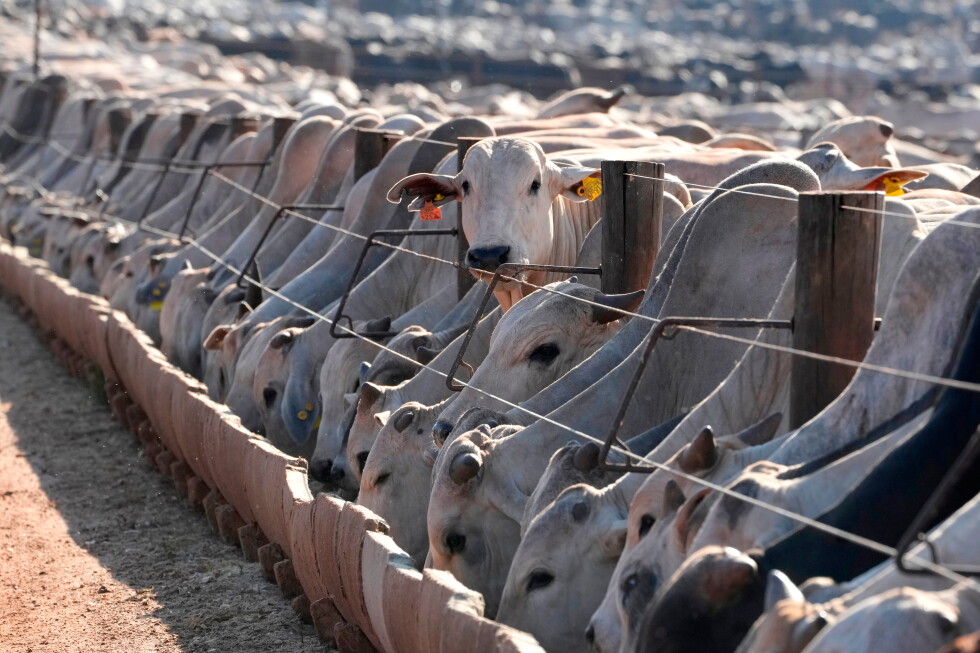
As the world’s leading beef exporter, Brazil sent roughly 108,000 tons of beef valued at approximately $1 billion to the EU in 2025, making the bloc one of the country’s most valuable export markets for animal products. Brazil’s federal agriculture ministry, led by the administration of President Luiz Inácio Lula da Silva, has openly condemned the EU’s action, calling it undiplomatic and out of step with the two sides’ deep strategic partnership. In an official statement released Thursday, Brazilian authorities expressed “indignation at the lack of dialogue before the measure was adopted”, and noted that the government reserves the right to implement reciprocal trade measures if a mutually acceptable resolution cannot be reached. The ministry added that it is prepared to use all appropriate trade tools, from reciprocal measures outlined in Brazilian domestic law to dispute settlement mechanisms established under both the Mercosur-EU free trade agreement and the World Trade Organization’s multilateral trading system.
Brazil’s leading agricultural industry groups have echoed the government’s criticism, warning that the suspension will cause significant disruptions to local producers. The Brazilian Association of Meat Exporting Industries (ABIEC), which provides technical support to the Brazilian government in EU trade negotiations, called the bloc’s action deeply concerning for domestic producers, noting that it fails to recognize the established quality of Brazilian beef, which is already exported to 170 countries worldwide. “Brazilian beef will continue to be sold in the markets for which it is authorized, but there is no automatic substitute for the European market, since different destinations require distinct products and cuts,” ABIEC explained in its own statement. The Confederation of Agriculture and Livestock of Brazil similarly pushed back in a document submitted to Brazil’s foreign ministry late Wednesday, arguing that the EU suspension “results in the clear nullification and impairment of trade benefits legitimately expected by Brazil”. The confederation added that EU regulators ignored the rigorous standards of Brazil’s existing health inspection system, and called on Brussels to correct what it frames as an unfair trade imbalance.
The import suspension comes at a particularly sensitive moment for the landmark free trade agreement reached in January between the EU and Mercosur — the South American trade bloc that counts Brazil, Argentina, Paraguay and Uruguay as its members. Meat imports from Mercosur have long been one of the most contentious points of opposition to the deal among European agricultural groups, and Brazil is the only Mercosur member affected by the current suspension. The agreement remains provisional, pending a final ruling from the European Court of Justice, and has not yet been fully implemented.
Robson Goncalves, an economist and professor at Brazil’s Fundacao Getulio Vargas, argues that the EU’s current move is inherently political, tied to European efforts to shield domestic agribusiness from upcoming Mercosur competition ahead of the full implementation of the trade deal. “These are the last attempts to protect European agribusiness from competition with Mercosur agribusiness,” Goncalves explained, noting that the mechanism used to halt Brazilian exports functions as a deliberate political measure. He added that he expects additional similar restrictive measures from the EU before the Mercosur-EU agreement enters fully into force, predicting that more protectionist actions will follow over the next several years.