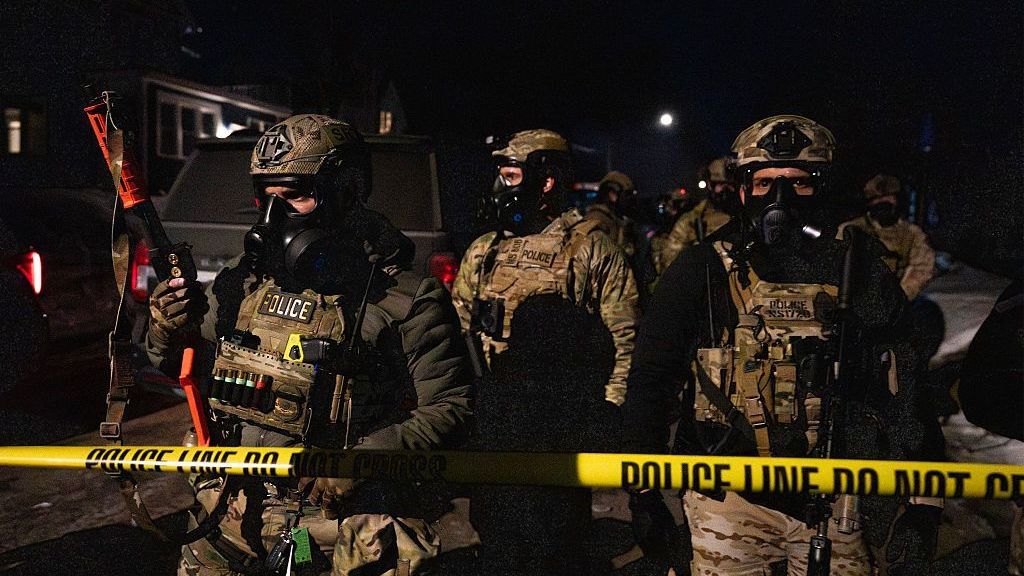
A long-simmering controversy over a January shooting involving a U.S. Immigration and Customs Enforcement agent has culminated in federal criminal charges, exposing deep intergovernmental tensions and raising fresh questions about accountability for federal law enforcement actions during high-profile immigration operations.
The case centers on Christian Castro, an ICE officer who was part of Operation Metro Surge, a controversial mass deployment of hundreds of federal immigration agents to Minnesota that drew widespread public protests and left two local residents dead in confrontations with officers. On January 14, a shooting left Julio Cesar Sosa-Celis, a Venezuelan migrant, wounded in the leg. Initial accounts from the Department of Homeland Security claimed Castro had acted in self-defense, saying he opened fire after he was ambushed by three unauthorized migrants armed with a shovel and a broom handle.
That official narrative quickly unraveled after surveillance footage emerged that contradicted the agents’ account of the incident. Minnesota state investigators have put forward a far different version of events: they allege Castro fired his weapon through a closed, locked door of a residence, after a group of people had run inside to escape. The bullet that struck Sosa-Celis in the leg ultimately came to rest in the wall of a child’s bedroom inside the home, according to state officials.
Originally, Alfredo Alejandro Aljorna and Sosa-Celis were charged with attacking and obstructing federal agents. But those charges were swiftly thrown out by prosecutors after they cited newly uncovered evidence that undermined the initial official story. Back in February, ICE itself acknowledged that at least two agents involved in the incident may have provided untruthful statements about the shooting, and both were placed on administrative leave pending investigation.
Castro was first taken into custody in Texas back in May, where he has remained in jail for three months. Minnesota’s top prosecutor formally requested that Texas governor Greg Abbott extradite Castro to Minnesota to face state charges of assault and filing a false police report related to the shooting. When Abbott refused to approve the extradition request last month, citing what he called “serious doubts” that Castro meets the legal definition of a fugitive, Minnesota officials responded by filing a lawsuit to force Abbott to act on the request.
Last week, Castro was released from custody in Texas. On Wednesday, a federal grand jury returned a six-count indictment against him on federal charges connected to the shooting, with the most prominent charge being that he lied about the circumstances of the non-fatal shooting. Law enforcement officials have told media outlets that the indictment will remain under seal until Castro is taken into custody again.
This federal prosecution marks a highly unusual development: it is extremely rare for the current U.S. Department of Justice to bring criminal charges against a federal law enforcement officer for actions taken while on official duty. The incident has amplified already fierce criticism of large-scale, federally led immigration operations, which have drawn pushback from local communities and legal advocates over aggressive tactics and lack of accountability for officer misconduct.