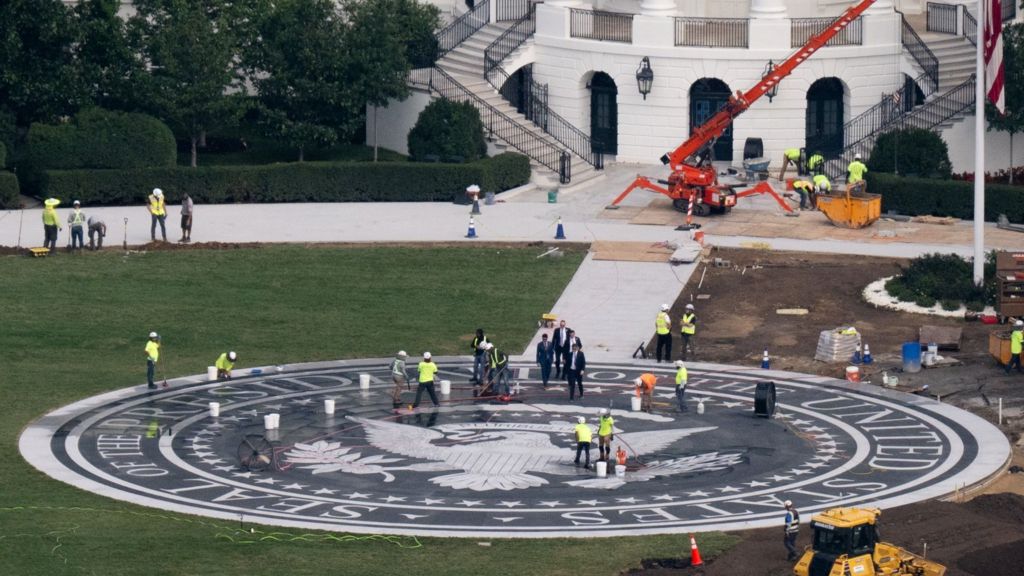
A new infrastructure proposal from the Trump administration has sparked fresh debate over alterations to the White House complex, with plans to construct the first dedicated helipad on the property’s historic South Lawn drawing sharp criticism from heritage preservation groups and political opponents alike.
For decades, presidential travel by helicopter has relied on temporary landing zones on the South Lawn, where Marine One — the standard call sign for any U.S. Marine Corps aircraft carrying the sitting president — touches down for departures and arrivals. The new proposal would replace these ad-hoc arrangements with a permanent, purpose-built helipad, a first for the White House grounds.
Critics argue that the construction of a permanent helipad represents an unnecessary alteration to a National Historic Landmark that has retained much of its original landscape design dating back to the early 19th century. Heritage advocates note that the White House and its grounds are protected under the National Historic Preservation Act, and any significant modification requires rigorous review to ensure the property’s historical integrity is not compromised. Opponents also question the timing and cost of the project, pointing out that the estimated multi-million dollar expense comes as the administration faces scrutiny over other discretionary infrastructure spending.
Supporters of the project counter that a permanent helipad will improve presidential safety and travel efficiency, eliminating the need to set up temporary landing barriers and security perimeters every time the president travels by helicopter. They note that current temporary arrangements require frequent rearrangement of landscaping and security equipment, which over time can cause more wear and tear on the historic grounds than a single, well-planned permanent installation.
The debate over the helipad comes amid a longer history of modifications to the White House complex, with every modern administration carrying out renovations and infrastructure updates to accommodate evolving presidential needs. What sets this project apart is its location on the iconic historic grounds, a space that has remained largely unchanged in its core layout for more than two centuries, making even a small infrastructure project a matter of national public discussion.