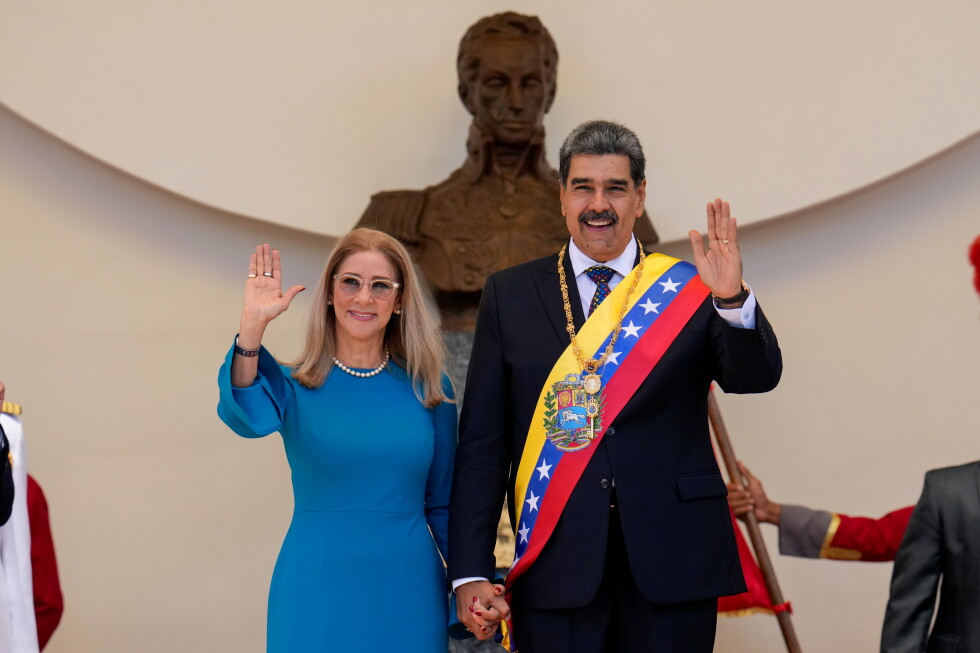
MANHATTAN, N.Y. – In a high-stakes legal filing in Manhattan federal court Wednesday, legal teams for ex-Venezuelan President Nicolás Maduro and his wife Cilia Flores formally moved to dismiss a long-standing U.S. drug trafficking indictment against the pair, basing their argument on long-held principles of international sovereign immunity that shield sitting and current foreign heads of state from prosecution in other nations’ courts.
Maduro, 63, and Flores, 69, have remained in custody at a federal detention facility in Brooklyn since early January, when U.S. security forces carried out a midnight raid on their Caracas residence to apprehend them and transport them to New York to face charges. The indictment was initially brought six years earlier, naming the pair alongside dozens of other alleged co-conspirators in an alleged narcotics trafficking plot. U.S. prosecutors accuse Maduro of conspiring with Venezuelan law enforcement officials to facilitate the movement of thousands of tons of cocaine into the United States on behalf of major drug cartel leaders. If convicted on the conspiracy charges, both Maduro and Flores face the possibility of life imprisonment.
In the court documents submitted this week, Maduro’s legal team argued that U.S. law requires the judge to throw out the indictment entirely, asserting that no U.S. judicial body has ever held a criminal trial for a foreign leader recognized as the sitting head of state by their own nation at the time charges were filed.
“This is no historical accident,” the lawyers wrote. “It reflects a principle older than common law itself: heads of state are exempt from the criminal process of any national court other than their own.” Even if the court rejected the claim of head-of-state immunity, the defense added, Maduro still qualifies for conduct-based sovereign immunity that protects official acts undertaken in his capacity as a nation’s leader. Maduro vehemently rejects all allegations against him, the team emphasized: “If this case were to proceed to trial, it would be apparent that he has been falsely accused.”
Flores’ legal team echoed the immunity argument in a separate filing Wednesday, noting that as former first lady of Venezuela, immunity is an inherent attribute of Venezuelan national sovereignty that only the Venezuelan government can waive. “It is an attribute of Venezuela’s sovereignty, and only Venezuela may surrender it,” her lawyers wrote.
U.S. District Judge Alvin K. Hellerstein has scheduled oral arguments on the dismissal motions for November 17, with the jury trial currently set to begin on June 1 next year. Federal prosecutors have been directed to submit their formal response to the defense’s arguments by the end of this month.
The detention and prosecution have already sparked intense international and political controversy. The Trump administration, which authorized the raid to apprehend Maduro, has defended the action as a targeted “surgical law enforcement operation.” Maduro, for his part, has described his capture as an act of kidnapping and has referred to himself as a prisoner of war. The case is unfolding alongside shifting U.S. energy policy toward Venezuela, with recent reports indicating oil giant Chevron is set to expand its operational footprint in the South American nation under new U.S. authorization.