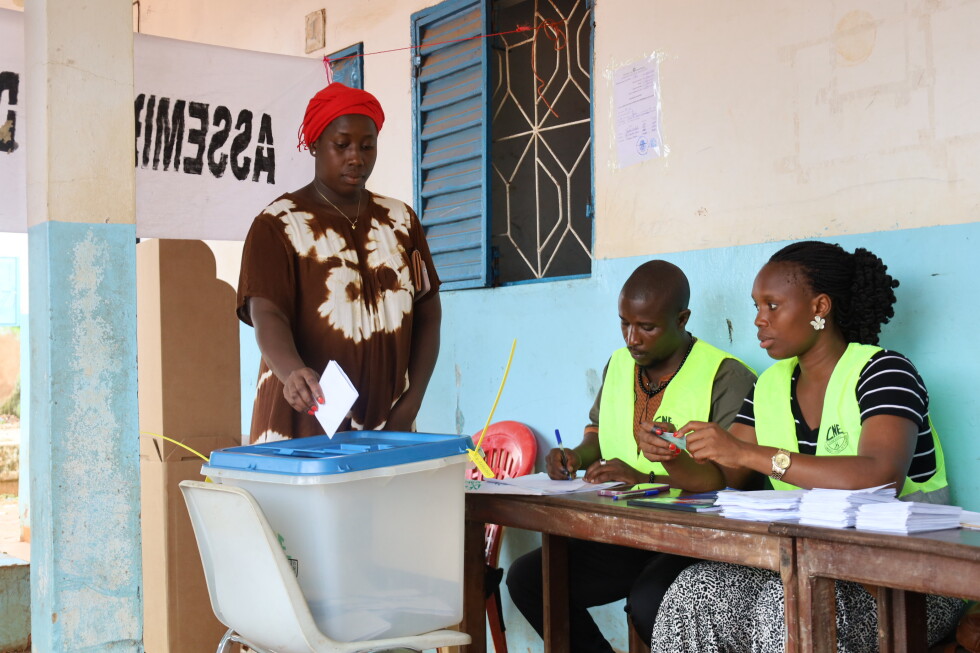
BISSAU, Guinea-Bissau – In a pivotal vote that will reshape the West African nation’s political landscape ahead of upcoming democratic elections, national electoral authorities announced Tuesday that a majority of participating voters have backed sweeping constitutional reforms that expand presidential authority and downsize the national legislature. The referendum, held this past Sunday, comes amid a period of fragile military-led transition and deep regional political unrest, setting the stage for December’s general elections intended to restore full civilian democratic rule.
Opposition political groups across the country had called for a widespread boycott of the vote, arguing that the proposed changes would concentrate too much unchecked power in the office of the president, opening the door to authoritarian shifts. Yet final data from the National Electoral Commission shows that among votes cast, 70% were cast in favor of the reforms, with just 30% opposing the amendments.
The constitutional revisions fundamentally alter Guinea-Bissau’s existing semi-presidential system of government, which split executive authority between an elected president and an appointed prime minister. The ruling military junta, which seized power in November 2022 following a disputed general election, has long argued that the power-sharing arrangement was the root cause of chronic political instability that has plagued the small nation for decades. In addition to weakening the prime minister’s role and concentrating executive power in the presidency, the reforms also cut the size of the national legislature from 102 seats to 65, a change supporters frame as a cost-cutting measure to streamline governance.
The vote unfolds against a troubling backdrop of democratic backsliding across West Africa, which has seen no fewer than a half-dozen successful military coups overthrow elected civilian governments since 2020, making the region one of the most unstable in Africa. For Guinea-Bissau specifically, the November 2022 military takeover marked its latest turn away from democratic rule, joining neighbors like Mali, Burkina Faso and Niger that have all seen soldiers seize power in recent years.
Beyond its political turmoil, Guinea-Bissau, a country of roughly 2.2 million people, presents a stark economic paradox. According to World Bank data, it boasts the highest per capita share of natural resources of any West African nation, yet more than 50% of its population lives below the international poverty line. This deep economic inequality has compounded political divisions, with competing factions blaming one another for the country’s failure to convert its natural wealth into broad-based prosperity and stable governance.