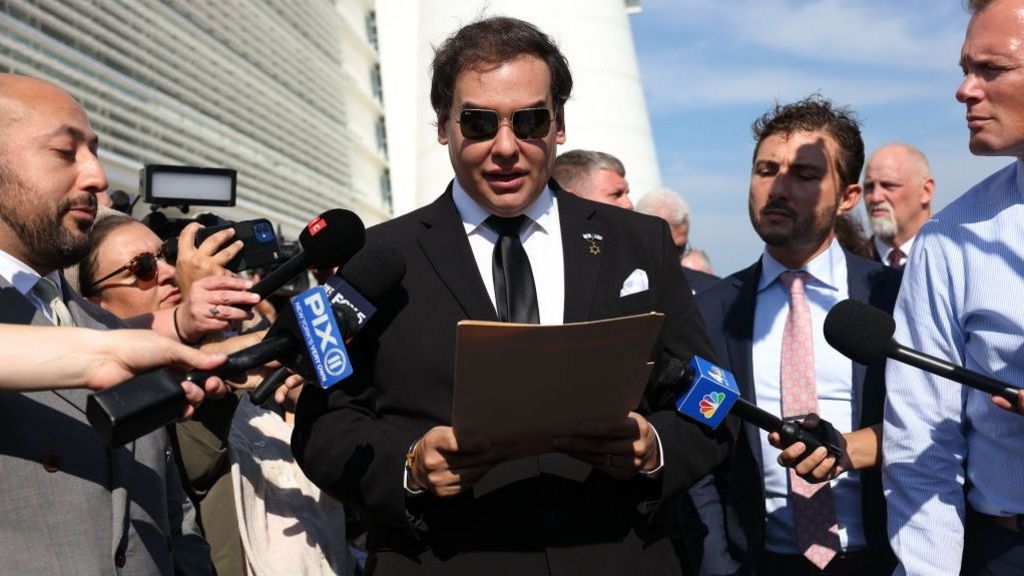
Leading prediction market operator Kalshi has implemented a permanent trading ban against former U.S. Representative George Santos, following an internal investigation that found evidence of insider trading tied to bets on his own attendance at former President Donald Trump’s 2026 State of the Union address, the company announced in a formal disciplinary notice.
Santos, a disgraced ex-lawmaker who was expelled from Congress in 2023 over multiple felony fraud and identity theft convictions, placed the series of controversial bets on the attendance outcome back in February. According to Kalshi’s compliance review, Santos held non-public information about his own plans that allowed him to manipulate the market for profit. The platform took proactive, independent action to issue the ban without waiting for external regulatory enforcement, marking one of the highest-profile penalties for misconduct in the fast-growing prediction trading sector.
In a post on social platform X, Santos responded flippantly to the ban, thanking Kalshi and challenging the company’s long-term viability. The BBC has reached out to Santos for additional comment on the ruling, but has not received a formal response as of reporting.
The current disciplinary action is the latest in a string of legal and regulatory consequences for Santos following his 2024 conviction on wire fraud and aggravated identity theft charges. Santos was sentenced to seven years in federal prison, but only served three months before former President Trump issued a full commutation of his sentence in 2025. Just two months prior to Kalshi’s permanent ban, Santos agreed to pay a $35,000 settlement to resolve a federal probe into the same State of the Union trades conducted by the U.S. Commodity Futures Trading Commission (CFTC).
Alongside the lifetime ban, Kalshi has imposed a financial penalty of $71,356 (equivalent to roughly £38,000) connected to the misconduct. The company confirmed it flagged Santos’s suspicious account activity to federal law enforcement authorities earlier this summer, after internal monitoring systems picked up irregular trading patterns.
Kalshi’s investigation laid out clear details of the alleged scheme: the market in question let users wager on whether Santos would attend Trump’s State of the Union speech, an outcome Santos could directly control. Between February 2 and February 25, Santos placed multiple large bets on the outcome, and made false public statements about his attendance plans that moved contract prices on the platform. In the end, Santos walked away with $17,839.57 in illegal profits from the trades, per Kalshi’s findings.
Santos has consistently denied wrongdoing in most public matters related to his conduct, though he has admitted to stealing the identities of nearly 12 people, including deceased family members, to advance his political career and personal finances. He pleaded guilty to the federal felony charges in 2024. Ahead of his 2022 election to Congress, Santos fabricated nearly all details of his professional and personal biography, including false claims of employment on Wall Street and family ties to the Holocaust. He became only the sixth sitting member of Congress in U.S. history to be expelled from the legislative body.
The Santos case comes as the entire prediction market industry faces growing regulatory scrutiny. Prediction markets, which let users place wagers on outcomes ranging from federal elections to key economic indicators, have seen a surge in mainstream user adoption in recent years, but have also drawn increased attention from regulators over market manipulation and compliance risks. Both Kalshi and its top competitor Polymarket have reported a rise in unusual, potentially manipulative trading activity in recent months, pushing platforms to upgrade their monitoring systems and take stricter action against rule-breakers.
Industry observers note the Kalshi ruling underscores the mounting compliance burden facing prediction markets as they edge closer to becoming mainstream financial products. U.S. regulators have already signaled that platforms will be held to stricter conduct and oversight standards as the industry matures, particularly for markets tied to high-stakes political and economic events.