On Tuesday, Israeli security forces seized control of the final remaining facility operated by the United Nations Relief and Works Agency for Palestine Refugees in the Near East (UNRWA) in occupied East Jerusalem. This action marks the latest escalation in a long-running, deeply acrimonious rift between Israel and the United Nations system, driven by repeated Israeli claims that global UN bodies are systematically biased against the Jewish state. Over the past two decades, Israel has cut ties or withdrawn from dozens of UN entities, a trend that has accelerated dramatically since the start of its military campaign in Gaza, and has often aligned these moves with policy shifts from the United States during past and current Donald Trump administrations.
Tensions between Israel and the UN stretch back to the earliest days of the Israeli state. Just one year after Israel declared independence in 1948, it gained full membership in the UN General Assembly via UN Resolution 273 in 1949. To date, however, it has never succeeded in winning election to a non-permanent seat on the UN Security Council, despite multiple campaigns. This friction was famously cemented in the 1950s by Israel’s founding prime minister David Ben-Gurion, who popularized the dismissive Hebrew phrase “Um-Shmum” – a rejection of UN authority that remains a common expression of Israeli contempt for the organization decades later.
While the UN has mediated major regional conflicts including the 1967 Arab-Israeli War via Security Council Resolution 242 and the 1973 war through Resolutions 338–340, high-profile disagreements have repeatedly deepened the divide. In 1975, the General Assembly passed Resolution 3379, which classified Zionism as a form of racism, drawing outrage from both Israel and the United States before the resolution was ultimately repealed in 1991 to clear the way for Israel’s participation in the Madrid peace talks. In 2012, Palestine secured non-state observer status at the UN after a decades-long diplomatic push, though Israel and the US blocked its bid for full membership. The 2016 Security Council Resolution 2334, which reaffirmed that all Israeli settlements in Palestinian territories occupied since 1967 are illegal – a position upheld by a 2024 ruling from the International Court of Justice (ICJ) – prompted Israel to cut development aid to Senegal in retaliation for its vote in favor of the measure.
The first major high-profile Israeli withdrawal from a core UN agency came in 2019, when Israel formally exited the UN Educational, Scientific and Cultural Organization (UNESCO). Tensions had been building since 2011, when UNESCO admitted Palestine as a member, prompting both Israel and the US to halt funding to the body. Relations deteriorated further in 2017, when UNESCO designated Hebron’s Ibrahimi Mosque in the occupied West Bank as an endangered World Heritage Site under Palestinian jurisdiction. Israel justified its 2019 withdrawal by claiming UNESCO had been “manipulated by Israel’s enemies” and consistently singled out the country for unfair condemnation. The US, which covered 20 percent of UNESCO’s total budget, withdrew in 2017 during Trump’s first term, also citing anti-Israel bias; Washington briefly rejoined in 2023 under President Joe Biden before withdrawing again in July 2025 during Trump’s second administration.
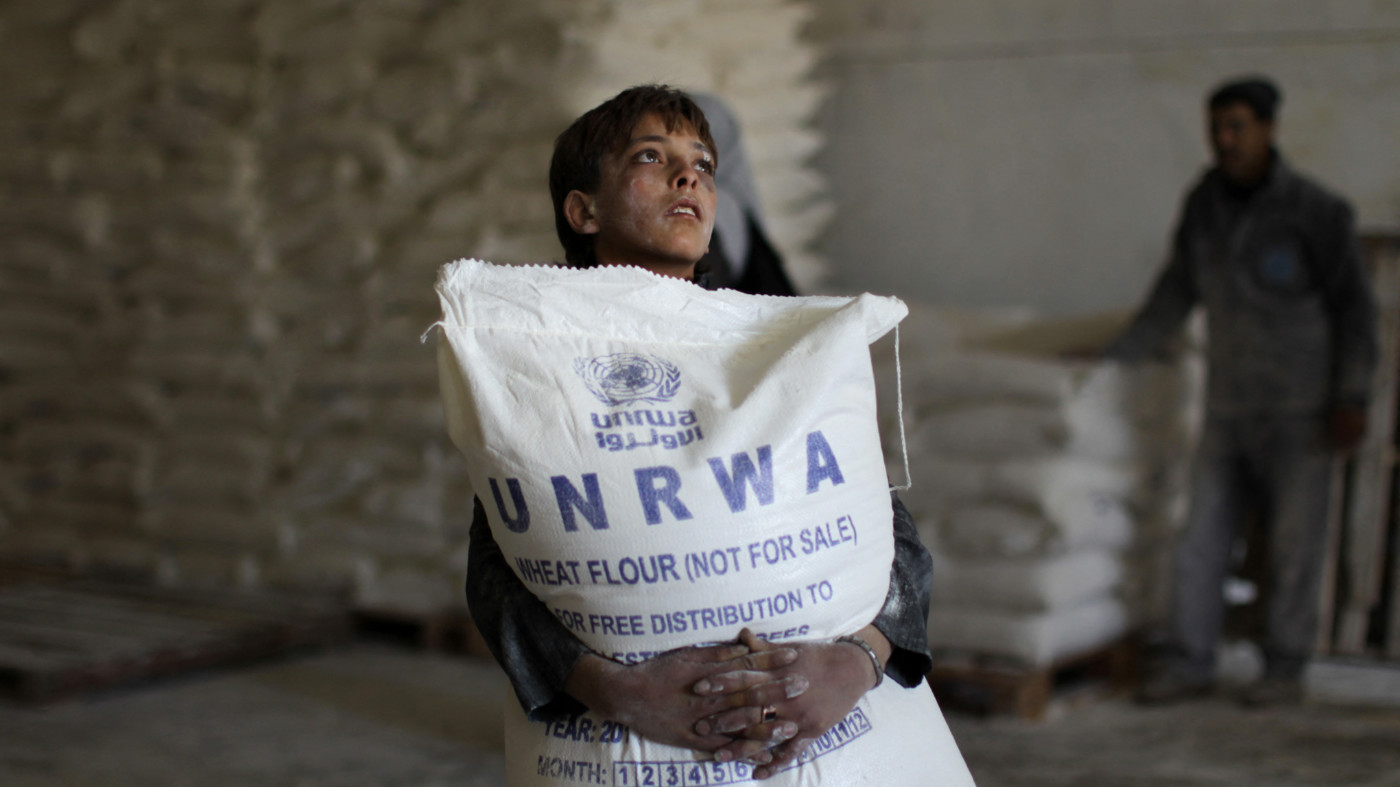
Most recently, the bitterest conflict has centered on UNRWA, the largest humanitarian provider serving Palestinian refugees in Gaza and the West Bank. Founded in 1949 to support the roughly 700,000 Palestinians displaced by the 1948 Nakba, UNRWA runs a sprawling network of critical services including schools, emergency shelters, and food kitchens for millions of displaced people. Israel has long opposed UNRWA’s mandate, because the agency formally recognizes Palestinians as refugees, affirming their claimed right of return to lands seized during the 1948 war. In January 2025, Israel cut all official ties with UNRWA, designated the agency as a terrorist organization, and banned it from operating within Israel and all occupied Palestinian territories. This move followed 2024 Israeli allegations that a small number of UNRWA’s 11,000 Gaza-based staff participated in the October 7, 2023 attacks that killed more than 1,100 Israelis. An independent UN-commissioned investigation, the 2024 Colonna Report, later confirmed UNRWA maintained institutional political neutrality, though the agency did terminate nine staff members over potential links to the attacks. The ICJ issued an advisory opinion in October 2025 ruling Israel’s ban on UNRWA unlawful, finding the country had failed to provide credible evidence to support its terrorist infiltration claims.
Despite the international court ruling, Israel has continued to dismantle UNRWA infrastructure across occupied territory. In January 2026, just weeks after passing legislation to cut off the agency’s water and electricity access, Israeli forces bulldozed UNRWA’s East Jerusalem headquarters under the direction of far-right National Security Minister Itamar Ben-Gvir. The seizure of the agency’s last remaining East Jerusalem facility this week completes the dismantling of UNRWA’s operations in the city. Outgoing UNRWA Commissioner-General Phillippe Lazzarini told Middle East Eye in April that the dismantling of UNRWA has become an explicit Israeli policy objective, framing the campaign against the agency as politically motivated, with Hamas infiltration claims used as a convenient pretext. Israel’s elimination of UNRWA’s operations cleared the way for a renewed Israeli blockade on aid entering Gaza in March 2025, which culminated in a formal declaration of famine across Gaza in August 2025. To date, 391 UNRWA staff have been killed during Israel’s military campaign in Gaza.
In February 2025, Israel cut all official ties with the UN Human Rights Council (UNHRC), the Geneva-based body tasked with upholding global human rights standards, repeating longstanding claims of “ongoing and unrelenting institutional bias against Israel.” The US cut its own ties with the council the day before. The UNHRC had drawn Israeli anger after passing a 2024 resolution calling for an immediate end to Israel’s Gaza blockade and all other forms of collective punishment against Palestinians. Israel and the US have objected for decades to the council’s Agenda Item 7, a permanent standing item established in 2006 that requires an annual debate on human rights violations in occupied Palestinian territories – the only permanent country-specific agenda item in the council’s work.
In January 2026, shortly after the US announced it would cut ties with 66 international organizations, 31 of which are UN entities, Israel followed suit, formally severing relations with six additional UN bodies. Among these are UN Women, which Israel falsely accused of ignoring the October 7 sexual violence against Israeli women – despite multiple public statements from the agency condemning the attacks; the UN Conference on Trade and Development (UNCTAD), which Israel condemned for publishing reports detailing the economic costs of Israeli occupation; the UN Alliance of Civilizations, which Israel accused of serving as a platform for anti-Israel rhetoric; UN Energy, which Israel dismissed as wasteful bureaucratic overreach; the Global Forum on Migration and Development, which Israel claimed undermines national immigration sovereignty; and the Office of the Special Representative of the Secretary-General for Children in Armed Conflict, which added Israel to its blacklist of violators of children’s rights in 2024. Israel has also long been disengage from the UN Economic and Social Commission for Western Asia, which it severed formal ties with in 2026 over annual anti-Israel reports.
Israel has not withdrawn from all UN agencies, but pressure from right-wing politicians to cut additional ties is growing. Far-right lawmakers have pushed for Israel to exit the World Health Organization (WHO), which the US left in January 2025, claiming the body is no longer objective. In July 2025, Israel refused to renew the visa of the top UN Office for the Coordination of Humanitarian Affairs (OCHA) official in occupied Palestine, citing biased conduct, and senior officials have repeatedly called for Israel to ignore ICJ rulings. In January 2024, the ICJ ordered Israel to take all possible measures to prevent acts of genocide in Gaza, a ruling far-right minister Ben-Gvir dismissed as the work of an “antisemitic court” that targets the Jewish state.
Most recently, Israel cut all official ties with UN Secretary-General António Guterres in May 2026, after his office included Israel in an annual report of states credibly suspected of perpetrating sexual violence. The inclusion followed multiple documented reports from human rights groups and media outlets documenting sexual violence committed by Israeli forces against Palestinian people in Gaza and the West Bank. Israel called the inclusion “shameful and absurd” and said it proved the UN is a politicized, corrupt body systematically focused on targeting Israel. This is only the third time a UN member state has cut ties with the secretary-general, the last such incident occurring in the 1950s when the Soviet Union and China blacklisted the UN’s first secretary-general, Trygve Lie. Israel had already designated Guterres persona non grata in 2024, banning him from entering Israel and occupied Palestinian territories over claims he was anti-Israel.
Israel has also consistently blocked the work of the UNHRC-appointed UN Special Rapporteur for the Occupied Palestinian Territories, an independent expert role tasked with documenting human rights violations. Current rapporteur Francesca Albanese, an Italian legal scholar, has been banned from entering Israel, Gaza, and the West Bank since 2024 over her public comments framing the October 7 attacks as a response to decades of Israeli occupation. In 2025, the US imposed sanctions on Albanese after she called on the International Criminal Court to prosecute executives from more than 60 global companies, including US firms, for complicity in Israeli crimes in Gaza – a move that has been challenged in US courts.