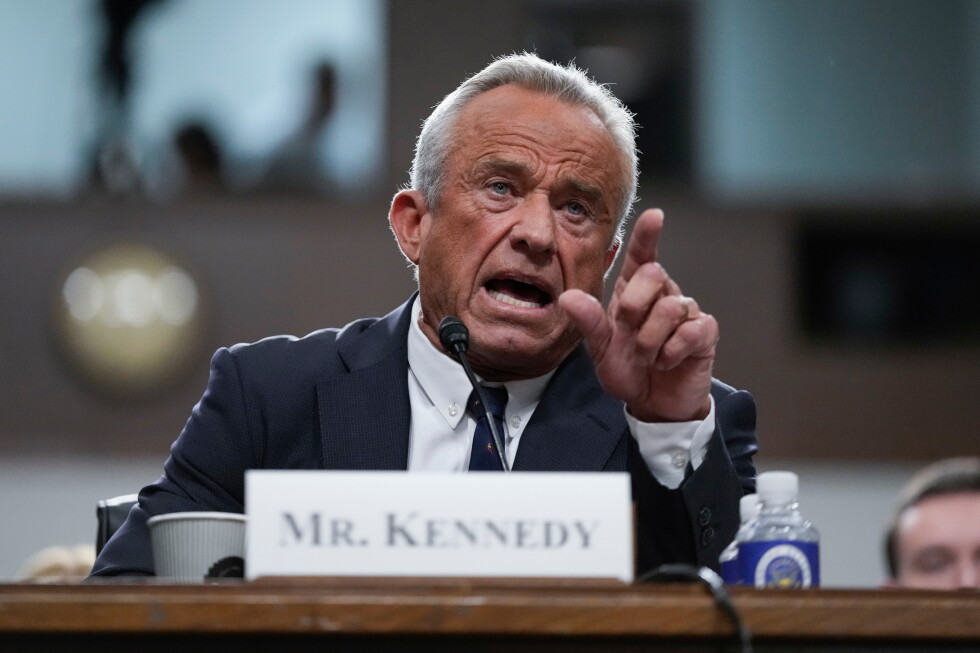
WASHINGTON, D.C. — Newly uncovered correspondence has thrown into sharp question the truthfulness of U.S. Health and Human Services Secretary Robert F. Kennedy Jr.’s 2024 confirmation testimony, directly contradicting his repeated claims that his 2019 trip to Samoa had no connection to vaccines.
When Kennedy appeared before Senate lawmakers last year to secure confirmation for his cabinet post — one he secured only after winning over skeptical Republican supporters — he denied multiple times that vaccines were the impetus for his visit to the Pacific island nation ahead of a devastating 2019 measles outbreak that killed 83 people, most of them children under five. Kennedy, who was one of the most high-profile anti-vaccine activists in the U.S. before taking office, told senators the trip was solely meant to roll out a digital health record system to improve local care delivery.
But documents obtained jointly by The Associated Press and The Guardian through a freedom of the press lawsuit against the U.S. State Department tell a different story. Dated January 20, 2019, the newly released letter on the letterhead of Kennedy’s former anti-vaccine nonprofit Children’s Health Defense (CHD) is addressed directly to Samoa’s then-prime minister Tuilaepa Sailele Malielegaoi. In it, Kennedy explicitly requests permission to lead a team to Samoa to investigate the country’s measles, mumps and rubella (MMR) vaccination program following the 2018 deaths of two children who had recently received MMR shots. The word “vaccine” or “vaccination” appears eight times across the text.
The 2018 child deaths, later confirmed by Samoan authorities to be the result of improper vaccine preparation by two nurses who ultimately pleaded guilty to manslaughter, prompted the Samoan government to pause all MMR vaccinations for 10 months. That pause sent vaccination rates plummeting across the country, creating the conditions for the deadly measles outbreak that emerged later in 2019. The letter reveals Kennedy speculated the deaths stemmed from vaccine manufacturing or lot issues, and proposed a “detailed health informatics assessment” of the country’s MMR program to examine his hypothesis.
“Adverse health events associated with vaccines” are rarely investigated quickly or thoroughly globally, Kennedy wrote, adding that existing health systems are not designed to rapidly trace connections between adverse diagnoses and specific vaccination events. Tuilaepa responded a month later welcoming the assessment and Kennedy’s planned visit, which went forward in May and June 2019. Previous reporting has confirmed Kennedy met with local anti-vaccine activists during the trip, and public health experts have widely noted that Kennedy’s high-profile visit emboldened anti-vaccine sentiment that slowed Samoa’s outbreak response.
In a statement responding to questions about the newly released documents, the Department of Health and Human Services repeated Kennedy’s original claim that the Samoa visit was “unrelated to vaccines.” The department called any suggestion that Kennedy lied to Congress “not only false but outright defamatory,” noting Kennedy was not under oath during his confirmation hearing. However, U.S. law classifies knowingly providing false material testimony to Congress as a felony punishable by prison time regardless of oath, even though prosecutions for the offense are extremely rare.
Neither the White House, Kennedy himself, nor current and former Samoan government officials responded to requests for comment on the new disclosures.
The revelation adds to a growing pattern of broken promises from Kennedy on vaccine policy, which dogged his confirmation from the start. To win confirmation, Kennedy pledged to maintain existing vaccine policies and keep in place the membership of the federal government’s key vaccine advisory committee. Once in office, he removed all 17 existing committee members and replaced them with hand-picked advisers aligned with his anti-vaccine views. Sen. Bill Cassidy, the Republican chair of the Senate health committee and a staunch vaccine proponent whose critical support secured Kennedy’s confirmation, has since publicly acknowledged Kennedy broke his commitments, saying “The commitments that were made to me have been violated.”
Now, Democratic lawmakers are pushing for accountability. Sens. Ron Wyden of Oregon and Edward Markey of Massachusetts, both Democrats who grilled Kennedy on the Samoa trip during his confirmation hearing, have accused Kennedy of lying to Congress. Wyden, the ranking member of the Senate Finance Committee, has promised to push Republican leadership to refer the matter to the U.S. Department of Justice for investigation, and pledged that Democrats would hold Kennedy fully accountable if their party reclaims control of the Senate in the upcoming fall elections. “There are consequences for lying to Congress,” Wyden said.
Legal experts note lawmakers could use the new disclosures as justification for congressional hearings, a formal investigation, or even an impeachment inquiry. But such action is widely considered unlikely in the current Republican-led Congress, which aligns closely with the priorities of the Trump administration that appointed Kennedy.