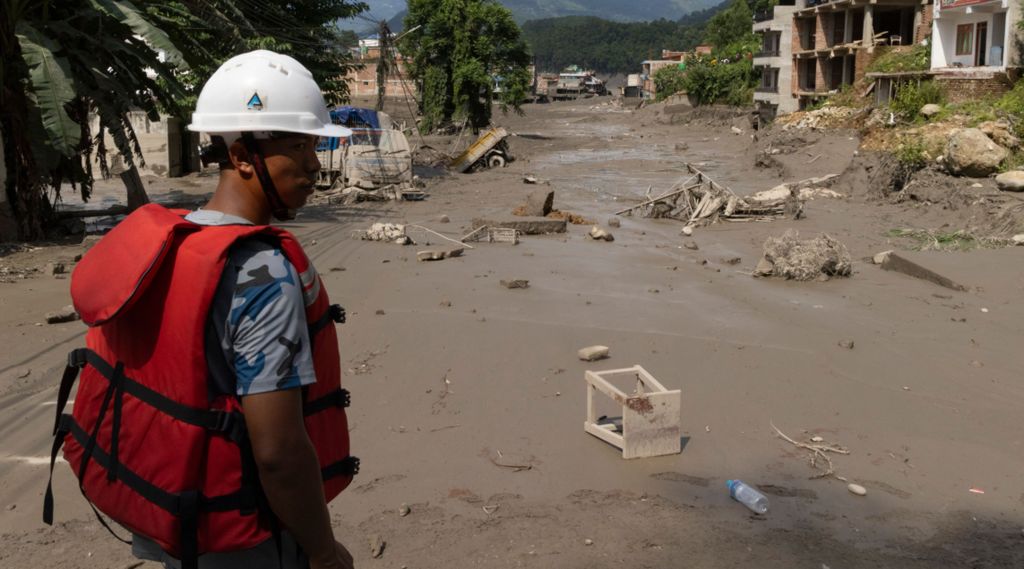
A devastating natural disaster has unfolded along the Nepal-Tibet border, where catastrophic flash floods and massive mudslides have left more than 150 people dead and hundreds more unaccounted for, including dozens of citizens from the United States and Canada, according to official Nepali authorities.
Aerial footage of the disaster zone captured sweeping views of submerged communities and destroyed infrastructure, illustrating the full scale of the destruction that struck the region on Wednesday. Official data from Nepal police confirms that over 500 tourists are currently missing, 466 of whom are foreign nationals hailing from 28 different countries. Among the missing are 54 citizens of the United States and 24 citizens of Canada, alongside dozens of people from India, the United Kingdom, and more than 100 Nepali nationals.
The U.S. State Department has confirmed that it is aware American citizens have been impacted by the disaster, but has declined to release specific figures or additional details due to privacy protections for affected individuals. A spokesperson for the department added that the U.S. Embassy in Kathmandu is working in close coordination with local tour operators and Nepali authorities to provide support to any affected U.S. citizens. In a public statement shared on social media, the U.S. Embassy expressed its grief over the tragic loss of life. “We are deeply saddened by the tragic loss of life and devastation caused by the Bhote Koshi flood that struck Rasuwa district and communities downstream,” the statement read. “We extend our sincere condolences to the families and loved ones of those who lost their lives, and our thoughts are with all those affected by this disaster.”
Canadian officials have also stepped in to monitor the rapidly evolving situation. Prime Minister Mark Carney confirmed via social media platform X that the Canadian government is tracking developments closely. “As rescue efforts continue, Canada stands ready to provide support,” Carney wrote, urging all Canadian citizens currently in the region to register for the Registration of Canadians Abroad, a free emergency service that allows the federal government to reach and assist citizens during crises overseas. Global Affairs Canada noted that 820 Canadian citizens are currently registered as present in Nepal, with another five registered in the Tibet Autonomous Region of China, though the department emphasized these figures are only estimates, as registration is voluntary and may include individuals who have altered their travel plans. The department confirmed it is aware that Canadian citizens have been affected by the floods and stands by ready to provide consular assistance.
On the Chinese side of the border, state media reports confirm three people have been killed and another 265 are missing after the floodwaters hit a border crossing crossing. Footage broadcast by Tibetan CCTV captured a massive surge of water and mud crashing into border infrastructure and nearby buildings.
Initial reports after the disaster suggested a small earthquake may have triggered an ice avalanche that preceded the landslides and floods. However, new analysis from the U.S. Geological Survey has disproven this early hypothesis. The organization confirmed that further examination of seismic data shows the recorded seismic activity was actually generated by the landslide itself, not the other way around.
Scientists note that landslides and avalanches in high-altitude Himalayan regions can have multiple triggers. One leading hypothesis is that increased water content—whether from heavy seasonal rainfall or accelerated glacial melt—destabilized the mountain slope and ice pack. While climate change is widely documented to be accelerating glacial melt across the Hindu Kush Himalaya region, researchers say it is too early to draw a direct link between this specific disaster and long-term climate shifts.
The disaster caused widespread damage to critical infrastructure across the affected region. Initial estimates from Nepali government officials put the total cost of destroyed and damaged roads and bridges at more than 15 billion Nepalese rupees, equal to approximately £72.18 million or $98.33 million. Entire small communities were swept away by the fast-moving flash flood, leaving rescue teams working to reach cut-off areas and locate survivors.
Nepali President Ram Chandra Paudel has issued a public call to action, urging government agencies, political parties, civil society organizations, security forces, and the general public to scale up rescue and relief operations. “I urge everyone to remain vigilant and actively engage in necessary coordination and cooperation in the lower coastal areas,” President Paudel said.