Global financial markets delivered a mixed performance on Thursday, with Asian equities splitting gains and losses following marginal downward movement on Wall Street a day earlier, as a blockbuster earnings report from chip giant Nvidia lifted U.S. futures and oil prices retreated. The session unfolded against a backdrop of shifting macroeconomic data and ongoing investor anxiety around the sustainability of the global artificial intelligence investment boom.
After U.S. markets closed Wednesday, Nvidia — one of the world’s most valuable public companies and a key barometer for the global AI industry — released quarterly results that far outstripped Wall Street analysts’ projections. The firm reported revenue for the May-to-July quarter more than doubled from the same period a year earlier, fueled by explosive, unrelenting demand for its high-end AI chips that power everything from large language models to generative AI tools for major tech corporations. Following the better-than-expected report, U.S. futures traded into positive territory early Thursday.
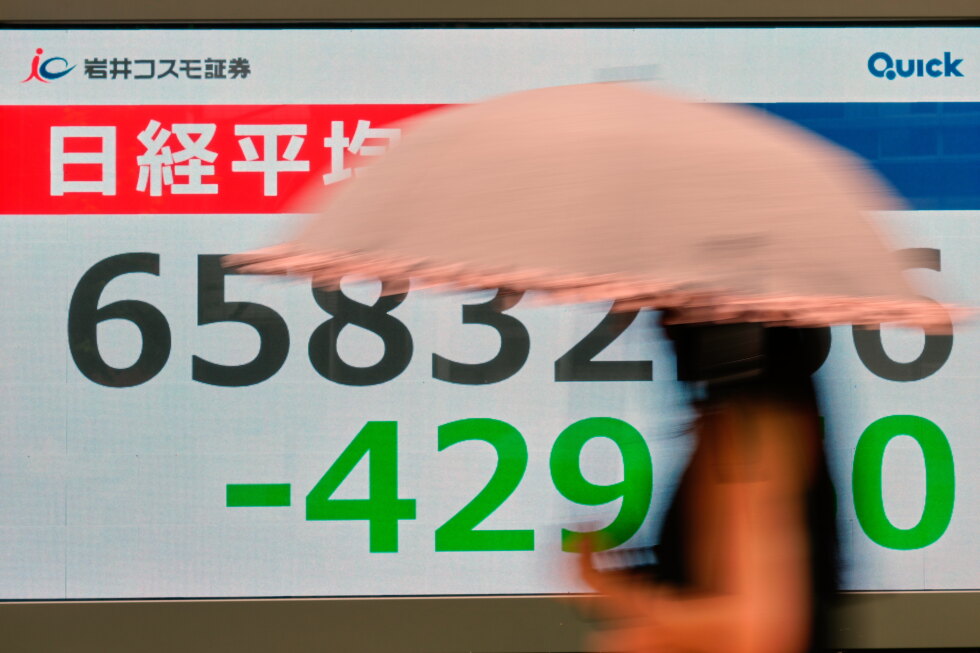
Across major Asian benchmarks, performance was fragmented. Japan’s Nikkei 225 edged down 0.2% to close at 66,162.72, though SoftBank Group, the multinational investment holding that holds a stake in AI leader OpenAI, notched a 0.1% gain. South Korea’s Kospi outperformed most regional indexes, climbing 1.5% to 6,909.81, with market heavyweight Samsung Electronics rising 2% as investors bet on ongoing AI chip demand. Japan, South Korea and Taiwan have emerged as the biggest regional winners from the global AI investment frenzy, and Taiwan’s benchmark Taiex index added 0.5% on Thursday.
In Greater China markets, Hong Kong’s Hang Seng Index slid 0.4% to 25,548.83, while the Shanghai Composite Index gained 0.6% to 3,935.99. New economic data released by China showed growth in industrial profits slowed to 11.2% in July, down from 15.1% in June, signaling ongoing softness in the country’s industrial recovery. Further afield, Australia’s S&P/ASX 200 dropped 0.9% to 9,041.70, and India’s Sensex posted a marginal 0.1% decline.
On Wednesday, U.S. markets closed with modest losses, with the benchmark S&P 500 falling less than 0.1% to remain just below its recent record high levels. The Dow Jones Industrial Average lost 0.2%, while the tech-heavy Nasdaq Composite dipped 0.1%. Beyond Nvidia’s results, the session brought other notable market-moving developments: Meta Platforms added 1.1% after reaching an $18 billion settlement with U.S. states over claims that its platforms Facebook and Instagram fueled teen social media addiction. The deal also requires Meta to implement new child-safety measures, ending a landmark national trial against the company.
New macroeconomic data released Wednesday also gave investors new insight into U.S. economic momentum and inflation pressures. The revised estimate for U.S. gross domestic product growth in the April-June quarter came in at 1.5%, matching earlier projections. The personal consumption expenditures price index — the inflation metric the Federal Reserve has long prioritized for policy decisions — held steady at 3.7% in July, unchanged from June. That reading was slightly higher than the 3.6% consensus forecast from economists surveyed by FactSet, and remains far above the Fed’s longstanding 2% annual inflation target.
Nvidia’s strong results have come at a time of widespread debate among investors over the future of the AI boom. While chip and AI-related stocks have rallied for more than two years, many market participants warn that massive current investments in AI infrastructure could lead to an asset bubble, as companies may fail to generate enough near- and medium-term profits to justify the sky-high valuations and rising capital outlays.
In energy markets, oil prices edged lower early Thursday. Brent crude, the global benchmark for oil pricing, fell 0.5% to $86.49 per barrel. For context, the commodity traded around $72 per barrel in late February, before the outbreak of open conflict in Iran pushed energy prices higher. U.S. benchmark West Texas Intermediate crude also dropped 0.5% to $81.84 per barrel. In currency markets, the U.S. dollar appreciated slightly against the Japanese yen, rising to 159.38 yen from 159.31 yen, while the euro edged up to $1.1655 from $1.1651.